
The Indus Valley Civilisation (IVC), also known as the Indus Civilisation, was a Bronze Age civilisation in the northwestern regions of South Asia, lasting from 3300 BCE to 1300 BCE, and in its mature form from 2600 BCE to 1900 BCE. Together with ancient Egypt and Mesopotamia, it was one of the three early civilisations of the Near East and South Asia. Of the three, it was the most widespread: it spanning much of Pakistan, northwestern India, and northeast Afghanistan. The civilisation flourished in the alluvial plain of the Indus River, which originates from northern slopes of the Kailash Range (Tibetan platue),near Lake Mansarovar, and flows through India entering Pakistan, and along a system of perennial monsoon-fed rivers that once flowed in the vicinity of the Ghaggar-Hakra, a seasonal river in northwest India and eastern Pakistan.
The term Harappan is also applied to the Indus Civilisation, after its type site Harappa, the first to be excavated early in the 20th century in what was then the Punjab province of British India and is now Punjab, Pakistan. The discovery of Harappa and soon afterwards Mohenjo-daro was the culmination of work that had begun after the founding of the Archaeological Survey of India in the British Raj in 1861. There were earlier and later cultures called Early Harappan and Late Harappan in the same area. The early Harappan cultures were populated from Neolithic cultures, the earliest and best-known of which is named after Mehrgarh, in Balochistan, Pakistan. Harappan civilisation is sometimes called Mature Harappan to distinguish it from the earlier cultures.
The cities of the ancient Indus were noted for their urban planning, baked brick houses, elaborate drainage systems, water supply systems, clusters of large non-residential buildings, and techniques of handicraft and metallurgy. Mohenjo-daro and Harappa very likely grew to contain between 30,000 and 60,000 individuals, and the civilisation may have contained between one and five million individuals during its florescence. A gradual drying of the region during the 3rd millennium BCE may have been the initial stimulus for its urbanisation. Eventually it also reduced the water supply enough to cause the civilisation's demise and to disperse its population to the east.
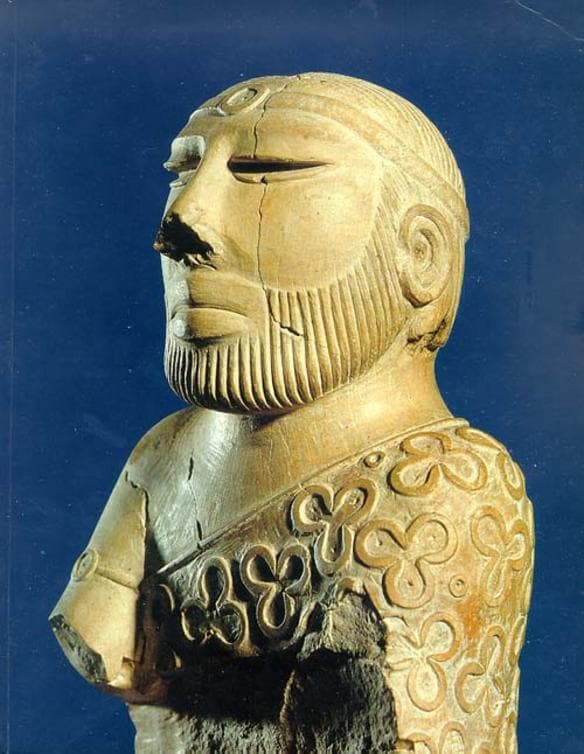
Although over a thousand Mature Harappan sites have been reported and nearly a hundred excavated, there are only five major urban centres: Mohenjo-daro in the lower Indus Valley (declared a UNESCO World Heritage Site in 1980 as "Archaeological Ruins at Moenjodaro"), Harappa in the western Punjab region, Ganeriwala in the Cholistan Desert, Dholavira in western Gujarat (declared a UNESCO World Heritage Site in 2021 as "Dholavira: A Harappan City"), and Rakhigarhi in Haryana. The Harappan language is not directly attested, and its affiliations are uncertain, as the Indus script has remained undeciphered. A relationship with the Dravidian or Elamo-Dravidian language family is favoured by a section of scholars.
Etymology
The Indus Valley Civilisation is
named after the Indus River system in whose alluvial plains the early sites of the civilisation were identified and excavated.
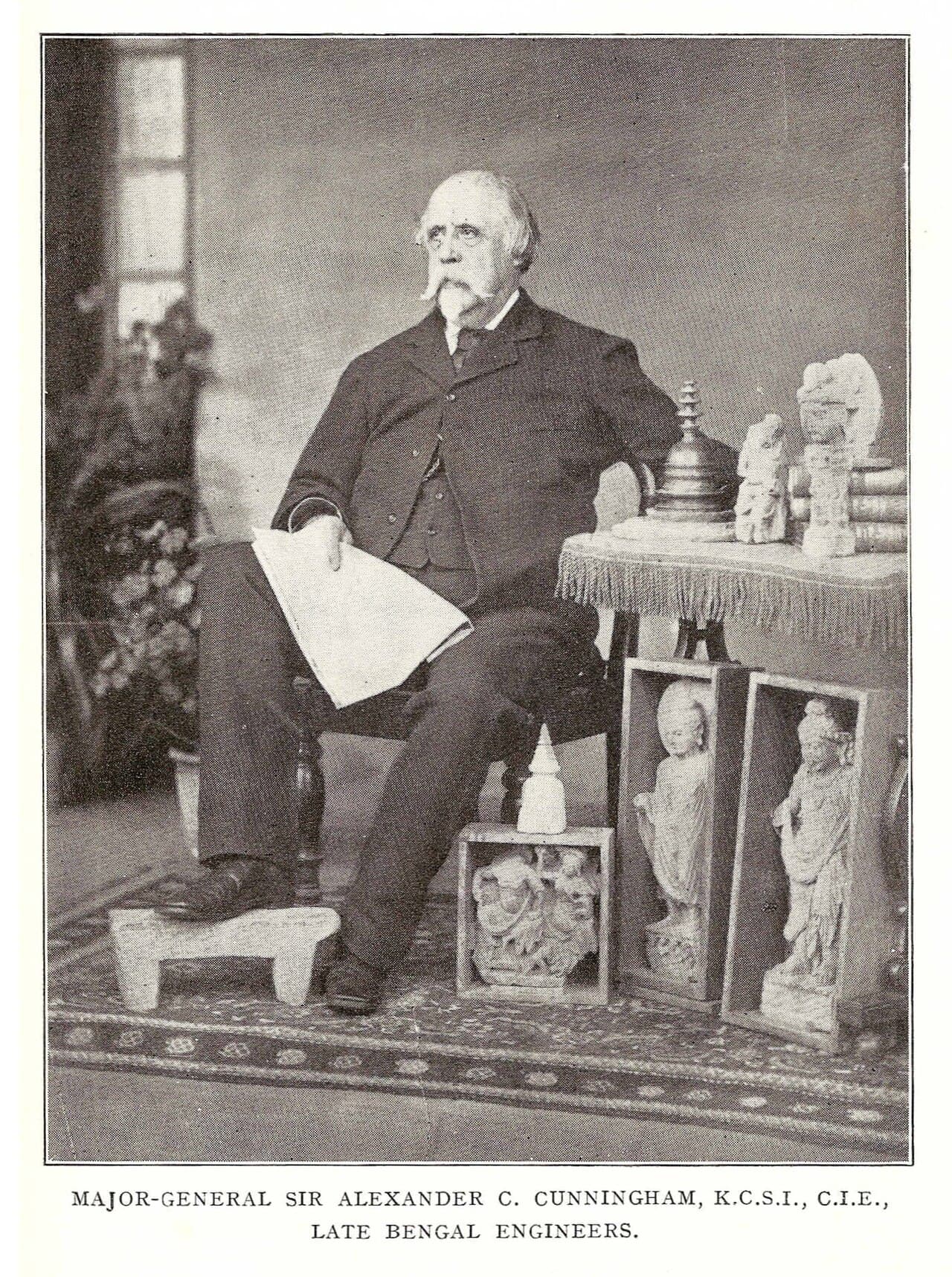
Following a tradition in archaeology, the civilisation is sometimes referred to as the Harappan, after its type site, Harappa, the first site to be excavated in the 1920s; this is notably true of usage employed by the Archaeological Survey of India after India's independence in 1947.
The term "Ghaggar-Hakra" figures prominently in modern labels applied to the Indus civilisation on account of a good number of sites having been found along the Ghaggar-Hakra River in northwest India and eastern Pakistan. The terms "Indus-Sarasvati Civilisation" and "Sindhu-Saraswati Civilisation" have also been employed in the literature by supporters of Indigenous Aryanism, after a posited identification of the Ghaggar-Hakra with the river Sarasvati described in the early chapters of the Rigveda, a collection of hymns in archaic Sanskrit composed in the second-millennium BCE, which are unrelated to the mature phase of the Indus Valley Civilization.
Recent geophysical research suggests that, unlike the Sarasvati described in the Rigveda as a snow-fed river, the Ghaggar-Hakra was a system of perennial monsoon-fed rivers, which became seasonal around the time the civilisation diminished, approximately 4,000 years ago.

Extent
The Indus Valley Civilisation was roughly contemporary with the other riverine civilisations of the ancient world: Ancient Egypt along the Nile, Mesopotamia in the lands watered by the Euphrates and the Tigris, and China in the drainage basin of the Yellow River and the Yangtze. By the time of its mature phase, the civilisation had spread over an area larger than the others, which included a core of 1,500 kilometres (900 mi) up the alluvial plain of the Indus and its tributaries. In addition, there was a region with disparate flora, fauna, and habitats, up to ten times as large, which had been shaped culturally and economically by the Indus.
Around 6500 BCE, agriculture emerged in Balochistan, on the margins of the Indus alluvium. In the following millennia, settled life made inroads into the Indus plains, setting the stage for the growth of rural and urban settlements. The more organised sedentary life, in turn, led to a net increase in the birth rate. The large urban centres of Mohenjo-daro and Harappa very likely grew to containing between 30,000 and 60,000 individuals, and during the civilisation's florescence, the population of the subcontinent grew to between 4–6 million people. During this period the death rate increased, as the close living conditions of humans and domesticated animals led to an increase in contagious diseases. According to one estimate, the population of the Indus civilisation at its peak may have been between one and five million.
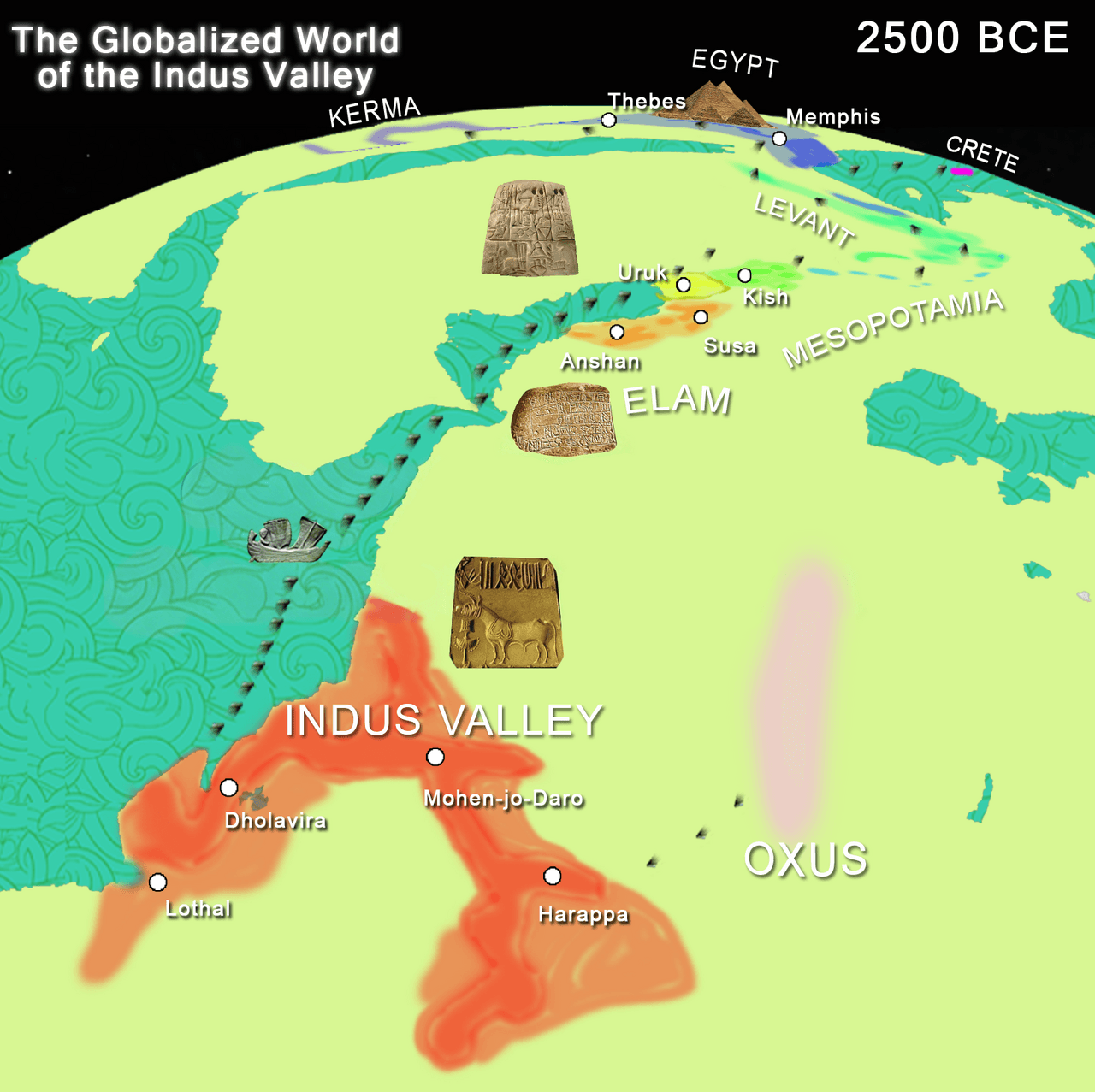
During its height the civilisation extended from Balochistan in the west to western Uttar Pradesh in the east, from northeastern Afghanistan in the north to Gujarat state in the south. The largest number of sites are in the Punjab region, Gujarat, Haryana, Rajasthan, Uttar Pradesh, Jammu and Kashmir states, Sindh, and Balochistan. Coastal settlements extended from Sutkagan Dor in Western Baluchistan to Lothal in Gujarat. An Indus Valley site has been found on the Oxus River at Shortugai in Afghanistan which is the northernmost site of the Indus Valley Civilisation, in the Gomal River valley in northwestern Pakistan, at Manda, Jammu on the Beas River near Jammu, and at Alamgirpur on the Hindon River, only 28 km (17 mi) from Delhi. The southernmost site of the Indus Valley Civilisation is Daimabad in Maharashtra. Indus Valley sites have been found most often on rivers, but also on the ancient seacoast, for example, Balakot (Kot Bala), and on islands, for example, Dholavira.
Discovery and history of excavation
The first modern accounts of the ruins of the Indus civilisation are those of Charles Masson, a deserter from the East India Company's army. In 1829, Masson travelled through the princely state of Punjab, gathering useful intelligence for the Company in return for a promise of clemency. An aspect of this arrangement was the additional requirement to hand over to the Company any historical artifacts acquired during his travels. Masson, who had versed himself in the classics, especially in the military campaigns of Alexander the Great, chose for his wanderings some of the same towns that had featured in Alexander's campaigns, and whose archaeological sites had been noted by the campaign's chroniclers. Masson's major archaeological discovery in the Punjab was Harappa, a metropolis of the Indus civilisation in the valley of Indus's tributary, the Ravi River. Masson made copious notes and illustrations of Harappa's rich historical artifacts, many lying half-buried. In 1842, Masson included his observations of Harappa in the book Narrative of Various Journeys in Baluchistan, Afghanistan, and the Punjab. He dated the Harappa ruins to a period of recorded history, erroneously mistaking it to have been described earlier during Alexander's campaign. Masson was impressed by the site's extraordinary size and by several large mounds formed from long-existing erosion.
Two years later, the Company contracted Alexander Burnes to sail up the Indus to assess the feasibility of water travel for its army. Burnes, who also stopped in Harappa, noted the baked bricks employed in the site's ancient masonry, but noted also the haphazard plundering of these bricks by the local population.
Despite these reports, Harappa was raided even more perilously for its bricks after the British annexation of the Punjab in 1848–49. A considerable number were carted away as track ballast for the railway lines being laid in the Punjab. Nearly 160 km (100 mi) of railway track between Multan and Lahore, laid in the mid-1850s, was supported by Harappan bricks.
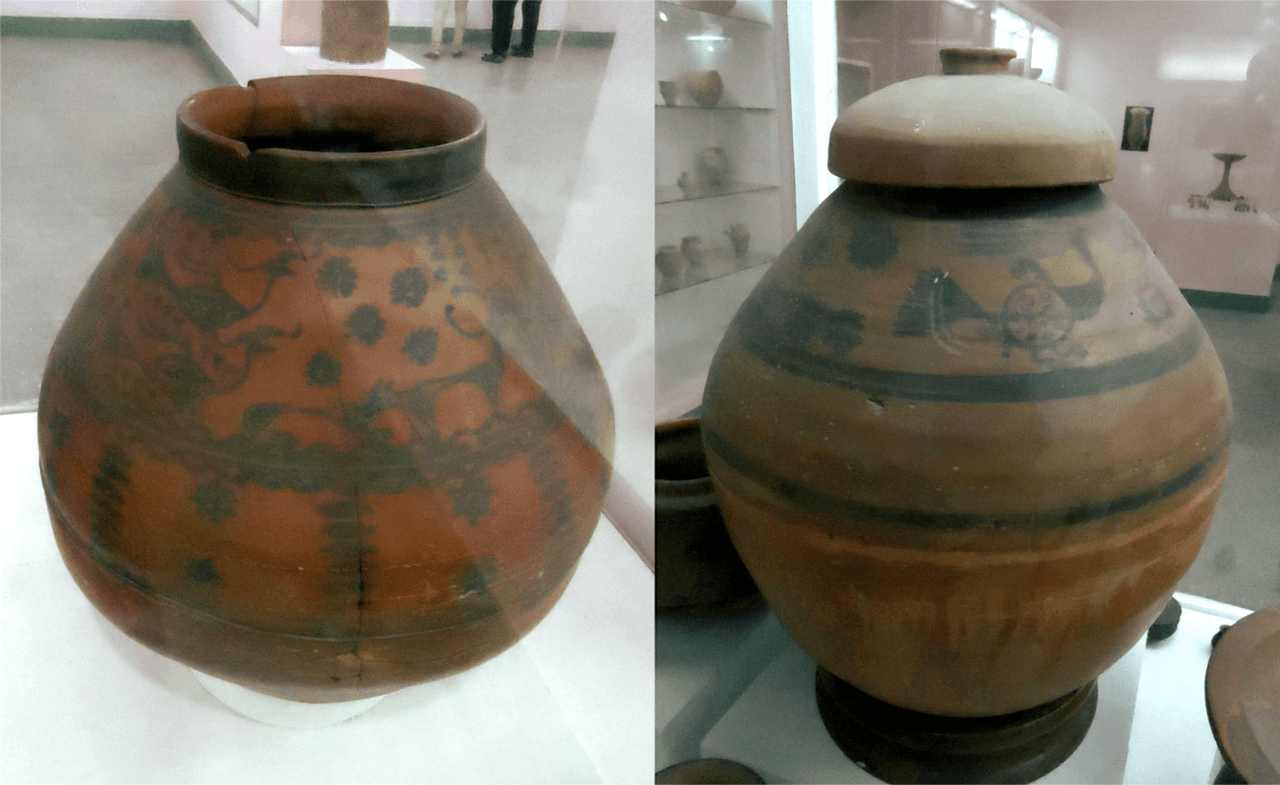
In 1861, three years after the dissolution of the East India Company and the establishment of Crown rule in India, archaeology on the subcontinent became more formally organised with the founding of the Archaeological Survey of India (ASI). Alexander Cunningham, the Survey's first director-general, who had visited Harappa in 1853 and had noted the imposing brick walls, visited again to carry out a survey, but this time of a site whose entire upper layer had been stripped in the interim. Although his original goal of demonstrating Harappa to be a lost Buddhist city mentioned in the seventh century CE travels of the Chinese visitor, Xuanzang, proved elusive, Cunningham did publish his findings in 1875. For the first time, he interpreted a Harappan stamp seal, with its unknown script, which he concluded to be of an origin foreign to India.
Archaeological work in Harappa thereafter lagged until a new viceroy of India, Lord Curzon, pushed through the Ancient Monuments Preservation Act 1904, and appointed John Marshall to lead the ASI. Several years later, Hiranand Sastri, who had been assigned by Marshall to survey Harappa, reported it to be of non-Buddhist origin, and by implication more ancient. Expropriating Harappa for the ASI under the Act, Marshall directed ASI archaeologist Daya Ram Sahni to excavate the site's two mounds.
Farther south, along the main stem of the Indus in Sind province, the largely undisturbed site of Mohenjo-daro had attracted notice. Marshall deputed a succession of ASI officers to survey the site. These included D. R. Bhandarkar (1911), R. D. Banerji (1919, 1922–1923), and M. S. Vats (1924). In 1923, on his second visit to Mohenjo-daro, Baneriji wrote to Marshall about the site, postulating an origin in "remote antiquity", and noting a congruence of some of its artifacts with those of Harappa. Later in 1923, Vats, also in correspondence with Marshall, noted the same more specifically about the seals and the script found at both sites. On the weight of these opinions, Marshall ordered crucial data from the two sites to be brought to one location and invited Banerji and Sahni to a joint discussion. By 1924, Marshall had become convinced of the significance of the finds, and on 24 September 1924, made a tentative but conspicuous public intimation in the Illustrated London News: "Not often has it been given to archaeologists, as it was given to Schliemann at Tiryns and Mycenae, or to Stein in the deserts of Turkestan, to light upon the remains of a long forgotten civilisation. It looks, however, at this moment, as if we were on the threshold of such a discovery in the plains of the Indus."
In the next issue, a week later, the British Assyriologist Archibald Sayce was able to point to very similar seals found in Bronze Age levels in Mesopotamia and Iran, giving the first strong indication of their date; confirmations from other archaeologists followed. Systematic excavations began in Mohenjo-daro in 1924–25 with that of K. N. Dikshit, continuing with those of H. Hargreaves (1925–1926), and Ernest J. H. Mackay (1927–1931). By 1931, much of Mohenjo-daro had been excavated, but occasional excavations continued, such as the one led by Mortimer Wheeler, a new director-general of the ASI appointed in 1944, and including Ahmad Hasan Dani.
After the partition of India in 1947, when most excavated sites of the Indus Valley Civilisation lay in territory awarded to Pakistan, the Archaeological Survey of India, its area of authority reduced, carried out large numbers of surveys and excavations along the Ghaggar-Hakra system in India. Some speculated that the Ghaggar-Hakra system might yield more sites than the Indus river basin. According to archaeologist Shireen Ratnagar, many Ghaggar-Hakra sites in India are actually those of local cultures, with distinctive local potterry, but which had contacts with Harappan civilisation; few are fully developed Harappan sites. As of 1977, about 90% of the Indus script seals and inscribed objects discovered were found at sites in Pakistan along the Indus river, while other sites accounts only for the remaining 10%. By 2002, over 1,000 Mature Harappan cities and settlements had been reported, of which just under a hundred had been excavated, mainly in the general region of the Indus and Ghaggar-Hakra rivers and their tributaries; however, there are only five major urban sites: Harappa, Mohenjo-daro, Dholavira, Ganeriwala and Rakhigarhi. As of 2008, about 616 sites have been reported in India, whereas 406 sites have been reported in Pakistan.
Unlike India, in which after 1947, the ASI attempted to "Indianise" archaeological work in keeping with the new nation's goals of national unity and historical continuity, in Pakistan the national imperative was the promotion of Islamic heritage, and consequently archaeological work on early sites was left to foreign archaeologists. After the partition, Mortimer Wheeler, the Director of ASI from 1944, oversaw the establishment of archaeological institutions in Pakistan, later joining a UNESCO effort tasked to conserve the site at Mohenjo-daro. Other international efforts at Mohenjo-daro and Harappa have included the German Aachen Research Project Mohenjo-daro, the Italian Mission to Mohenjo-daro, and the US Harappa Archaeological Research Project (HARP) founded by George F. Dales. Following a chance flash flood which exposed a portion of an archaeological site at the foot of the Bolan Pass in Balochistan, excavations were carried out in Mehrgarh by French archaeologist Jean-François Jarrige and his team in the early 1970s.
Chronology
The cities of the ancient Indus had "social hierarchies, their writing system, their large planned cities and their long-distance trade [which] mark them to archaeologists as a full-fledged 'civilisation.' The mature phase of the Harappan civilisation lasted from c. 2600–1900 BCE. With the inclusion of the predecessor and successor cultures – Early Harappan and Late Harappan, respectively – the entire Indus Valley Civilisation may be taken to have lasted from the 33rd to the 14th centuries BCE. It is part of the Indus Valley Tradition, which also includes the pre-Harappan occupation of Mehrgarh, the earliest farming site of the Indus Valley.
Several periodisations are employed for the IVC. The most commonly used classifies the Indus Valley Civilisation into Early, Mature and Late Harappan Phase. An alternative approach by Shaffer divides the broader Indus Valley Tradition into four eras, the pre-Harappan "Early Food Producing Era", and the Regionalisation, Integration, and Localisation eras, which correspond roughly with the Early Harappan, Mature Harappan, and Late Harappan phases.
Pre-Harappan era: Mehrgarh
Mehrgarh is a Neolithic (7000 BCE to c. 2500 BCE) mountain site in the Balochistan province of Pakistan, which gave new insights on the emergence of the Indus Valley Civilisation. Mehrgarh is one of the earliest sites with evidence of farming and herding in South Asia. Mehrgarh was influenced by the Near Eastern Neolithic, with similarities between "domesticated wheat varieties, early phases of farming, pottery, other archaeological artefacts, some domesticated plants and herd animals".
Jean-Francois Jarrige argues for an independent origin of Mehrgarh. Jarrige notes "the assumption that farming economy was introduced full-fledged from Near-East to South Asia", and the similarities between Neolithic sites from eastern Mesopotamia and the western Indus valley, which are evidence of a "cultural continuum" between those sites. But given the originality of Mehrgarh, Jarrige concludes that Mehrgarh has an earlier local background, and is not a "'backwater' of the Neolithic culture of the Near East".
Lukacs and Hemphill suggest an initial local development of Mehrgarh, with a continuity in cultural development but a change in population. According to Lukacs and Hemphill, while there is a strong continuity between the Neolithic and Chalcolithic (Copper Age) cultures of Mehrgarh, dental evidence shows that the Chalcolithic population did not descend from the Neolithic population of Mehrgarh, which "suggests moderate levels of gene flow". Mascarenhas et al. (2015) note that "new, possibly West Asian, body types are reported from the graves of Mehrgarh beginning in the Togau phase (3800 BCE)."
Gallego Romero et al. (2011) state that their research on lactose tolerance in India suggests that "the west Eurasian genetic contribution identified by Reich et al. (2009) principally reflects gene flow from Iran and the Middle East." They further note that "[t]he earliest evidence of cattle herding in South Asia comes from the Indus River Valley site of Mehrgarh and is dated to 7,000 YBP."
Early Harappan
The Early Harappan Ravi Phase, named after the nearby Ravi River, lasted from c. 3300 BCE until 2800 BCE. It started when farmers from the mountains gradually moved between their mountain homes and the lowland river valleys, and is related to the Hakra Phase, identified in the Ghaggar-Hakra River Valley to the west, and predates the Kot Diji Phase (2800–2600 BCE, Harappan 2), named after a site in northern Sindh, Pakistan, near Mohenjo-daro. The earliest examples of the Indus script date to the 3rd millennium BCE.
The mature phase of earlier village cultures is represented by Rehman Dheri and Amri in Pakistan. Kot Diji represents the phase leading up to Mature Harappan, with the citadel representing centralised authority and an increasingly urban quality of life. Another town of this stage was found at Kalibangan in India on the Hakra River.
Trade networks linked this culture with related regional cultures and distant sources of raw materials, including lapis lazuli and other materials for bead-making. By this time, villagers had domesticated numerous crops, including peas, sesame seeds, dates, and cotton, as well as animals, including the water buffalo. Early Harappan communities turned to large urban centres by 2600 BCE, from where the mature Harappan phase started. The latest research shows that Indus Valley people migrated from villages to cities.
The final stages of the Early Harappan period are characterised by the building of large walled settlements, the expansion of trade networks, and the increasing integration of regional communities into a "relatively uniform" material culture in terms of pottery styles, ornaments, and stamp seals with Indus script, leading into the transition to the Mature Harappan phase.
Mature Harappan
According to Giosan et al. (2012), the slow southward migration of the monsoons across Asia initially allowed the Indus Valley villages to develop by taming the floods of the Indus and its tributaries. Flood-supported farming led to large agricultural surpluses, which in turn supported the development of cities. The IVC residents did not develop irrigation capabilities, relying mainly on the seasonal monsoons leading to summer floods. Brooke further notes that the development of advanced cities coincides with a reduction in rainfall, which may have triggered a reorganisation into larger urban centres.
According to J.G. Shaffer and D.A. Lichtenstein, the Mature Harappan civilisation was "a fusion of the Bagor, Hakra, and Kot Diji traditions or 'ethnic groups' in the Ghaggar-Hakra valley on the borders of India and Pakistan".
Also, according to a more recent summary by Maisels (2003), "The Harappan oecumene formed from a Kot Dijian/Amri-Nal synthesis". He also says that, in the development of complexity, the site of Mohenjo-daro has priority, along with the Hakra-Ghaggar cluster of sites, "where Hakra wares actually precede the Kot Diji related material". He sees these areas as "catalytic in producing the fusion from Hakra, Kot Dijian and Amri-Nal cultural elements that resulted in the gestalt we recognize as Early Harappan (Early Indus)."
By 2600 BCE, the Early Harappan communities turned into large urban centres. Such urban centres include Harappa, Ganeriwala, Mohenjo-daro in modern-day Pakistan, and Dholavira, Kalibangan, Rakhigarhi, Rupar, and Lothal in modern-day India. In total, more than 1,000 settlements have been found, mainly in the general region of the Indus and Ghaggar-Hakra Rivers and their tributaries.
Cities
A sophisticated and technologically advanced urban culture is evident in the Indus Valley Civilisation, making them the first urban centre in the region. The high degree of forward-looking urban planning demonstrates the existence of well-organised local governments capable of formulating and executing a large-scale forward-looking development program, and which placed a high value on public health and hygiene, or, alternatively, accessibility to the means of religious ritual.
As seen in Harappa, Mohenjo-daro and the 2010s partially excavated Rakhigarhi, this urban plan included the world's first known city sanitation systems. Within the city, individual homes or groups of homes obtained water from wells. From a room that appears to have been set aside for bathing, waste water was directed to covered drains, which lined the major streets. Houses opened only to inner courtyards and smaller lanes. The housebuilding in some villages in the region still resembles in some respects the housebuilding of the Harappans.
The Indus Valley cities developed elaborate drainage and sewerage systems, described by archaeologists as well-planned and advanced compared with many contemporary societies. Their urban architecture included dockyards, granaries, warehouses, brick platforms, and massive protective walls, which were likely intended both as flood defences and as fortifications.
The purpose of the citadel remains debated. In sharp contrast to this civilisation's contemporaries, Mesopotamia and ancient Egypt, no large monumental structures were built. There is no conclusive evidence of palaces or temples. Some structures are thought to have been granaries. Found at one city is an enormous well-built bath (the "Great Bath"), which may have been a public bath. Although the citadels were walled, it is far from clear that these structures were defensive; many may have been flood defences.
Most city dwellers appear to have been traders or artisans, who lived with others pursuing the same occupation in well-defined neighbourhoods. Materials from distant regions were used in the cities for constructing seals, beads and other objects. Among the artefacts discovered were beautiful glazed faïence beads. Steatite seals have images of animals, people (perhaps gods), and other types of inscriptions, including the yet un-deciphered writing system of the Indus Valley Civilisation. Some of the seals were used to stamp clay on trade goods.
Although some houses were larger than others, Indus Valley Civilisation cities were remarkable for their apparent, if relative, egalitarianism. All the houses had access to water and drainage facilities. This gives the impression of a society with relatively low wealth concentration.
Authority and governance
Archaeological records provide no immediate answers for the question of who ruled Harappan cities and how. Nonetheless, there are indications of complex decisions being taken and large-scale mobilisation of resources. For instance, the majority of the cities were constructed in a highly uniform and well-planned grid pattern, divided into two levels from ground making one part slightly higher than the other; such complex urban planning, combined with the construction of large public works projects, demonstrates the existence of some sort of planning authority. The remarkable consistency of Harappan weights and measures, as evident in pottery, seals, weights and bricks, also indicates the existence of a central authority able to make definitive regulations.
These are some major theories:
There was a single state or federation ruling all or most of the Indus Valley. Proponents of this theory believe that the presence of standardised weights and measures demonstrates the presence of a central authority.
There was no single ruler, with each city being a self-governing city state.
Metallurgy
Copper was abundant at Indus sites, as revealed by archaeology. In his 2019 study of Harappan and Indus copper industry, Brett Hoffman analysed extensive copper/bronze assemblages from Harappa. He used advanced techniques such as Scanning Electron Microscopy (SEM), to understand production, consumption, and trade in copper ore. The study revealed regional patterns and detailed technological aspects of bronze production in Harappa and in Indus Valley Civilisation more generally. Indus bronze was alloyed with tin, arsenic and lead.
Hoffman examined a large collections of copper/bronze artifacts from Harappa, covering the timeline from 3300 to 1700 BCE, and challenged some older broad interpretations of bronze production. He studied how copper was acquired, processed, and used for diverse items, such as tools and prestige goods. The production increased especially starting with the Kot Diji Phase, but the Early Harappan groups were already well acquainted with copper metallurgy.
Major copper and copper ore sources used by Indus Valley Civilisation included Rajasthan (Khetri mines) and as far as Oman, and Bahrain. The Aravalli Range in northwestern India was particularly important.
A touchstone bearing gold streaks was found in Banawali, which was probably used for testing the purity of gold (such a technique is still used in some parts of India).
Contrary to the older ideas of elite control over metal production, recent research indicates that access to copper and bronze was relatively widespread throughout the Indus society.