
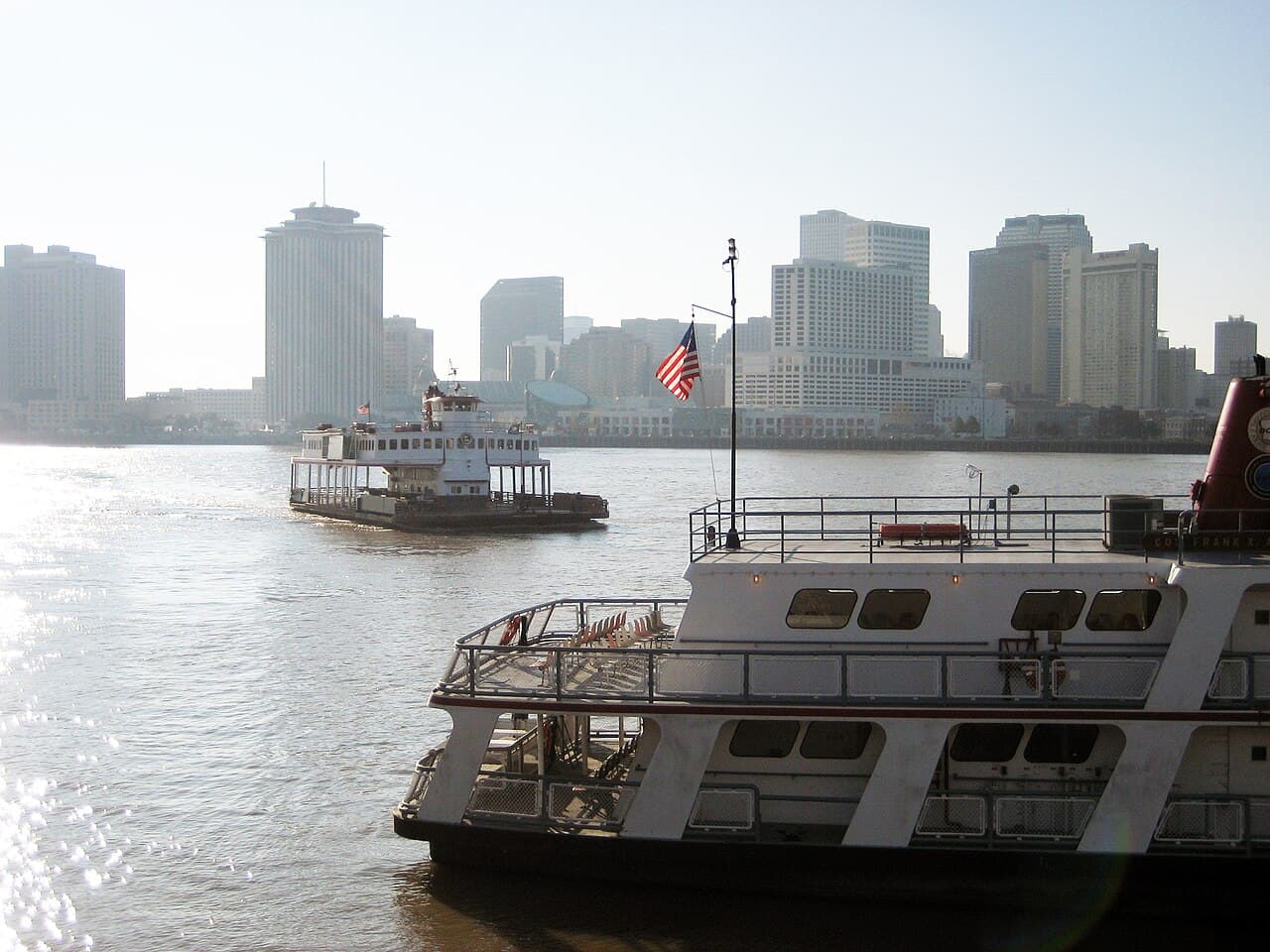
New Orleans (commonly known as NOLA or The Big Easy, among other nicknames) is a consolidated city-parish located along the Mississippi River in the U.S. state of Louisiana. With a population of 383,997 at the 2020 census, New Orleans is the most populous city in Louisiana, the second-most populous in the Deep South (after Atlanta), and the twelfth-most populous in the Southeastern United States; the New Orleans metropolitan area, with about 1 million residents, is the 59th-most populous metropolitan area in the United States. New Orleans serves as a major port and commercial hub for the broader Gulf Coast region. The city is coextensive with Orleans Parish.
New Orleans is renowned for its distinctive music, Creole cuisine, unique dialects, and its annual celebrations and festivals, most notably Mardi Gras. The historic heart of the city is the French Quarter, known for its French and Spanish Creole architecture and vibrant nightlife along Bourbon Street. The city has been described as the "most interesting" in the United States, owing in large part to its cross-cultural and multilingual heritage. Additionally, New Orleans has increasingly been known as "Hollywood South" due to its prominent role in the film industry and in pop culture.
Founded in 1718 by French colonists, New Orleans was once the territorial capital of French Louisiana before becoming part of the United States in the Louisiana Purchase of 1803. New Orleans in 1840 was the third most populous city in the United States, and it was the largest city in the American South from the Antebellum era until after World War II. The city has historically been very vulnerable to flooding, due to its high rainfall, low-lying elevation, poor natural drainage, and proximity to multiple bodies of water. State and federal authorities have installed a complex system of levees and drainage pumps in an effort to protect the city.
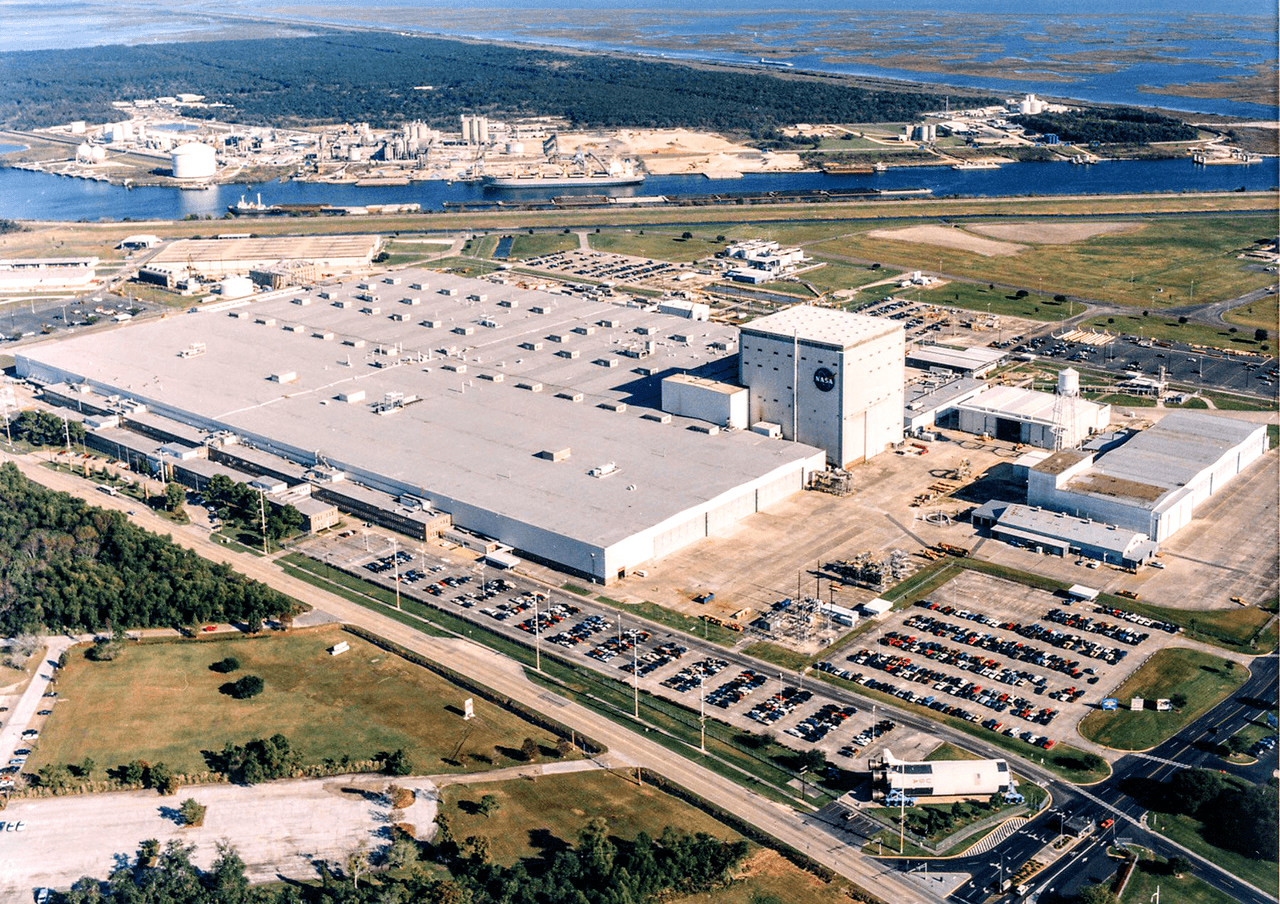
New Orleans was severely affected by Hurricane Katrina in late August 2005, which flooded more than 80% of the city, killed more than 1,800 people, and displaced thousands of residents, causing a population decline of over 50%. Since Katrina, major redevelopment efforts have led to a rebound in the city's population. Concerns have been expressed about gentrification and consequent displacement.
Etymology and nicknames
Before the arrival of European colonists, the indigenous Choctaw people called the area of present-day New Orleans Bulbancha, which translates as "land of many tongues". It appears to have been a contraction of balbáha a̱shah, which means "there are foreign speakers". In his book Histoire de la Louisiane, Antoine-Simon Le Page du Pratz wrote that the indigenous name referred to the Mississippi River and that the use of the same name for the settlement relates to Native American concepts of the close interaction between rivers and their surrounding land.
The name of New Orleans derives from the original French name, La Nouvelle-Orléans, which was given to the city in honor of Philippe II, Duke of Orléans, who served as Louis XV's regent from 1715 to 1723. The French city of Orléans itself was originally known as civitas Aurelianorum, possibly named after one of the many Roman Emperors bearing the nomen gentilicum around that time, which later evolved into Orléans.
Following the defeat in the Seven Years' War, France formally transferred the possession of Louisiana to Spain, with which France had secretly signed the Treaty of Fontainebleau a year earlier, in the Treaty of Paris of 1763. The Spanish renamed the city Nueva Orleans (pronounced [ˌnweβa oɾleˈans]), which was used until 1800. The United States, which had acquired possession from France in 1803, anglicized the French name to New Orleans.
New Orleans has several nicknames, including these:
Crescent City, alluding to the course of the Lower Mississippi River around and through the city.
The Big Easy, possibly a reference by musicians in the early 20th century to the relative ease of finding work there.
The City that Care Forgot, used since at least 1938, referring to the outwardly easygoing, carefree nature of the residents.
NOLA, the acronym for New Orleans, Louisiana.
History
French–Spanish colonial era
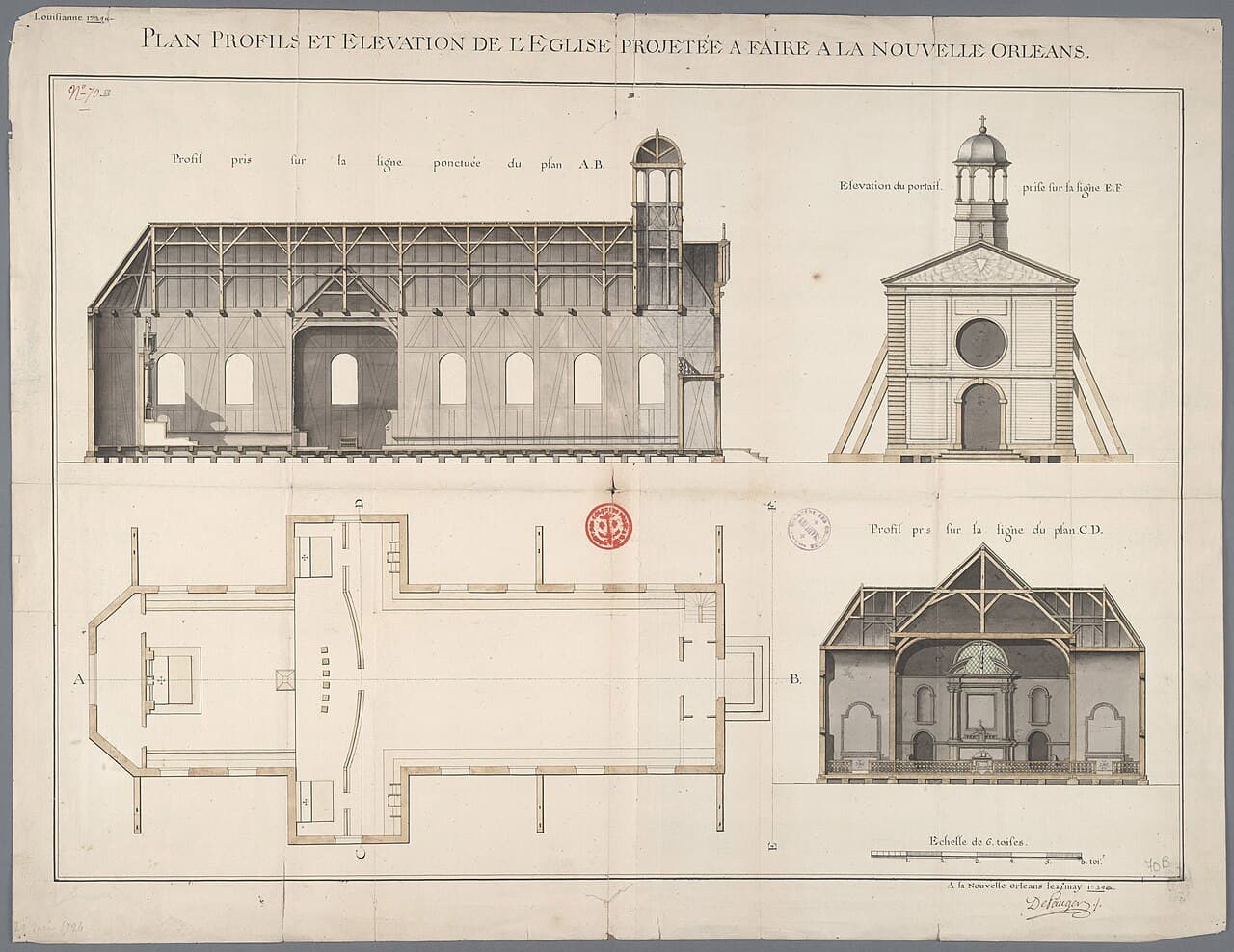
La Nouvelle-Orléans (New Orleans) was founded in the spring of 1718 by the French Mississippi Company under Jean-Baptiste Le Moyne de Bienville, on land traditionally inhabited by the Chitimacha people. The city was named for Philippe II, Duke of Orléans, then-regent of the Kingdom of France whose title derived from the French city of Orléans. As a colony, French Louisiana faced conflict with Native American tribes navigating rival European powers. In 1729, the Natchez revolt erupted with an attack on Fort Rosalie, resulting in the deaths of over 200 French colonists. Governor Étienne Perier launched a retaliatory campaign that effectively destroyed the Natchez people, but it soured relations between France and the territory's Native Americans leading directly into the Chickasaw Wars of the 1730s.
Native resistance continued into the 1740s under governor Pierre de Rigaud, marquis de Vaudreuil-Cavagnial, as tribes including the Chickasaw and Choctaw leveraged competing colonial interests. Raids intensified as French economic instability weakened colonial defenses, with some Chickasaw attacks reaching as far south as Baton Rouge. Meanwhile, labor shortages led the French colonists to turn to the Atlantic slave trade. By the early 1720s, enslaved Africans were arriving in significant numbers, and in 1724, the Code Noir formalized harsh laws governing their lives. A distinct Afro-Creole culture began to develop, blending African traditions with Catholicism and French language, giving rise to practices such as Louisiana Voodoo and the Louisiana Creole language.
New Orleans quickly emerged as a cultural and commercial hub in French Louisiana. Its position as a key port made it the gateway for goods moving between the interior of North America and the Atlantic world. Institutions like the Ursuline sisters, founded in 1727 by nuns sponsored by the Company of the Indies, reflected the city's integration into French religious and educational networks. The convent educated girls and remains foundational to several modern schools in the city. Early city planning and architecture were shaped by military engineers like Pierre Le Blond de Tour and Adrien de Pauger, whose designs laid out the enduring street grid and fortifications. By the 1740s, public works programs under engineer Ignace François Broutin transformed the city's architecture, blending colonial governance with a distinct Creole character.

After France ceded Louisiana to the Spanish Empire in the 1763 Treaty of Paris, New Orleans residents resisted Spanish rule. Local residents staged the Louisiana Rebellion of 1768, briefly seizing control of the city and sending a delegation to France to appeal for renewed French authority. Their efforts failed, and King Louis XV reaffirmed Spanish sovereignty. Nearly all of the surviving 18th-century architecture of the Vieux Carré (French Quarter) dates from the Spanish period, notably excepting the Old Ursuline Convent. During the American Revolutionary War, New Orleans played a key role as a supply hub for the American cause, particularly under Spanish governor Bernardo de Gálvez y Madrid, Count of Gálvez, who led a campaign against the British from the city in 1779. From the 1760s onward, Filipinos also began settling in the region.
United States territorial era
The Third Treaty of San Ildefonso in 1800 restored French control of New Orleans and Louisiana, but Napoleon sold both to the United States in the Louisiana Purchase in 1803. Thereafter, the city grew rapidly with influxes of Americans, French, Creoles and Africans. Later immigrants were Irish, Germans, Poles and Italians. Major commodity crops of sugar and cotton were cultivated with slave labor on nearby large plantations.
Between 1791 and 1810, thousands of St. Dominican refugees from the Haitian Revolution, both whites and free people of color (affranchis or gens de couleur libres), arrived in New Orleans; a number brought their slaves with them, many of whom were native Africans or of full-blood descent. While Governor Claiborne and other officials wanted to keep out additional free black people, the French Creoles wanted to increase the French-speaking population. In addition to bolstering the territory's French-speaking population, these refugees had a significant impact on the culture of Louisiana, including developing its sugar industry and cultural institutions.
As more refugees were allowed into the Territory of Orleans, St. Dominican refugees who had first gone to Cuba also arrived. Many of the white Francophones had been deported by officials in Cuba in 1809 as retaliation for Bonapartist schemes. Nearly 90 percent of these immigrants settled in New Orleans. The 1809 migration brought 2,731 whites, 3,102 free people of color (of mixed-race European and African descent), and 3,226 slaves of primarily African descent, doubling the city's population. The city became 63 percent black, a greater proportion than Charleston, South Carolina's 53 percent at that time.
Slave rebellion
On January 8–11, 1811, about 500 enslaved Africans in St. Charles and St. John the Baptist parishes rose up in the German Coast rebellion against their enslavers, killing two white men in the process. They proceeded to march south toward New Orleans and were eventually controlled by the local militia, with numerous casualties on both sides.
The uprising has been called the "largest slave rebellion in US history."
Battle of New Orleans and antebellum period
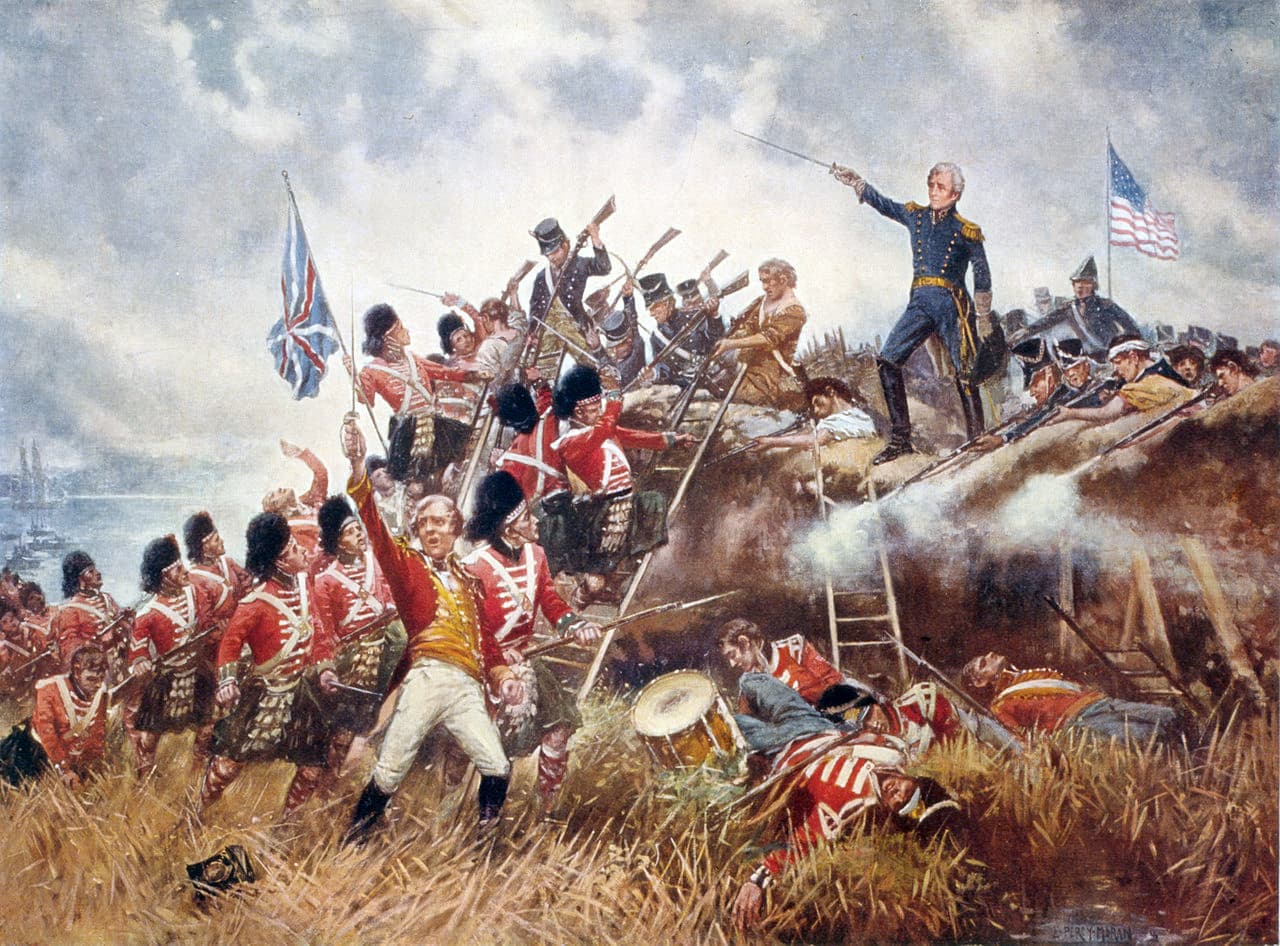
During the final campaign of the War of 1812, the British sent a force of 11,000 in an attempt to capture New Orleans. Despite great challenges, General Andrew Jackson, with support from the U.S. Navy, successfully cobbled together a force of militia from Louisiana and Mississippi, U.S. Army regulars, a large contingent of Tennessee state militia, Kentucky frontiersmen and local privateers (the latter led by the pirate Jean Lafitte), to decisively defeat the British in the Battle of New Orleans on January 8, 1815. The armies had not learned of the Treaty of Ghent, which had been signed on December 24, 1814 (although not ratified by the U.S. government until February 16, 1815). The fighting in Louisiana began in December 1814 and did not end until late January, after the Americans held off the Royal Navy during a ten-day siege of Fort St. Philip.
As a port, New Orleans played a major role during the antebellum period in the Atlantic slave trade. The port handled commodities for export from the interior and imported goods from other countries, which were warehoused and transferred in New Orleans to smaller vessels and distributed along the Mississippi River watershed. The river was filled with steamboats, flatboats and sailing ships. Despite its role in the slave trade, New Orleans at the time also had the largest and most prosperous community of free persons of color in the nation, who were often educated, middle-class property owners.
New Orleans housed the largest slave market in the country, particularly after the U.S. ended the international slave trade in 1808. The domestic trade surged, with two-thirds of more than a million enslaved people forcibly relocated to the Deep South. The trade's economic value was immense as slaves were collectively valued at half a billion dollars, and the broader economy surrounding the trade, including transport and services, generated billions more. As a result, New Orleans benefited significantly, both financially and commercially, from this system.
Following the Louisiana Purchase, Anglo-Americans and later German and Irish immigrants migrated to the city, contributing to its rapid growth. By 1840, New Orleans was the wealthiest and third-most populous city in the U.S. The white Francophone population remained influential, with French still used in some schools. Free people of color (gens de couleur libres), mostly of mixed race and largely Francophone, formed a distinct artisan and professional class, even as the majority of black residents remained enslaved. The city's prosperity was shadowed by repeated epidemics of yellow fever and other tropical and infectious diseases, which killed over 150,000 residents in the 19th century. By 1860, the city's population had reached nearly 170,000, its per capita income was the second highest in the nation, and it was the third-largest U.S. port by import tonnage.
Civil War–Reconstruction era
As the Creole elite feared, the American Civil War changed their world. In April 1862, following the city's occupation by the Union Navy after the Battle of Forts Jackson and St. Philip, Gen. Benjamin F. Butler – a respected Massachusetts lawyer serving in that state's militia – was appointed military governor. New Orleans residents supportive of the Confederacy nicknamed him "Beast" Butler, because of an order he issued. After his troops had been assaulted and harassed in the streets by women still loyal to the Confederate cause, his order warned that such future occurrences would result in his men treating such women as those "plying their avocation in the streets", implying that they would treat the women like prostitutes. Accounts of this spread widely. He also came to be called "Spoons" Butler because of the alleged looting that his troops did while occupying the city, during which time he himself supposedly pilfered silver flatware.
Significantly, Butler abolished French-language instruction in city schools. Statewide measures in 1864 and, after the war, 1868 further strengthened the English-only policy imposed by federal representatives. With the predominance of English speakers, that language had already become dominant in business and government. By the end of the 19th century, French usage had faded. It was also under pressure from Irish, Italian and German immigrants. However, as late as 1902 "one-fourth of the population of the city spoke French in ordinary daily intercourse, while another two-fourths was able to understand the language perfectly," and as late as 1945, many elderly Creole women spoke no English. The last major French language newspaper, L'Abeille de la Nouvelle-Orléans (New Orleans Bee), ceased publication on December 27, 1923, after 96 years. According to some sources, Le Courrier de la Nouvelle Orléans continued until 1955.
As the city was captured and occupied early in the war, it was spared the destruction through warfare suffered by many other cities of the American South. The Union Army eventually extended its control north along the Mississippi River and along the coastal areas. As a result, most of the southern portion of Louisiana was originally exempted from the liberating provisions of the 1863 Emancipation Proclamation issued by President Abraham Lincoln. Large numbers of rural ex-slaves and some free people of color from the city volunteered for the first regiments of Black troops in the War. Led by Brigadier General Daniel Ullman (1810–1892), of the 78th Regiment of New York State Volunteers Militia, they were known as the "Corps d'Afrique". While that name had been used by a militia before the war, that group was composed of free people of color. The new group was made up mostly of former slaves. They were supplemented in the last two years of the War by newly organized United States Colored Troops, who played an increasingly important part in the war.
Violence in the South, including the Memphis Riots and New Orleans Riot of 1866, spurred Congress to pass the Reconstruction Act and Fourteenth Amendment, granting citizenship and civil rights to freedmen and free people of color. During Reconstruction, Louisiana and Texas were governed under the Fifth Military District, and Louisiana was readmitted to the Union in 1868 with a new constitution that established universal male suffrage, universal public education, and elected both black and white officials. P.B.S. Pinchback briefly served as Louisiana's Republican governor in 1872, becoming the first U.S. governor of African descent. New Orleans also maintained a racially integrated public school system during this period. However, wartime destruction, a financial recession, and the Panic of 1873 hindered economic recovery. From 1868, white insurgents used violence to suppress Black voters and disrupt Republican gatherings, culminating in the 1872 contested gubernatorial election and the rise of the "White League", a paramilitary group supporting Democrats. In 1874, they seized state offices during the Battle of Liberty Place, and by 1876, Redeemers had reclaimed the state legislature. Federal troops withdrew in 1877, ending Reconstruction. In 1892 the racially integrated unions of New Orleans led a general strike in the city from November 8 to 12, shutting down the city & winning the vast majority of their demands.
Jim Crow era
Dixiecrats and Democrats passed Jim Crow laws, establishing racial segregation in public facilities. In 1889, the legislature passed a constitutional amendment incorporating a "grandfather clause" that effectively disfranchised freedmen as well as the propertied people of color manumitted before the war. Unable to vote, African Americans could not serve on juries or in local office, and were closed out of formal politics for generations. The Southern U.S. was ruled by a white Democratic Party. Public schools were racially segregated and remained so until 1960.
New Orleans's large community of well-educated, often French-speaking free persons of color (gens de couleur libres), who had been free prior to the Civil War, fought against Jim Crow. They organized the Comité des Citoyens (Citizens Committee) to work for civil rights. As part of their legal campaign, they recruited one of their own, Homer Plessy, to test whether Louisiana's newly enacted Separate Car Act was constitutional. Plessy boarded a commuter train departing New Orleans for Covington, Louisiana, sat in the car reserved for whites only, and was arrested. The case resulting from this incident, Plessy v. Ferguson, was heard by the U.S. Supreme Court in 1896. The court ruled that "separate but equal" accommodations were constitutional, effectively upholding Jim Crow measures.
In practice, African-American public schools and facilities were underfunded across the South. The Supreme Court ruling contributed to this period as the nadir of race relations in the United States. The rate of lynchings of black men was high across the South, as other states also disfranchised blacks and sought to impose Jim Crow. Nativist prejudices also surfaced. Anti-Italian sentiment in 1891 contributed to the lynchings of 11 Italians, some of whom had been acquitted of the murder of the police chief. Some were shot and killed in the jail where they were detained. It was the largest mass lynching in U.S. history. In July 1900 the city was swept by white mobs rioting after Robert Charles, a young African American, killed a policeman and temporarily escaped. The mob killed him and an estimated 20 other blacks; seven whites died in the days-long conflict, until a state militia suppressed it.
20th century
New Orleans's economic and population zenith in relation to other American cities occurred in the antebellum period. It was the nation's fifth-largest city in 1860 (after New York, Philadelphia, Boston and Baltimore) and was significantly larger than all other southern cities. From the mid-19th century onward rapid economic growth shifted to other areas, while New Orleans's relative importance steadily declined. The growth of railways and highways decreased river traffic, diverting goods to other transportation corridors and markets. Thousands of the most ambitious people of color left the state in the Great Migration around World War II and after, many for West Coast destinations. From the late 1800s, most censuses recorded New Orleans slipping down the ranks in the list of largest American cities (New Orleans's population still continued to increase throughout the period, but at a slower rate than before the Civil War).
In 1929, a streetcar strike took place in the city, during which serious unrest occurred. It is also credited for the creation of the distinctly Louisianan po' boy sandwich.
By the mid-20th century, New Orleanians recognized that their city was no longer the leading urban area in the South. By 1950, Houston, Dallas, and Atlanta exceeded New Orleans in size, and in 1960 Miami eclipsed New Orleans, even as the latter's population reached its historic peak. As with other older American cities, highway construction and suburban development drew residents from the center city to newer housing outside. The 1970 census recorded the first absolute decline in population since the city became part of the United States in 1803. The New Orleans metropolitan area continued expanding in population, albeit more slowly than other major Sun Belt cities. While the Port of New Orleans remained one of the nation's largest, automation and containerization cost many jobs. The city's former role as banker to the South was supplanted by larger peer cities. New Orleans's economy had always been based more on trade and financial services than on manufacturing, but the city's relatively small manufacturing sector also shrank after World War II. Despite some economic development successes under the administrations of deLesseps Story Morrison (1946–1961) and Victor H. Schiro (1961–1970), metropolitan New Orleans's growth rate consistently lagged behind more vigorous cities.
During the later years of Mayor deLesseps Morrison's administration and throughout Victor Schiro's tenure, New Orleans became a focal point of the Civil Rights Movement. The Southern Christian Leadership Conference was founded in the city, and lunch counter sit-ins took place in Canal Street department stores. Tensions escalated in 1960 during school desegregation following the Brown v. Board of Education (1954) ruling. Six-year-old Ruby Bridges integrated William Frantz Elementary School, becoming the first child of color to attend a previously all-white Southern school. Racial controversy also surrounded the 1956 Sugar Bowl, when Georgia governor Marvin Griffin opposed the participation of Pitt Panthers African-American fullback Bobby Grier. Georgia Institute of Technology president Blake R. Van Leer defied the governor, and the game proceeded. The federal Civil Rights Act of 1964 and the Voting Rights Act of 1965 restored key constitutional protections, but economic and educational disparities between Black and White residents remained. As more affluent residents left the city, its population became increasingly poor and predominantly African-American. Beginning in 1980, Black-majority leadership emerged, working to address entrenched socioeconomic inequities.
By the late 20th century, New Orleans had grown increasingly reliant on tourism amid rising poverty, low educational attainment, and high crime, which hindered its adaptation to the broader U.S. shift toward a post-industrial service economy. Meanwhile, city leaders pursued geographic expansion through ambitious drainage efforts. Engineer A. Baldwin Wood designed a pump system that allowed development in formerly uninhabitable swamp and marsh areas, but over time, these areas subsided significantly below sea level. Although the city had always faced flooding risks, awareness of its vulnerability grew after Hurricane Betsy in 1965 and the May 8th 1995 Louisiana Flood. These events exposed the limits of the drainage system, prompting upgrades. By the 1980s and 1990s, scientists warned that erosion of the marshlands and swamp surrounding New Orleans, exacerbated by developments like the Mississippi River–Gulf Outlet Canal, had left the city more exposed than ever to hurricane storm surges.
21st century
New Orleans was catastrophically affected by what Raymond B. Seed called "the worst engineering disaster in the world since Chernobyl", when the federal levee system failed during Hurricane Katrina on August 29, 2005. By the time the hurricane approached the city on August 29, 2005, most residents had evacuated. As the hurricane passed through the Gulf Coast region that day, the city's federal flood protection system failed, resulting in the worst civil engineering disaster in American history at the time. Floodwalls and levees constructed by the United States Army Corps of Engineers failed below design specifications and 80% of the city flooded. Tens of thousands of residents who had remained were rescued or otherwise made their way to shelters of last resort at the Louisiana Superdome or the New Orleans Morial Convention Center. More than 1,500 people were recorded as having died in Louisiana, most in New Orleans, while others remain unaccounted for. Before Hurricane Katrina, the city called for the first mandatory evacuation in its history, to be followed by another mandatory evacuation three years later with Hurricane Gustav.
The city was declared off-limits to residents while efforts to clean up after Hurricane Katrina began. The approach of Hurricane Rita in September 2005 caused repopulation efforts to be postponed, and the Lower Ninth Ward was reflooded by Rita's storm surge. Because of the scale of damage, many people resettled permanently outside the area. Federal, state, and local efforts supported recovery and rebuilding in severely damaged neighborhoods. The U.S. Census Bureau in July 2006 estimated the population to be 223,000; the city was estimated to have regained approximately 60% of its pre-Katrina population by summer 2007. Ten years after the hurricane, the population had recovered to 80% of what it was at the 2000 census.
Several major tourist events and other forms of revenue for the city have returned. Large conventions returned. College bowl games returned for the 2006–2007 season. The New Orleans Saints returned that season. The New Orleans Hornets (now named the Pelicans) returned to the city for the 2007–2008 season. New Orleans hosted the 2008 NBA All-Star Game in addition to Super Bowl XLVII. Major annual events such as Mardi Gras, Voodoo Experience, and the Jazz & Heritage Festival were never displaced or canceled. A new annual festival, "The Running of the Bulls New Orleans", was created in 2007.
On August 29, 2021, coincidentally the 16th anniversary of the landfall of Hurricane Katrina, Hurricane Ida, a category 4 hurricane, made landfall near Port Fourchon, where the Hurricane Ida tornado outbreak caused damage. On January 1, 2025, a truck attack occurred in New Orleans, killing 15 people and injuring 35. The attack was carried out as an act of domestic terrorism and was committed by Shamsud-Din Jabbar.
On December 30, 2025, 350 Louisiana National Guard troops were deployed to New Orleans as part of wave of recent nationwide National Guard deployments.
Geography
New Orleans is located in the Mississippi River Delta, south of Lake Pontchartrain, on the banks of the Mississippi River, approximately 105 miles (169 km) upriver from the Gulf of Mexico. According to the U.S. Census Bureau, the city's area is 350 square miles (910 km2), of which 169 square miles (440 km2) is land and 181 square miles (470 km2) (52%) is water. The area along the river is characterized by ridges and hollows.
Elevation
New Orleans was originally settled on the river's natural levees or high ground. After the Flood Control Act of 1965, the U.S. Army Corps of Engineers built floodwalls and man-made levees around a much larger geographic footprint that included previous marshland and swamp. Over time, pumping of water from marshland allowed for development into lower elevation areas. Today, half of the city is at or below local mean sea level, while the other half is slightly above sea level. Evidence suggests that portions of the city may be dropping in elevation due to subsidence.
A 2007 study by Tulane and Xavier University suggested that "51%... of the contiguous urbanized portions of Orleans, Jefferson, and St. Bernard parishes lie at or above sea level," with the more densely populated areas generally on higher ground. The average elevation of the city is currently between 1 and 2 feet (0.30 and 0.61 m) below sea level, with some portions of the city as high as 20 feet (6 m) at the base of the river levee in Uptown and others as low as 7 feet (2 m) below sea level in the farthest reaches of Eastern New Orleans. A study published by the ASCE Journal of Hydrologic Engineering in 2016, however, stated:
...most of New Orleans proper—about 65%—is at or below mean sea level, as defined by the average elevation of Lake Pontchartrain
The magnitude of subsidence potentially caused by the draining of natural marsh in the New Orleans area and southeast Louisiana is a topic of debate. A study published in Geology in 2006 by an associate professor at Tulane University claims:
While erosion and wetland loss are huge problems along Louisiana's coast, the basement 30 feet (9.1 m) to 50 feet (15 m) beneath much of the Mississippi Delta has been highly stable for the past 8,000 years with negligible subsidence rates.