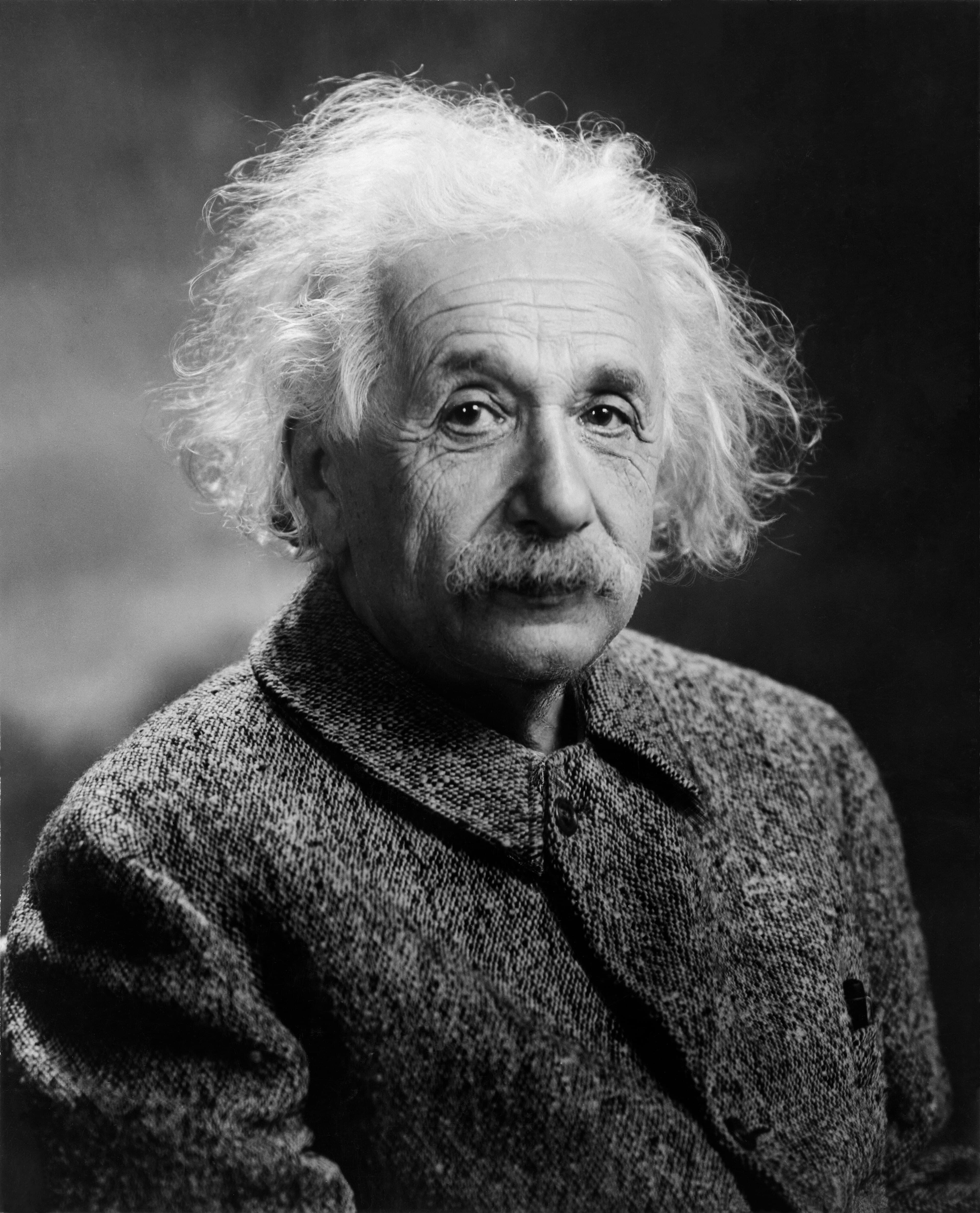
In the spring of 1905, a 26-year-old patent clerk in Bern, Switzerland, submitted four papers to the journal Annalen der Physik. Each one alone would have cemented a scientist's legacy. Together, they detonated a revolution in physics that continues to echo more than a century later. The young man was Albert Einstein, and the world would never see itself the same way again.
A Restless Mind in Formation
Albert Einstein was born on March 14, 1879, in Ulm, in the Kingdom of Württemberg, Germany. His father Hermann was an engineer and salesman; his mother Pauline, a gifted musician who ensured her son received violin lessons from the age of five — a practice he maintained throughout his life. Despite later mythology, Einstein was not a poor student. He excelled in mathematics and physics from an early age, though he clashed with the rigid, rote-memorization style of German schooling. He reportedly taught himself algebra and calculus by age 14, and at 12 encountered a small book on Euclidean plane geometry that he later called the 'holy geometry booklet,' devouring it with rapturous intensity.
After his family relocated to Milan, Einstein renounced his German citizenship to avoid military conscription and, after an initial rejection, gained admission to the Swiss Federal Polytechnic School in Zurich in 1896. There he fell in love with Mileva Marić, a fellow physics student and the only woman in his program. They married in 1903, and though the precise nature of her intellectual contributions to his early work remains debated by historians, her influence on his thinking during those pivotal years was undeniable. The couple had two sons, Hans Albert and Eduard, before their marriage deteriorated and ended in divorce in 1919.
The Miracle Year: Annus Mirabilis
The year 1905 stands as one of the most astonishing single years of scientific productivity in history. Working in isolation from academia — he had failed to secure a university position after graduating — Einstein published four landmark papers while employed as a technical expert (third class) at the Swiss Patent Office. The first explained the photoelectric effect by proposing that light travels in discrete packets of energy called quanta, or photons — a paper that would eventually win him the Nobel Prize in Physics in 1921. The second provided a mathematical explanation for Brownian motion, offering powerful indirect evidence for the existence of atoms at a time when their reality was still debated. The third introduced the Special Theory of Relativity, dismantling Newton's absolute concepts of space and time and establishing that the laws of physics are the same for all observers moving at constant velocities. The fourth, a brief addendum to the third, contained what would become the most famous equation in history: E=mc², asserting that energy and mass are interchangeable, related by the square of the speed of light.
General Relativity: Rewriting Gravity
If Special Relativity reshaped physics, General Relativity — completed in 1915 after a decade of intensive mathematical struggle — elevated Einstein to the status of legend. Where Newton had described gravity as a force acting at a distance, Einstein reconceived it as the curvature of spacetime caused by mass and energy. A massive object like the Sun, in Einstein's framework, warps the fabric of spacetime around it, and planets follow curved paths not because they are pulled, but because they travel along the natural contours of that warped geometry. It was an idea of breathtaking elegance. The theory made a bold prediction: light from distant stars should bend as it passes near a massive object such as the Sun. On May 29, 1919, during a total solar eclipse, British astronomer Arthur Eddington measured just such a deflection in starlight grazing the Sun. The result matched Einstein's predictions precisely. Headlines around the world announced that Newton had been overthrown. Einstein became an overnight global celebrity — an almost unprecedented cultural phenomenon for a scientist.
| Year | Achievement | Significance |
|---|---|---|
| 1905 | Photoelectric effect paper | Established quantum nature of light; Nobel Prize basis |
| 1905 | Special Theory of Relativity | Unified space, time; introduced E=mc² |
| 1915 | General Theory of Relativity | Redefined gravity as spacetime curvature |
| 1917 | Cosmological constant introduced | First relativistic model of the universe |
| 1921 | Nobel Prize in Physics | Awarded for photoelectric effect discovery |
| 1935 | EPR Paradox paper | Launched quantum entanglement debate |
Exile, War, and the Bomb
Einstein's fame could not shield him from the political storms of the twentieth century. A committed pacifist and internationalist, he was also a proud Jew at a time of rising European antisemitism. When Adolf Hitler rose to power in Germany in 1933, Einstein — who had been in the United States for a visiting professorship at Caltech — refused to return. He accepted a position at the newly founded Institute for Advanced Study in Princeton, New Jersey, where he would remain for the rest of his life. The Nazis confiscated his property, revoked his citizenship, and placed him on lists of enemies of the state.
The most agonizing chapter of his later years concerned nuclear weapons. In August 1939, persuaded by physicist Leo Szilárd of the danger of Nazi Germany developing an atomic bomb, Einstein signed a letter to President Franklin D. Roosevelt alerting him to the possibility and urging American research into nuclear chain reactions. This letter contributed to the eventual launch of the Manhattan Project. Einstein himself was denied security clearance and played no direct role in building the bomb. When the United States dropped atomic bombs on Hiroshima and Nagasaki in August 1945, Einstein was reportedly devastated, later saying that signing the letter to Roosevelt was 'the one great mistake' of his life. In his final years, he became a prominent advocate for nuclear disarmament, co-signing the Russell-Einstein Manifesto in 1955, just days before his death, calling on world leaders to seek peaceful resolutions to conflict.
The Unfinished Quest and Personal Life
Despite his monumental achievements, Einstein spent the last three decades of his life largely in pursuit of a goal he never reached: a unified field theory that would reconcile general relativity with electromagnetism and, later, with the emerging science of quantum mechanics. He was deeply uncomfortable with quantum theory's probabilistic nature, famously declaring that 'God does not play dice with the universe.' His debates with Niels Bohr over the foundations of quantum mechanics remain among the most intellectually rich exchanges in the history of science. Though Einstein's resistance to quantum indeterminacy is now generally seen as misguided, the questions he raised drove the field forward and eventually led to the concept of quantum entanglement, which he dismissively called 'spooky action at a distance' — a phenomenon that has since been experimentally confirmed and is now a cornerstone of quantum information science.
In his personal life, Einstein married his cousin Elsa Löwenthal in 1919, the same year his divorce from Mileva was finalized. Elsa provided stability and managed the chaos of his public celebrity until her death in 1936. Einstein was known for his egalitarian instincts: he corresponded warmly with civil rights leader W.E.B. Du Bois, visited the Lincoln University historically Black college in Pennsylvania, and spoke out against American racism at a time when few white public figures did.
Death and Enduring Legacy
Albert Einstein died on April 18, 1955, in Princeton, New Jersey, of an abdominal aortic aneurysm. He was 76. True to his character, he declined surgery, saying he had lived his life and it was time to go gracefully. In a bizarre postscript, the pathologist who performed his autopsy, Thomas Harvey, removed Einstein's brain without permission and kept it for decades, eventually leading to a series of studies — controversial in methodology — that claimed to find structural differences in the regions associated with mathematical reasoning.
Einstein's legacy is woven into the fabric of the modern world in ways both obvious and invisible. GPS satellites must account for relativistic time dilation — both special and general — to maintain accuracy; without Einstein's equations, they would drift by miles within a day. Lasers, solar panels, and MRI machines all trace partial lineages to his theoretical work. In 2016, a century after he first predicted their existence, gravitational waves were directly detected by the LIGO observatory — yet another triumphant confirmation of general relativity. His face is perhaps the most recognizable in the history of science, a symbol not merely of intellect but of the creative, rebellious imagination that underpins all great discovery. He remains, more than any other figure, the archetype of what it means to think differently about the universe.