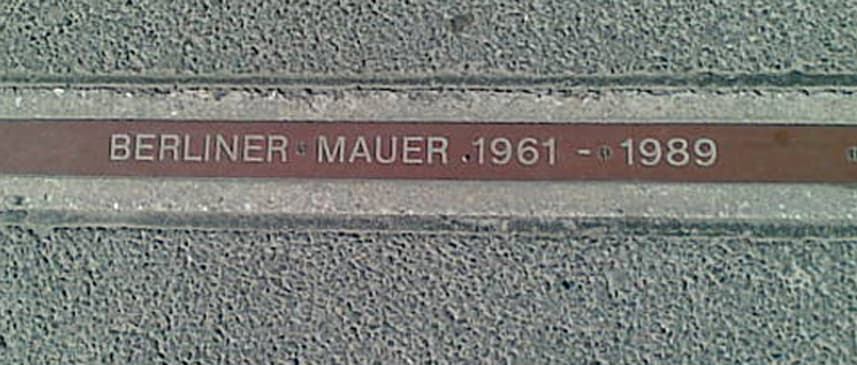
The Berlin Wall was a 155-kilometre fortified barrier erected by East Germany's communist government beginning on August 13, 1961, to stop the mass exodus of citizens fleeing to the democratic West. It physically divided the city of Berlin for 28 years, becoming the most potent symbol of the Iron Curtain and the Cold War divide between the Soviet bloc and the Western democracies. The Wall fell on November 9, 1989, triggering German reunification and signalling the imminent collapse of the Soviet Union.
What Was the Berlin Wall and Why Was It Built?
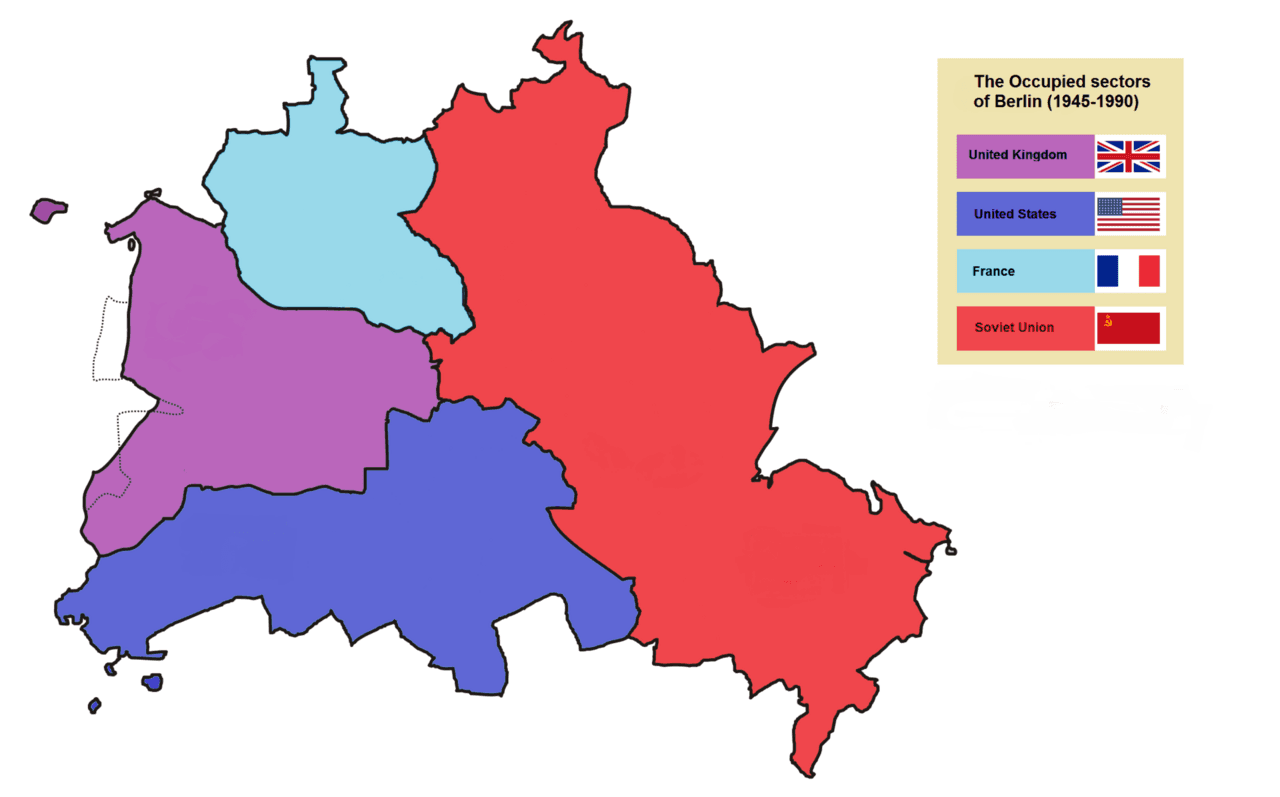
After World War II ended in 1945, Germany was divided into four occupation zones controlled by the United States, Britain, France, and the Soviet Union. Berlin, deep inside the Soviet zone, was similarly split. By 1949, two separate states had emerged: the Federal Republic of Germany (West Germany) in the west and the German Democratic Republic, or GDR (East Germany), in the east. West Berlin remained a democratic enclave surrounded by communist territory—and an irresistible escape route. Between 1949 and 1961, approximately 3.5 million East Germans fled to the West through Berlin, including vast numbers of doctors, engineers, and teachers whose departure was crippling the GDR's economy. East German leader Walter Ulbricht lobbied Soviet Premier Nikita Khrushchev relentlessly for permission to seal the border. Khrushchev, himself embarrassed by the haemorrhage of people choosing capitalism over communism, finally agreed in the summer of 1961. The construction order was issued in secret, and in the early hours of August 13, 1961—dubbed 'Barbed Wire Sunday'—East German soldiers and workers began sealing the border with barbed wire and temporary barriers almost overnight.
How Was the Berlin Wall Constructed and What Did It Look Like?
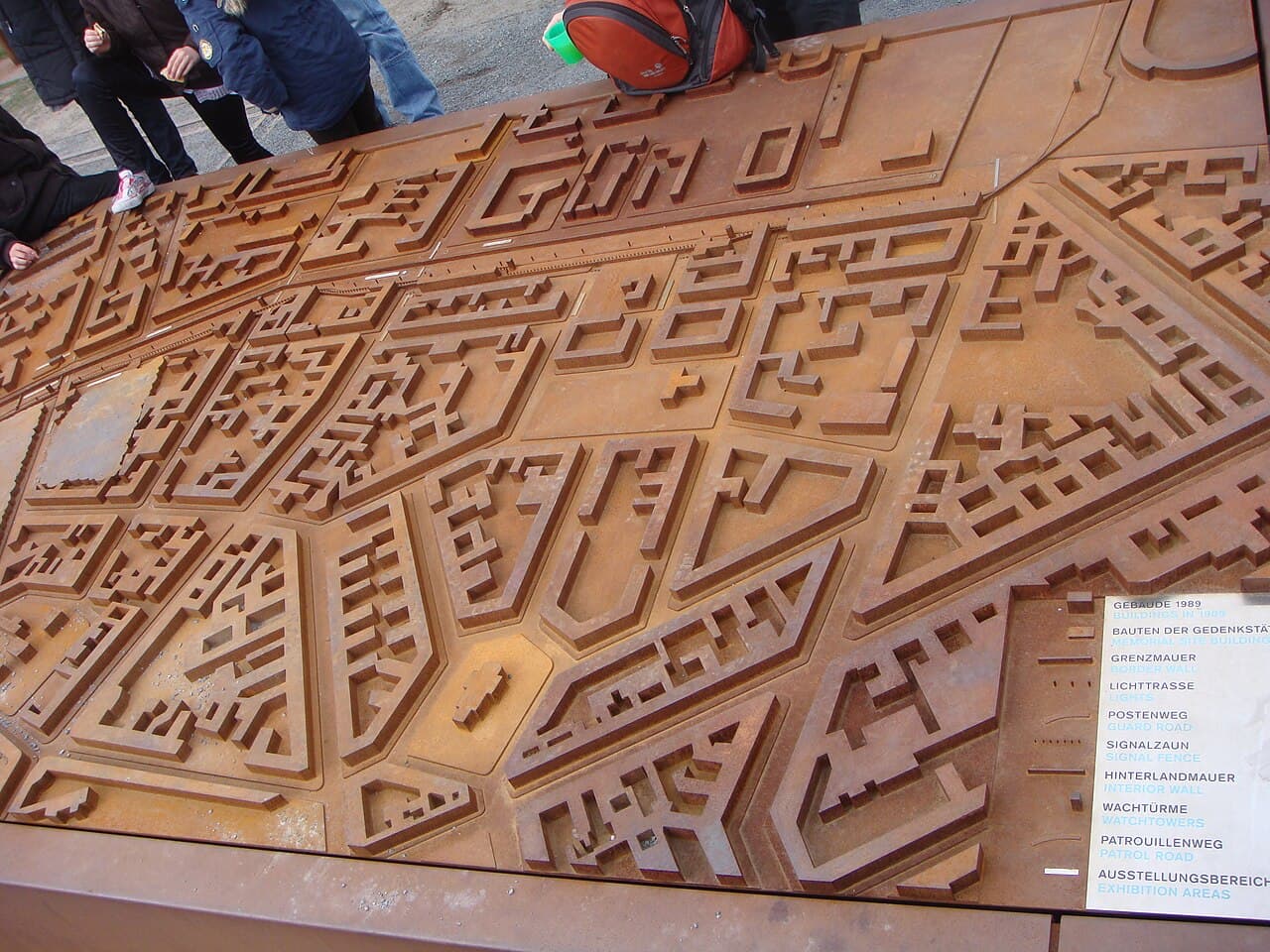
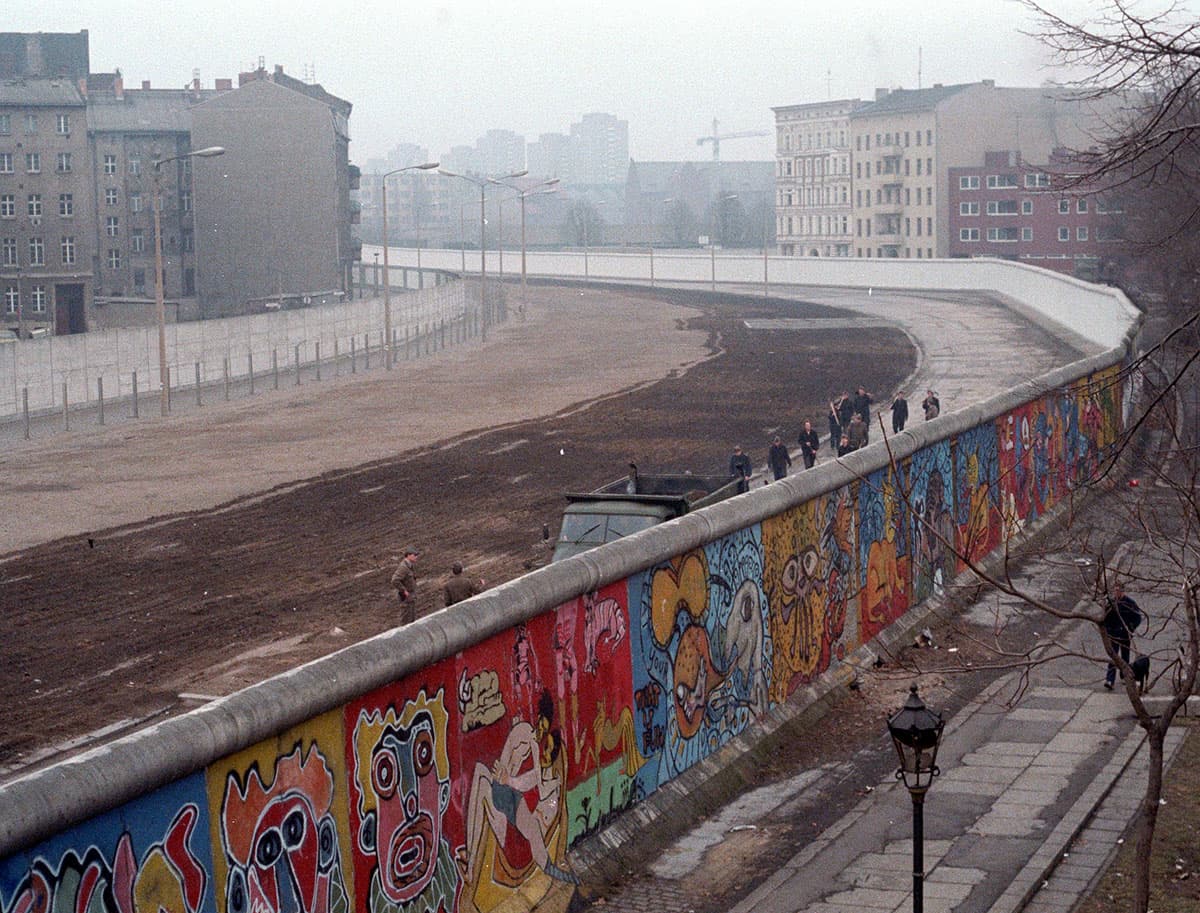
What began as barbed wire rapidly evolved into a sophisticated multi-layered fortification system. The final version of the Wall, largely in place by the mid-1970s, was anything but a simple concrete partition. The most visible element was a 3.6-metre-high (roughly 12 feet) smooth-topped concrete wall running through the city. Behind it, on the eastern side, lay a 'death strip'—a no-man's-land between 30 and 500 metres wide depending on location—equipped with anti-vehicle trenches, raked sand to reveal footprints, tripwires, and attack dogs on long running lines. Approximately 302 watchtowers were staffed around the clock by border guards, known as Grenztruppen, who operated under the infamous Schießbefehl—a shoot-to-kill order authorising them to fire on anyone attempting to cross without authorisation. The barrier was not one wall but two parallel barriers encircling all of West Berlin, incorporating 20 bunkers, 259 dog runs, and 65 kilometres of anti-vehicle ditches. At least 140 official checkpoints existed, the most famous being Checkpoint Charlie at Friedrichstraße, the sole crossing point for non-German civilians and Allied personnel.
How Many People Died Trying to Cross the Berlin Wall?
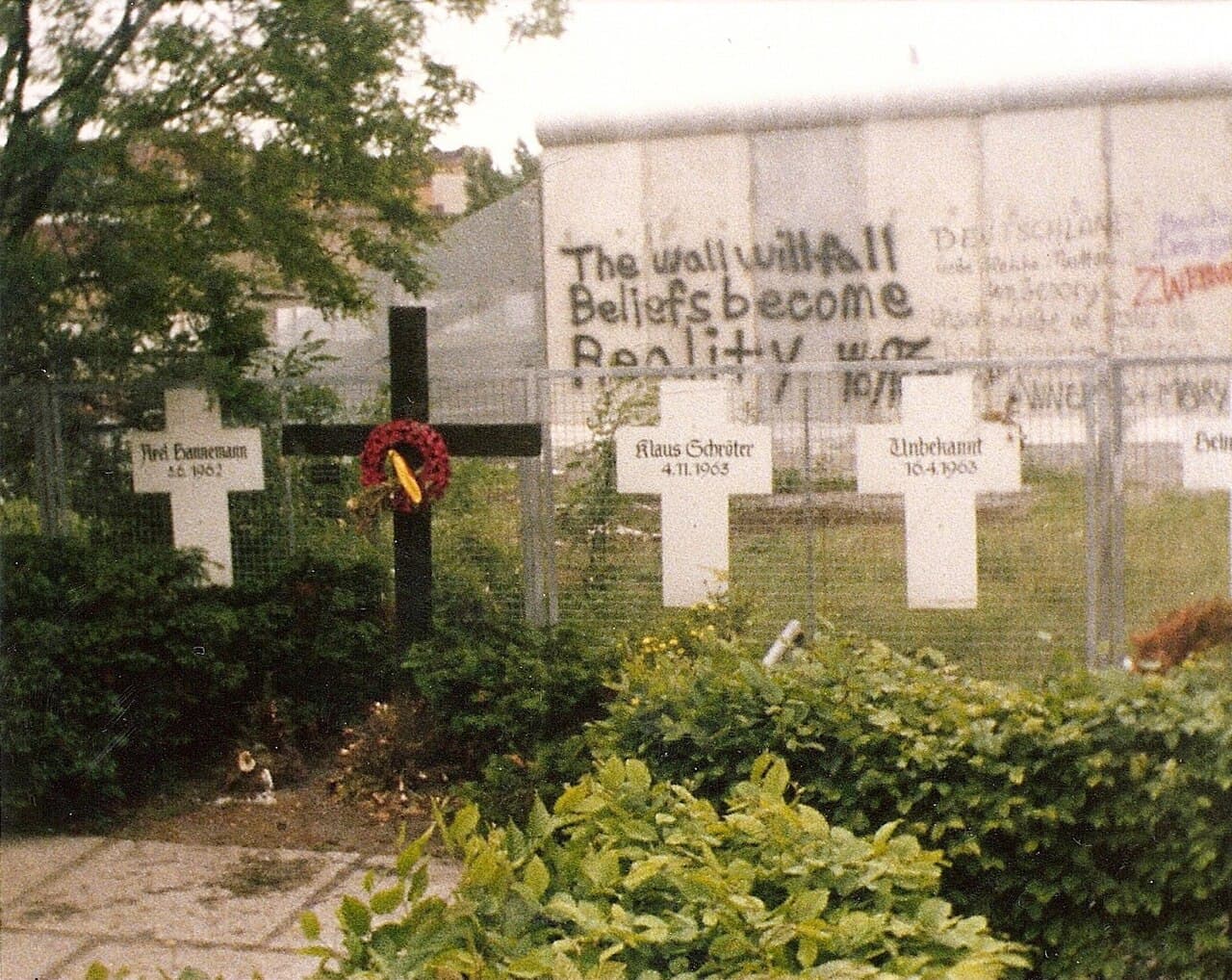
The exact death toll at the Berlin Wall remains a subject of ongoing historical research. The Berlin Wall Memorial's scholarly project, the most rigorous investigation to date, has confirmed at least 140 people killed at the Wall between 1961 and 1989. Other researchers cite estimates as high as 200 or more when accounting for those who died from injuries, heart attacks during escape attempts, or in circumstances less directly documented. The first confirmed death was Günter Litfin, a 24-year-old tailor shot on August 24, 1961, just 11 days after construction began. The most internationally publicised death was that of 18-year-old Peter Fechter, who was shot on August 17, 1962, and bled to death in the death strip over the course of nearly an hour while Western observers and press watched helplessly. The last person killed attempting to cross was Chris Gueffroy, shot on February 6, 1989—just nine months before the Wall fell. Despite the danger, an estimated 5,000 people successfully escaped across the Wall during its 28-year existence, using methods ranging from tunnels and hot-air balloons to homemade zip lines and concealment in car trunks.
What Were the Most Daring Escape Attempts Over the Berlin Wall?
The ingenuity of escape attempts from East to West Berlin became legendary. In September 1962, a group of students and friends dug 'Tunnel 29'—a 135-metre tunnel from Bernauer Straße that allowed 29 people to escape in a single night, later documented by NBC News. In 1979, two East German families—the Strelzyks and Wetzels—spent two years secretly sewing together a hot-air balloon from scraps of fabric and floated 28 kilometres to freedom, a story later dramatised in the 1982 Disney film 'Night Crossing.' Conrad Schumann became iconic in an August 15, 1961 press photograph showing him leaping over barbed wire while still in his border guard uniform—the image was published worldwide within hours. Wolfgang Engels, in April 1963, drove an armoured personnel carrier directly into the Wall, got stuck, was shot twice, and was rescued by West Berliners who pulled him through the wire to freedom. Early escapes in 1961 were relatively straightforward—people simply jumped from windows of buildings on Bernauer Straße that abutted the border—but East German authorities quickly bricked up those windows and eventually demolished entire apartment blocks to eliminate such vulnerabilities.
How Did the Berlin Wall Affect Daily Life in a Divided City?
The Wall's construction overnight severed families, friendships, and entire communities with no warning. Around 60,000 East Berliners who had commuted daily to work in the West found themselves suddenly unable to reach their jobs. Thousands of families were separated, sometimes permanently, for decades. West Berlin itself, though economically supported by West Germany through significant subsidies and an 'air bridge' mentality inherited from the 1948-49 Soviet blockade, became an isolated democratic island. The city's population declined as people chose not to live in an encircled city; the West German government offered financial incentives—including tax breaks and exemptions from military service—to encourage residents to stay. East Berlin, meanwhile, was developed as a showpiece of communist achievement, with grand Stalinist-style boulevards like Karl-Marx-Allee, while ordinary East Germans endured chronic shortages of consumer goods, restricted travel, and pervasive surveillance by the Stasi secret police, which by 1989 employed one informant for every 63 citizens. The Brandenburg Gate, once the symbolic heart of a unified Berlin, stood sealed and inaccessible in the death strip from 1961 until 1989.
What Famous Speeches Were Made at the Berlin Wall?
The Wall became a stage for some of the most memorable political rhetoric of the twentieth century. On June 26, 1963, US President John F. Kennedy delivered his 'Ich bin ein Berliner' speech to a crowd of approximately 450,000 West Berliners at Rudolph Wilde Platz. Declaring solidarity with the besieged city and condemning the Wall as 'an offense against humanity,' Kennedy transformed what had been a defensive Western stance into a powerful moral statement. More than two decades later, on June 12, 1987, President Ronald Reagan stood at the Brandenburg Gate and issued his famous challenge: 'Mr. Gorbachev, tear down this wall!' The speech, initially opposed by Reagan's own State Department and National Security Council as too provocative, was delivered before an estimated 45,000 people and broadcast across West Germany. Reagan's challenge gained its full resonance only in retrospect—the Wall fell just 29 months later. East German authorities jammed West German radio and television broadcasts of the speech to prevent East Berliners from hearing it.
Why Did the Berlin Wall Fall on November 9, 1989?
The Wall's collapse resulted from a cascade of political failures, popular pressure, and a single bureaucratic blunder broadcast live on television. By 1989, Soviet leader Mikhail Gorbachev's policies of glasnost (openness) and perestroika (restructuring) had signalled that Moscow would no longer intervene militarily to prop up Eastern European communist governments, as it had in Hungary in 1956 and Czechoslovakia in 1968. Mass protests erupted across East Germany throughout the autumn of 1989, most dramatically the Monday Demonstrations in Leipzig, which drew 70,000 people on October 9 and swelled to 300,000 by October 16. On October 18, East German leader Erich Honecker, who had presided over the country since 1971, was forced to resign and was replaced by Egon Krenz. Hungary had already opened its border with Austria in May 1989, allowing East Germans to flee west through a third country; by November, over 50,000 had escaped via this route. On the evening of November 9, 1989, East German Politburo spokesman Günter Schabowski held a press conference at which he announced new travel regulations allowing East Germans to cross the border freely. When a journalist asked when the regulations would take effect, Schabowski shuffled his papers, looked up, and replied: 'Immediately, without delay.' He had not been present at the meeting where the policy was decided and was unaware it was intended to take effect the following morning with an orderly registration process. The announcement was broadcast live across East and West German television. Within hours, tens of thousands of East Berliners descended on the checkpoints demanding passage. Overwhelmed and receiving no orders to use force, border guards stood aside. Crowds from both sides climbed atop the Wall and began chipping away at it with hammers. The most significant barrier of the Cold War fell not by military force or diplomatic agreement, but by accident.
What Happened After the Berlin Wall Fell?
The fall of the Wall accelerated events at extraordinary speed. Germany's formal reunification occurred on October 3, 1990—less than 11 months after the Wall's opening. The GDR was dissolved and its 16 million citizens incorporated into the Federal Republic. The economic and social costs of reunification proved enormous: by 1991, East German industrial output had fallen by two-thirds, and unemployment in the former GDR rose above 30 percent. The West German government transferred over 1.5 trillion euros to the former East over the following two decades in reconstruction funds. The Wall's physical demolition was largely completed by 1990, carried out partly by contractors and partly by the so-called Mauerspechte ('Wall Woodpeckers')—ordinary citizens who chipped away at the concrete as souvenirs and symbols of liberation. Today, less than two kilometres of the original Wall remain standing. The longest intact section, the East Side Gallery at 1.3 kilometres along Mühlenstraße, was transformed in 1990 into the world's largest open-air gallery, featuring 105 murals painted by artists from 21 countries. The Wall's fall also accelerated the dissolution of the Soviet Union itself, which officially ceased to exist on December 25, 1991.
What Is the Berlin Wall's Legacy Today?
The Berlin Wall remains one of history's most powerful symbols of ideological division and the human cost of authoritarianism. The Berlin Wall Memorial on Bernauer Straße, established in 1998 and expanded significantly in 2010, preserves a 1.4-kilometre section of the border strip with documentation centre, outdoor exhibitions, and a Chapel of Reconciliation built on the site of a church demolished by East German authorities in 1985. Annual commemoration ceremonies on November 9 draw thousands of visitors. The term 'wall' has entered political vocabulary as shorthand for any divisive barrier, and debates about walls—physical and metaphorical—still invoke the Berlin Wall as the defining modern precedent. Sociologists and economists continue to document the 'wall in the head' (Mauer im Kopf)—persistent social, economic, and attitudinal differences between former East and West Germans. Average wages in the former East remain approximately 20 percent below the western average as of the early 2020s, and political behaviour continues to differ measurably, with parties like the AfD and Die Linke performing significantly stronger in eastern states. The 28 years the Wall stood is precisely equal to the number of years that had passed between its fall in 1989 and 2017—a milestone that prompted widespread reflection on how long its shadow still falls.
| Key Statistic | Figure | Context |
|---|---|---|
| Total length of barrier | 155 km | Encircled all of West Berlin |
| Height of concrete wall | 3.6 metres | Smooth-topped to prevent grip |
| Watchtowers | 302 | Staffed 24 hours a day |
| Confirmed deaths at the Wall | At least 140 | Per Berlin Wall Memorial research |
| Successful escapes | ~5,000 | Over 28 years |
| Years the Wall stood | 28 years | August 13, 1961 – November 9, 1989 |
| East Germans who fled via Hungary (1989) | Over 50,000 | After Hungary opened its border in May 1989 |
| Cost of German reunification (transfers to East) | Over €1.5 trillion | Transferred over two decades post-1990 |
| East Side Gallery murals | 105 | Painted by artists from 21 countries in 1990 |