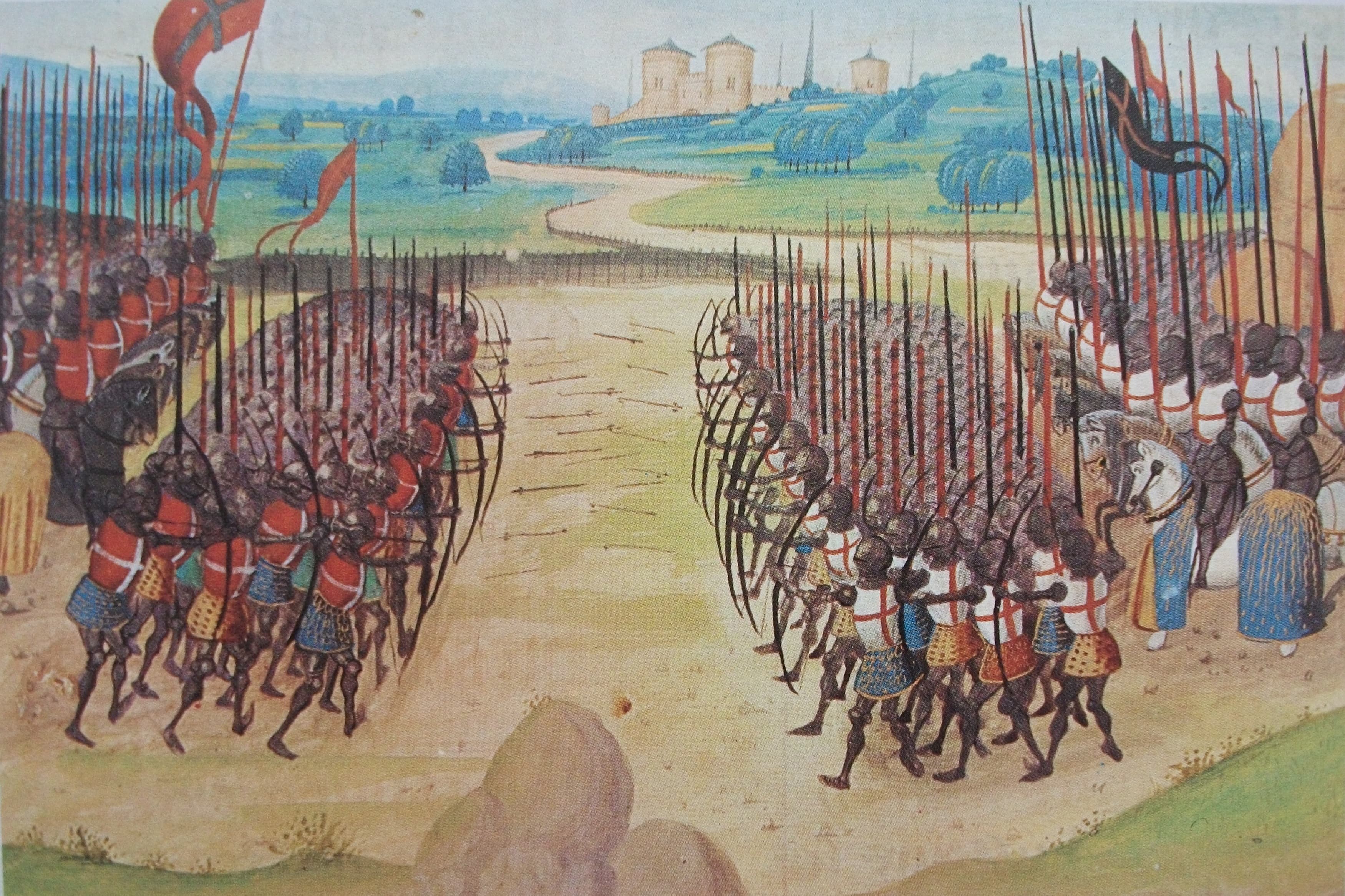
The Hundred Years' War was a series of armed conflicts between the kingdoms of England and France lasting from 1337 to 1453 — a total of 116 years. It was fought primarily over England's claim to the French throne and control of prosperous territories such as Gascony and Normandy. The war fundamentally reshaped both nations, gave rise to French national identity, produced the legendary figure of Joan of Arc, and accelerated the decline of medieval chivalric warfare in favour of professional armies and longbow tactics.
What Were the Causes of the Hundred Years' War?
The war's origins were rooted in a tangled web of dynastic rivalry, feudal obligation, and economic competition stretching back more than a century before the first arrows flew. At its core was a succession crisis. When King Charles IV of France died in 1328 without a male heir, the French crown passed to his cousin Philip VI of the House of Valois. England's Edward III, however, claimed he had a stronger right to the throne through his mother Isabella, daughter of Philip IV of France. The French applied Salic law — which barred inheritance through the female line — to exclude Edward, a decision he formally rejected in 1337 when he declared himself King of France, igniting the conflict. Beyond dynasty, the two crowns clashed over the Duchy of Gascony in southwest France, a wealthy wine-producing region held by English kings as a fief of the French crown since 1152. Edward III resented performing homage to Philip VI for Gascony, and Philip used every feudal pretext to threaten English control of it. A third trigger was Flanders. The cloth-manufacturing Flemish towns depended on English wool imports and frequently sided with England against their French overlords, making Flanders a strategic battleground. Finally, French support for Scotland — the 'Auld Alliance' — meant that England faced a two-front threat, giving Edward additional motivation to strike decisively at France.
How Was the Hundred Years' War Divided Into Phases?
Historians conventionally divide the war into four distinct phases separated by truces and treaties. The Edwardian Phase (1337–1360) saw England achieve stunning victories at Sluys (1340), Crécy (1346), and the capture of Calais (1347). The Caroline Phase (1369–1389) reversed English fortunes as the French, under the brilliant constable Bertrand du Guesclin, employed Fabian tactics to recapture most of what the Treaty of Brétigny (1360) had ceded to England. The Lancastrian Phase (1415–1429) brought England's greatest triumphs — Agincourt (1415) and the Treaty of Troyes (1420), which made Henry V heir to the French throne. Finally, the French Resurgence (1429–1453) saw Joan of Arc inspire a reversal that drove the English from all of France except Calais by 1453.
What Happened at the Battle of Crécy in 1346?
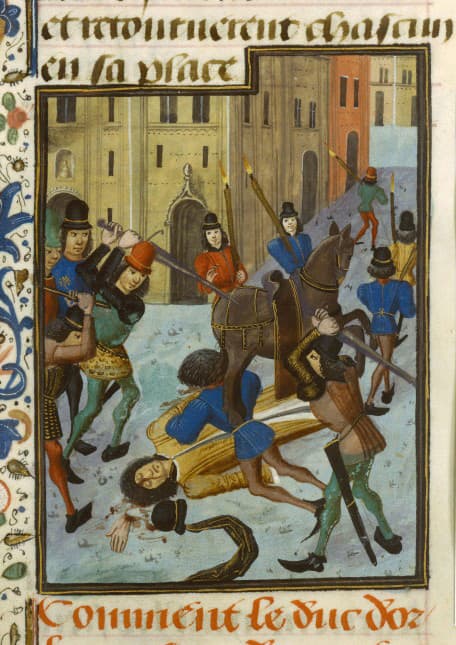
The Battle of Crécy on 26 August 1346 was one of the most decisive engagements in medieval military history and demonstrated the devastating effectiveness of the English longbow. Edward III positioned approximately 12,000–15,000 troops on a ridge near Crécy-en-Ponthieu in northern France. Philip VI commanded a French force estimated at 30,000–40,000, including Genoese crossbowmen and over 1,200 knights. The English longbowmen — trained yeomen capable of firing 10–12 arrows per minute — unleashed a storm of armour-piercing arrows that shredded the Genoese crossbowmen and halted successive French cavalry charges. Philip launched 15–16 cavalry charges over the course of the day; all failed. French casualties numbered roughly 1,500 knights and nobles, including King John of Bohemia, who famously died asking to strike one blow despite being blind. English losses were under 200. Crécy shattered the myth of mounted knightly supremacy and foreshadowed similar carnage at Poitiers (1356) and Agincourt (1415).
Why Was the Battle of Agincourt (1415) So Significant?
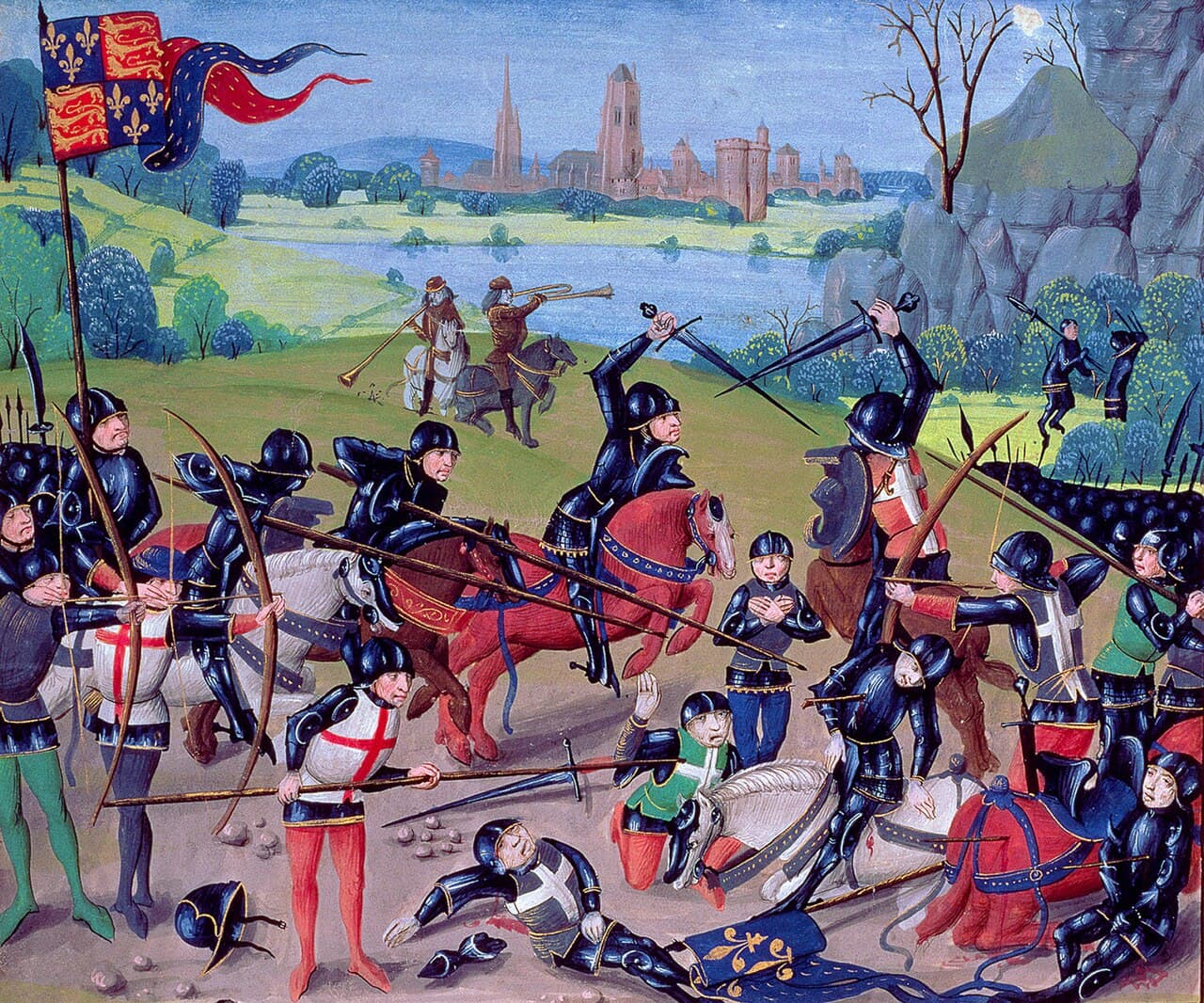
On 25 October 1415 — St Crispin's Day — Henry V of England led a force of roughly 6,000 exhausted soldiers, around 5,000 of them longbowmen, against a French army of approximately 12,000–36,000 men (estimates vary) at Agincourt in the Pas-de-Calais. The narrow, recently ploughed field funnelled the French men-at-arms into a killing ground where heavy mud slowed their advance. English archers drove sharpened stakes into the ground as anti-cavalry barriers and fired at close range. The result was catastrophic for France: between 6,000 and 10,000 French soldiers died, including three dukes, five counts, and 90 barons, compared to fewer than 100 English dead. Agincourt forced France to accept the Treaty of Troyes (May 1420), by which Henry V was recognised as regent and heir to the French throne, disinheriting the Dauphin Charles. Had Henry not died of dysentery at Vincennes on 31 August 1422 — only two months before the French king Charles VI — the entire history of France might have been rewritten.
Who Was Joan of Arc and How Did She Change the War?
Joan of Arc (Jeanne d'Arc) was born around 1412 in Domrémy, a village in the Duchy of Bar. At approximately 16 she began experiencing visions of saints — Michael, Catherine, and Margaret — that she interpreted as divine commands to expel the English and crown the Dauphin as rightful King of France. In early 1429, the French cause appeared hopeless: Reims, where French kings were traditionally crowned, was deep in English-controlled territory, and the strategic city of Orléans had been under siege since October 1428. Joan convinced the Dauphin Charles to give her command of a relief force, which she led to Orléans. In just nine days, between 4 and 8 May 1429, she broke the siege — a turning point that transformed French morale. On 17 July 1429, Charles VII was crowned at Reims, legitimising his reign. Joan was captured by Burgundian forces in May 1430, sold to the English, and tried for heresy and witchcraft by a pro-English ecclesiastical court at Rouen. She was burned at the stake on 30 May 1431, aged approximately 19. Her trial was declared null and void in 1456, and she was canonised by the Catholic Church in 1920. More than any military strategist, Joan restored French psychological confidence and gave the reconquest a spiritual dimension that proved unstoppable.
What Military Innovations Did the Hundred Years' War Produce?
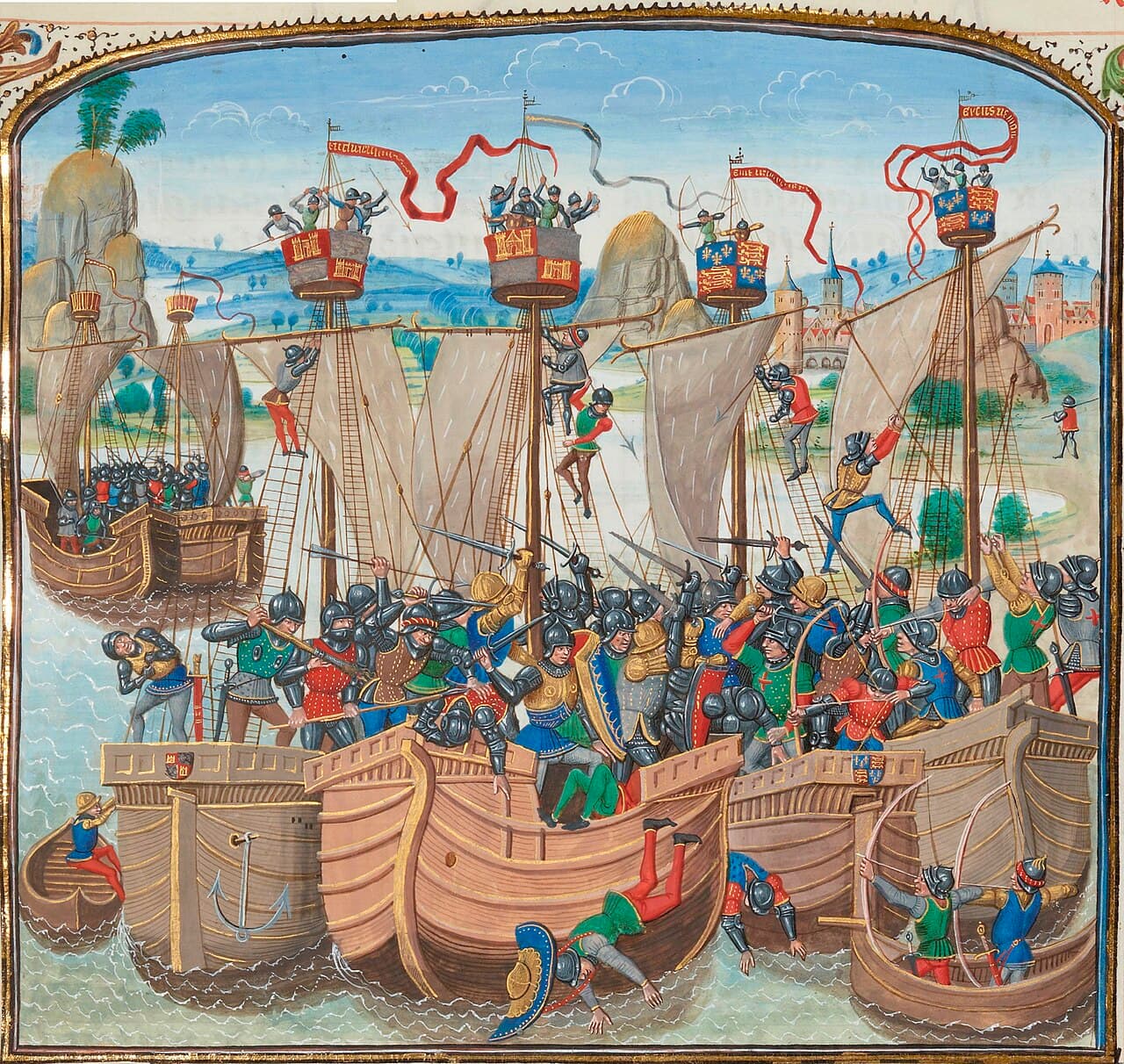
The war drove remarkable changes in military technology and organisation. The English longbow — a six-foot weapon of yew capable of penetrating plate armour at 100 yards — dominated the early phases, but its supremacy depended on trained yeoman archers who required years of practice from childhood. French strategists gradually learned to avoid pitched battles where English archers held the advantage, opting instead for siege warfare and scorched-earth tactics. More transformatively, the later stages of the war saw gunpowder artillery come of age. Jean Bureau, master of French artillery, used cannons to devastating effect during the final campaigns of 1449–1453, systematically reducing English-held fortresses in Normandy that had resisted siege for decades. At the Battle of Castillon on 17 July 1453, cannon fire destroyed the English relief force under John Talbot, Earl of Shrewsbury, effectively ending the war. The conflict also accelerated the replacement of feudal levies with paid professional soldiers, and stimulated developments in ship design following the naval Battle of Sluys (1340), where Edward III's fleet destroyed over 200 French ships.
| Battle | Date | Victor | Key Outcome |
|---|---|---|---|
| Sluys | 24 June 1340 | England | England gained naval supremacy in the Channel |
| Crécy | 26 August 1346 | England | Longbow devastates French cavalry; ~1,500 French nobles killed |
| Poitiers | 19 September 1356 | England | King John II of France captured; ransom paid 3m gold écus |
| Agincourt | 25 October 1415 | England | ~6,000–10,000 French killed; Treaty of Troyes 1420 |
| Orléans | 4–8 May 1429 | France | Joan of Arc breaks siege; French national revival begins |
| Patay | 18 June 1429 | France | French cavalry rout English archers; Talbot captured |
| Formigny | 15 April 1450 | France | France recovers Normandy; cannons defeat English archers |
| Castillon | 17 July 1453 | France | Final battle; Talbot killed; Gascony falls to France |
What Role Did the Black Death Play in the Hundred Years' War?
The Black Death — which struck Europe between 1347 and 1351 and killed an estimated one-third of its population — profoundly disrupted the war's trajectory. The plague forced Edward III to abandon a promising siege of Calais in 1349, and disrupted French and English recruitment for years. Both kingdoms lost enormous proportions of their agricultural and military workforce, straining the financial base needed to sustain campaigns. In France, the plague combined with the social upheaval of the Jacquerie peasant revolt of 1358 to weaken central royal authority, which paradoxically helped English military operations. Repeated outbreaks throughout the 14th century meant both sides frequently could not field or supply armies at full strength, contributing to the prolonged truces — such as the Truce of Bordeaux (1357) and Truce of Brétigny (1360) — that punctuated the conflict.
Why Did England Ultimately Lose the Hundred Years' War?
England's ultimate defeat resulted from a confluence of military, political, and demographic factors. Strategically, England never had the population base to occupy and administer a kingdom as large as France: England held roughly 2.5–3 million people against France's 10–12 million. Maintaining garrisons across Normandy, Gascony, and the Loire Valley required constant reinforcement from across the Channel, a logistical burden that became increasingly unsustainable. Politically, the English position was fatally undermined by the premature death of Henry V in 1422 and the subsequent regency for his infant son Henry VI, who grew into an ineffectual and mentally fragile ruler. French diplomacy successfully detached Burgundy — England's crucial ally — from the Anglo-Burgundian alliance through the Congress of Arras in 1435, isolating England and depriving it of the one continental power that could counterbalance French strength. France, under Charles VII, meanwhile modernised its military with the Compagnies d'ordonnance (1445), the first permanent standing army in Western Europe, and the Bureau brothers transformed French artillery into the most effective in the continent. England's longbow army, victorious at Crécy and Agincourt, simply had no answer to cannon fire at Formigny and Castillon. By 23 October 1453 — the conventional end date — England retained only Calais (held until 1558) and the Channel Islands from all its French possessions.
What Was the Legacy and Long-Term Impact of the Hundred Years' War?
The Hundred Years' War left legacies that shaped European history for centuries. In France, the war forged a sense of national identity around the crown and the French language, displacing the fragmented loyalties of feudalism. Joan of Arc became the supreme symbol of French nationhood, invoked during the Revolution, the Napoleonic era, and the Resistance of World War II. The war also permanently ended English ambitions of ruling France: the loss of Normandy and Gascony forced English kings to focus on Britain itself, eventually driving Tudor expansion into Wales, Ireland, and Scotland. In England, returning soldiers from France brought military experience and weapons that fed directly into the Wars of the Roses (1455–1487), as rival noble factions — many led by veterans — fought for the English crown. Economically, the loss of Gascony devastated the English wine trade and Bordeaux merchants, while the long campaign in France left the English crown deeply in debt. In the broader history of warfare, the Hundred Years' War marked the transition from feudal to national armies, demonstrated the supremacy of disciplined infantry and projectile weapons over cavalry, and established artillery as the decisive arm of land warfare — a paradigm that would define European conflict for the next four centuries.