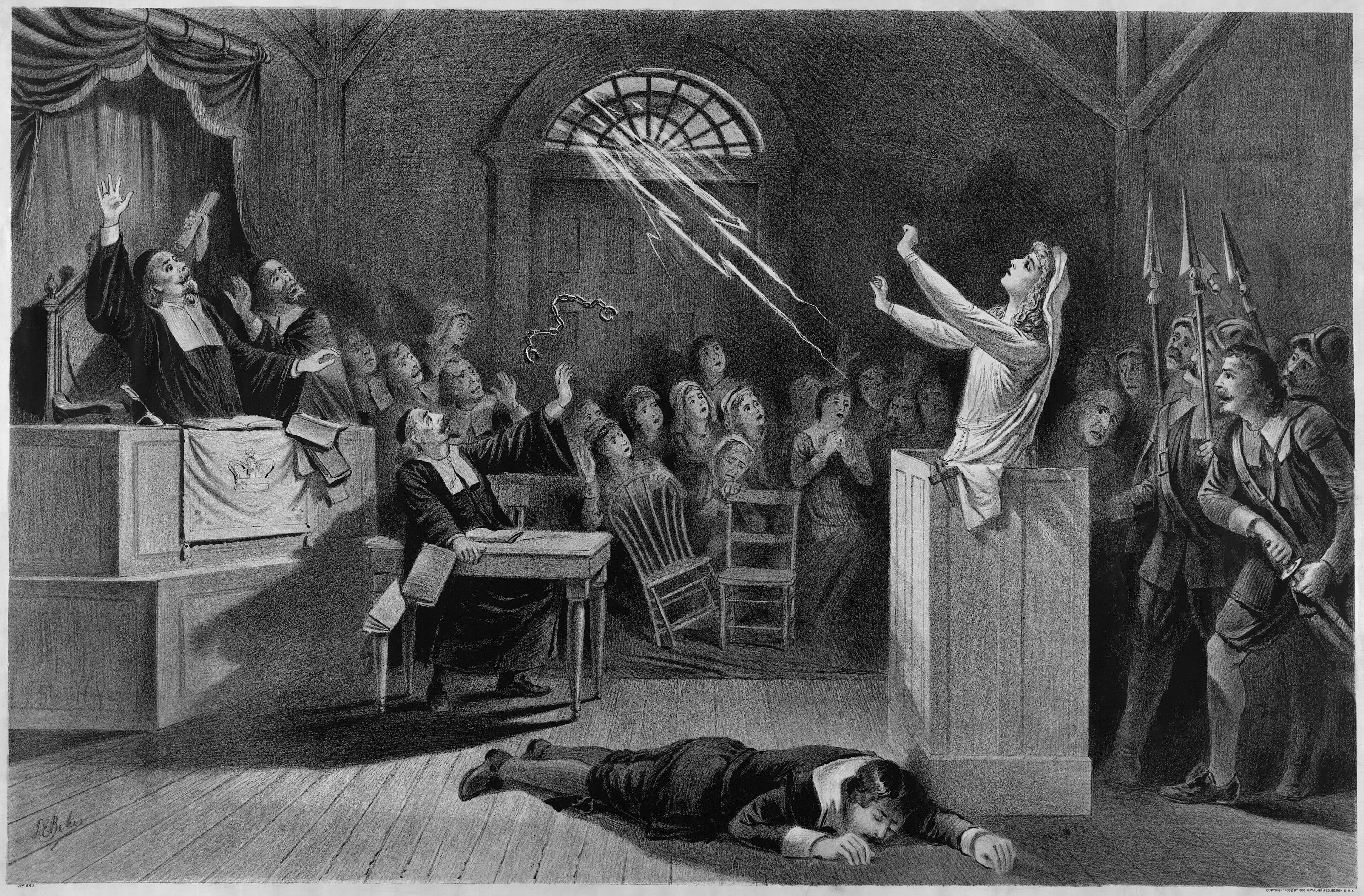
In the bitter winter of 1692, a cluster of young girls in Salem Village, Massachusetts, began convulsing, screaming, and claiming invisible tormentors were attacking them. Within months, an entire Puritan community had fractured under the weight of accusation, paranoia, and religious terror. By the time the crisis ended, twenty people had been executed and more than two hundred had been accused of practicing witchcraft. The Salem witch trials remain the most infamous episode of mass hysteria in American history — a cautionary tale about the lethal consequences of fear unchecked by reason.
A Community Primed for Crisis
Salem Village in 1692 was not a peaceful place even before the first accusations flew. The community had spent years locked in disputes over land boundaries, church leadership, and local politics. The village had recently installed a controversial new minister, Reverend Samuel Parris, whose demanding personality and salary disputes had already divided his congregation. Massachusetts itself was in political turmoil: the colony's original charter had been revoked in 1684, leaving its legal standing uncertain, and King Philip's War (1675–1678) had devastated nearby communities, leaving survivors traumatized and displaced. Smallpox outbreaks and a harsh winter compounded the misery. Into this volatile environment, the first accusations of witchcraft arrived with explosive force.
The First Accusations
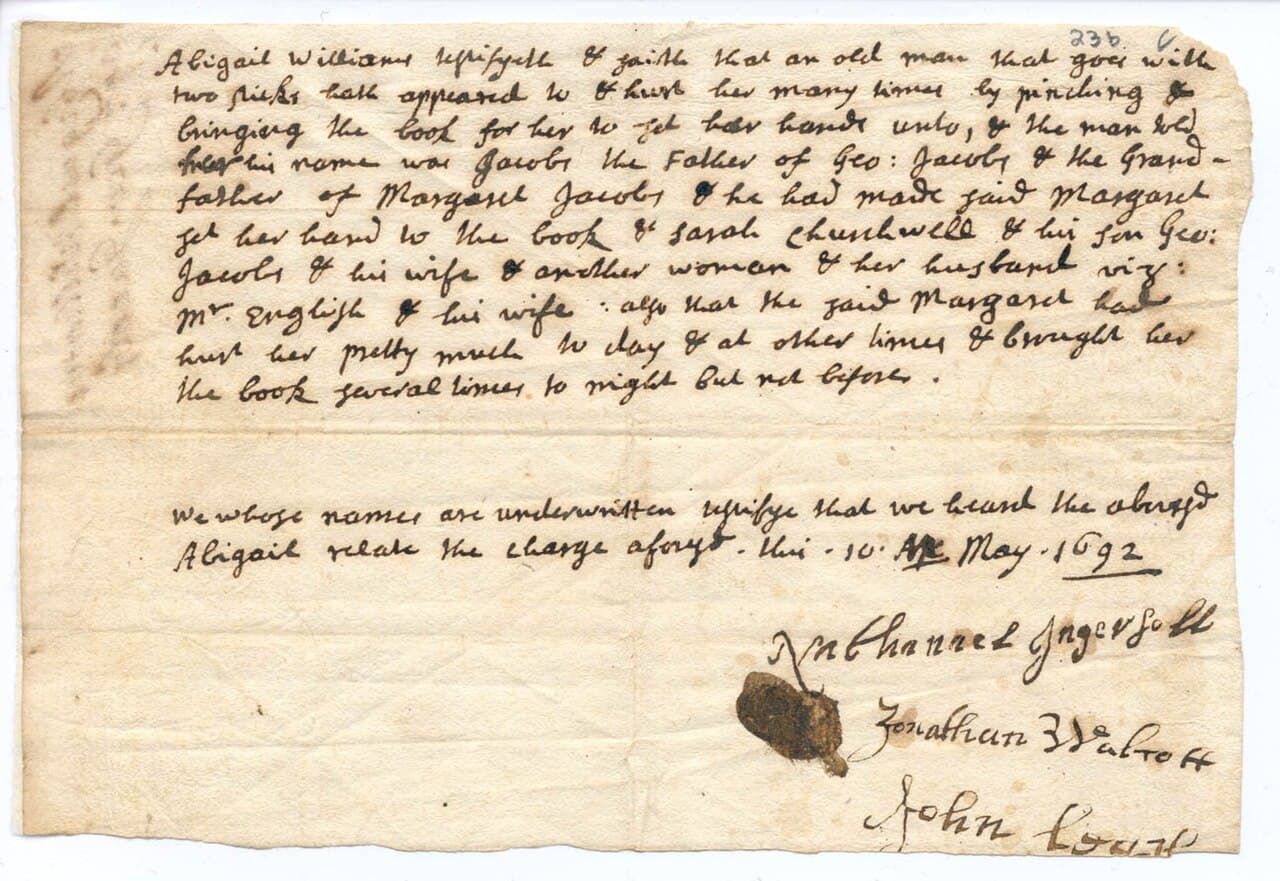
In January 1692, Reverend Parris's nine-year-old daughter Betty and her eleven-year-old cousin Abigail Williams began exhibiting alarming symptoms: violent fits, contorted postures, screaming, and claims of being bitten and pinched by unseen forces. A local doctor, William Griggs, could find no medical explanation and suggested the girls might be bewitched. Under pressure from community leaders and Parris himself to name their tormentors, the girls pointed fingers at three women: Tituba, a Caribbean enslaved woman in the Parris household; Sarah Good, a destitute homeless woman; and Sarah Osborne, an elderly woman who had scandalized the community by failing to attend church. All three existed at the margins of Puritan society — exactly the kind of people a frightened community might single out.
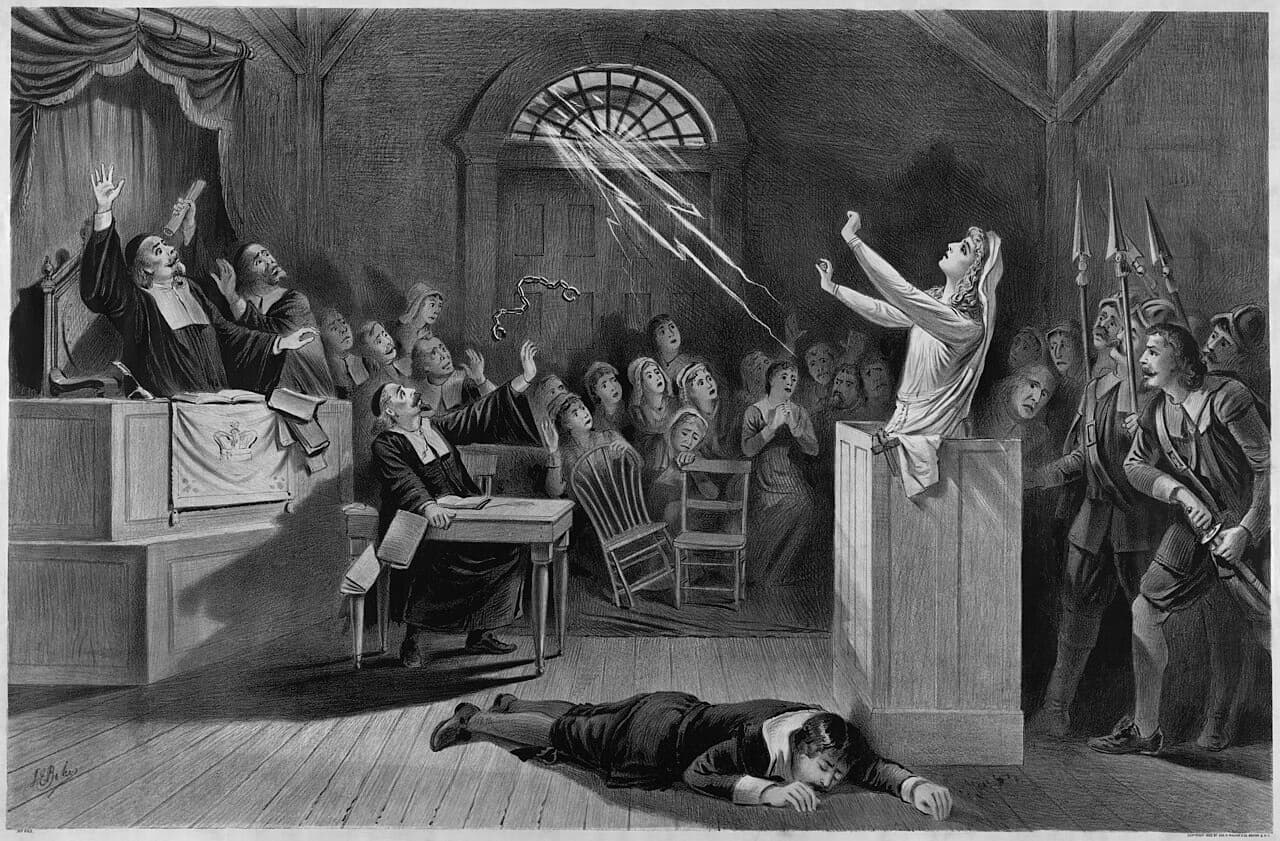
Tituba's confession proved pivotal and catastrophic. Under interrogation — and almost certainly under duress — she delivered a vivid, theatrical account of meeting the devil, signing his book, and flying through the air on sticks. Rather than face immediate condemnation, her confession temporarily spared her life, but it also validated the court's belief that a witchcraft conspiracy was spreading through Salem. Her testimony opened the floodgates. Accusations multiplied rapidly, leaping beyond the village's fringe members to implicate respected church members, prosperous landowners, and eventually the governor's own wife.
The Court of Oyer and Terminer
As accusations multiplied beyond the capacity of local magistrates, the newly appointed Governor William Phips established a special Court of Oyer and Terminer in May 1692 to try the accused. The court was presided over by Chief Justice William Stoughton, a hardline Puritan who became the driving judicial force behind the executions. The court made a fateful and deeply controversial decision: it would admit 'spectral evidence' — testimony that the accused person's spirit or specter had appeared to the witness in a dream or vision. This standard made it virtually impossible to mount a defense. An accused person could not disprove what existed only in someone else's mind.
The first to be hanged was Bridget Bishop on June 10, 1692. She was followed by waves of executions through the summer. Nineteen people in total were hanged on Gallows Hill. One man, eighty-year-old Giles Corey, refused to enter a plea — likely to protect his estate from seizure — and was pressed to death beneath heavy stones over two days, reportedly uttering 'More weight' as his final words. At least five more people died in prison while awaiting trial.
The Accused: Who Were They?
| Name | Status | Fate |
|---|---|---|
| Bridget Bishop | Tavern keeper, previously accused | Hanged, June 10, 1692 |
| Rebecca Nurse | Respected church member, age 71 | Hanged, July 19, 1692 |
| George Burroughs | Former Salem Village minister | Hanged, August 19, 1692 |
| Giles Corey | Farmer, age 80 | Pressed to death, September 19, 1692 |
| Mary Easty | Church member, sister of Rebecca Nurse | Hanged, September 22, 1692 |
| Tituba | Enslaved woman, first confessor | Imprisoned, later sold and freed |
| Sarah Good | Homeless woman, early accused | Hanged, July 19, 1692 |
The Tide Turns
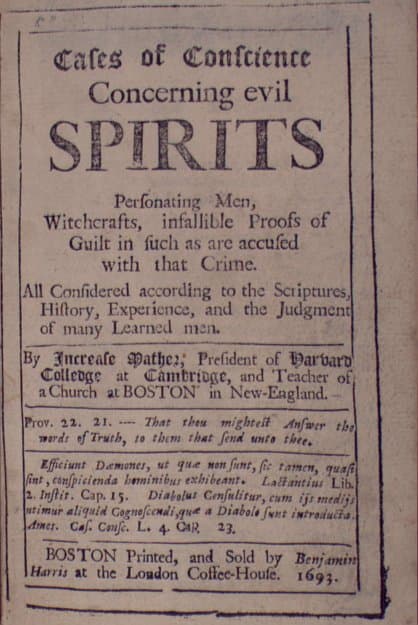
By autumn 1692, doubts about the proceedings were growing louder. Prominent Boston minister Increase Mather published 'Cases of Conscience Concerning Evil Spirits' in October, arguing forcefully that spectral evidence was unreliable and that it was better for ten witches to escape than for one innocent person to be condemned. Governor Phips, whose own wife had been accused, dissolved the Court of Oyer and Terminer in late October. A new Superior Court was established that disallowed spectral evidence, and the remaining accused were either acquitted or pardoned. The last prisoners were released from jail in May 1693.
The reckoning came slowly but genuinely. In 1697, Judge Samuel Sewall publicly repented his role in the trials, standing before his congregation as a statement of his guilt was read aloud — one of the few officials to take personal responsibility. In 1711, the Massachusetts General Court passed a bill reversing the attainders of most of the condemned and paid restitution to survivors and families. Ann Putnam Jr., one of the primary accusers, issued a public apology in 1706. It was not until 1957, however, that Massachusetts formally exonerated the last of the accused — and in 2001, the state legislature finally cleared the names of the final five victims.
Legacy: Why Salem Still Matters
The Salem witch trials have resonated far beyond their historical moment. Arthur Miller's 1953 play 'The Crucible' used Salem as an allegory for McCarthyism, cementing the trials as a universal symbol of politically motivated persecution. Scholars have proposed numerous explanations for the crisis over the centuries: ergot poisoning from contaminated rye bread, social tensions between farming and merchant classes, post-traumatic stress from frontier warfare, and the particular vulnerabilities of a theocratic legal system. No single theory fully accounts for the hysteria, which was almost certainly the product of overlapping stresses — psychological, political, economic, and religious.
What Salem teaches most powerfully is how quickly institutions designed to protect a community can become instruments of destruction when fear displaces due process. The willingness to condemn based on unverifiable testimony, the social incentives that rewarded accusation and punished skepticism, and the failure of community leaders to restrain a runaway legal process — these are not uniquely seventeenth-century failures. They are perennial human vulnerabilities. Salem endures in the American memory not merely as a historical tragedy, but as a mirror held up to warn every generation that follows.