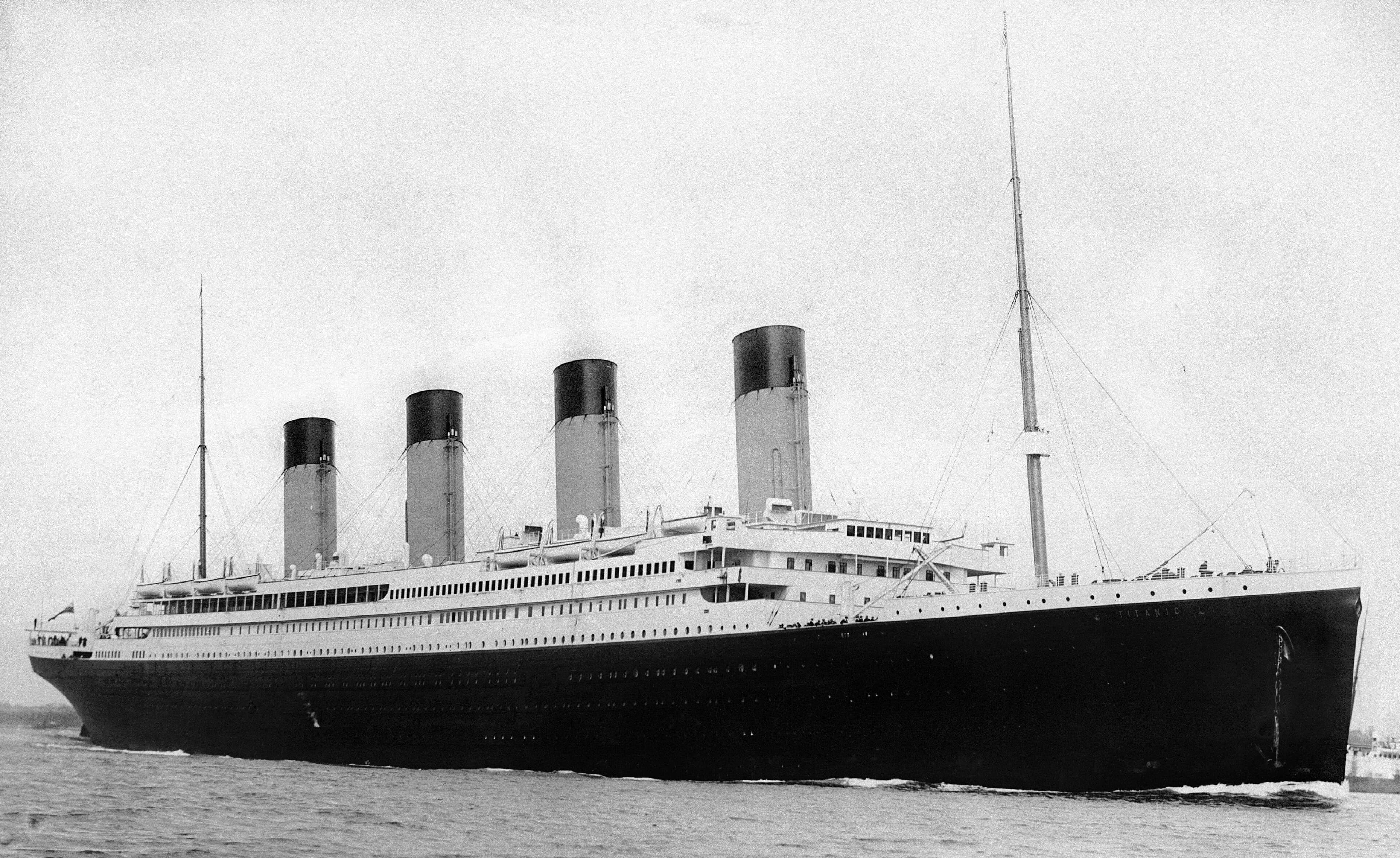
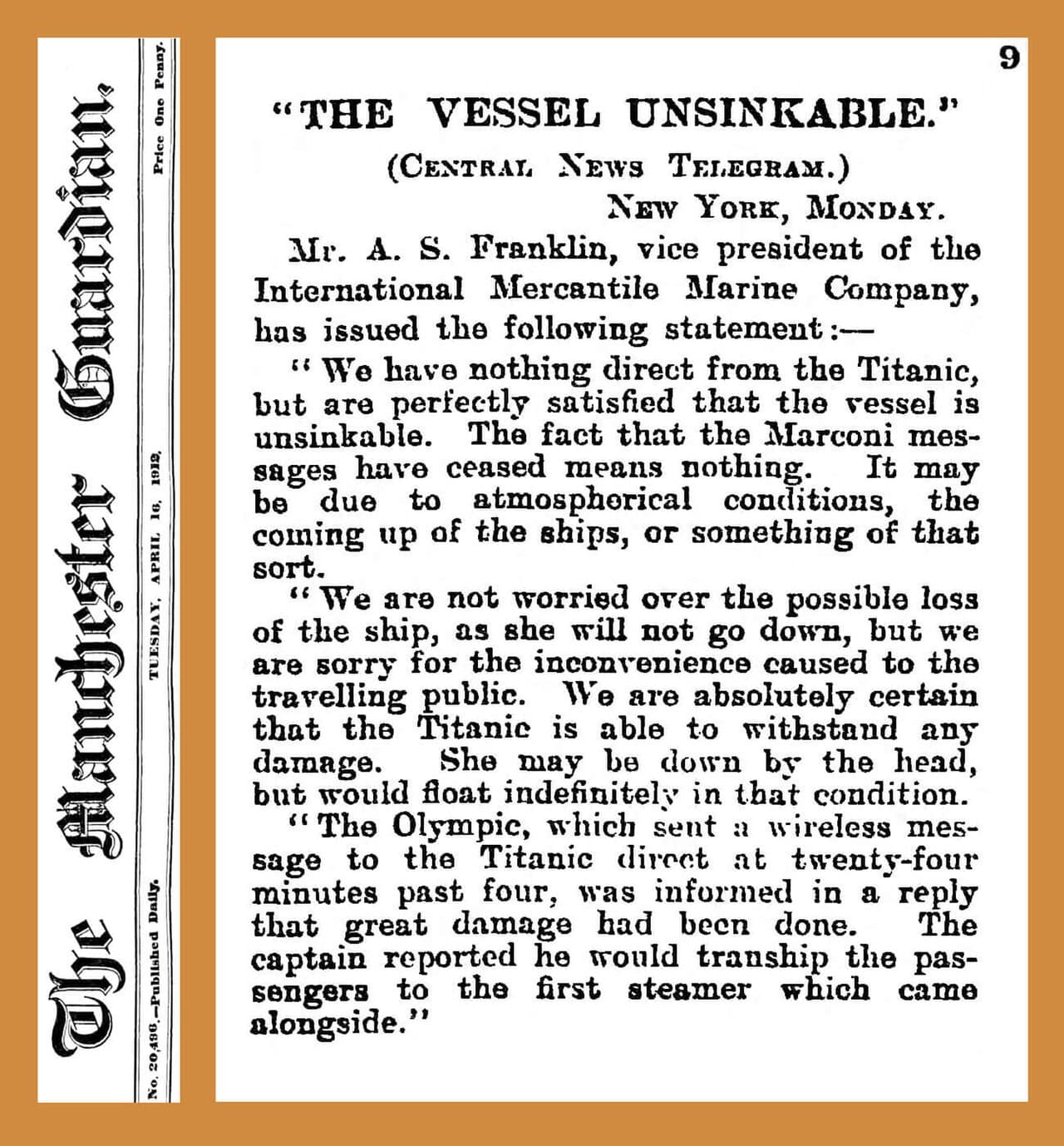
At 11:40 p.m. on April 14, 1912, lookout Frederick Fleet spotted a dark mass looming out of the North Atlantic darkness and rang the crow's nest bell three times — the signal for danger ahead. Within seconds, First Officer William Murdoch ordered the engines reversed and the helm hard to starboard. It was already too late. The RMS Titanic, the largest and most celebrated ship ever built, sideswiped an iceberg at approximately 22.5 knots. Less than three hours later, she lay two miles beneath the surface of the ocean, taking more than 1,500 souls with her.
The sinking of the Titanic is not merely a tale of a ship going down. It is a story about human hubris, class inequality, technological overconfidence, and the capricious cruelty of fate — a narrative so potent it has never ceased to captivate the world's imagination.
Building the Dream: A Ship of Superlatives
The Titanic was conceived in 1907 by J. Bruce Ismay, chairman of the White Star Line, and Lord William James Pirrie of the Harland and Wolff shipyard in Belfast. Their ambition was to outclass competitors — particularly the Cunard Line's Lusitania and Mauretania — not in speed, but in sheer scale and luxury. The result was a trio of sister ships: the Olympic, the Titanic, and the Britannic.
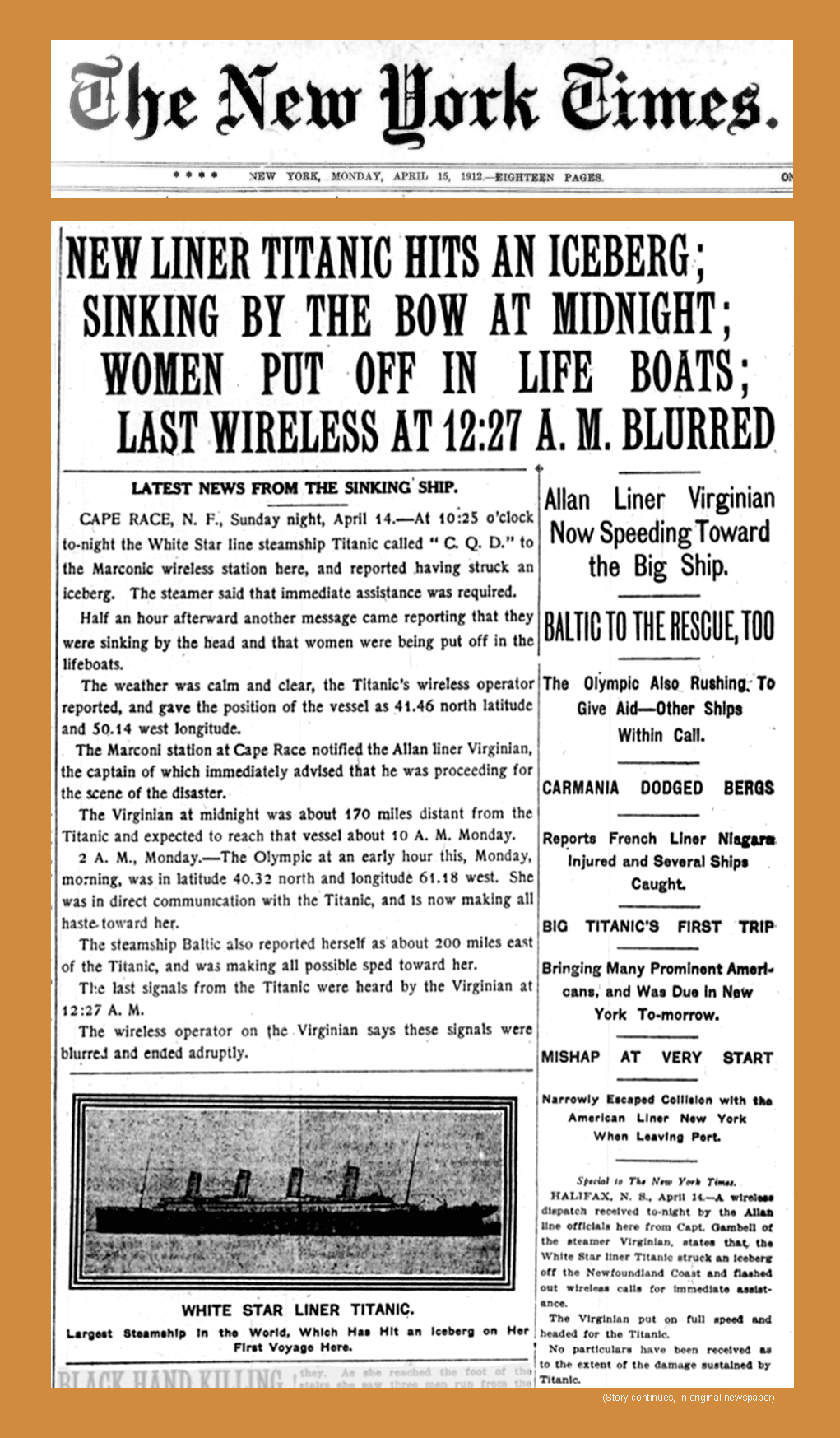
At 882 feet long and 46,328 gross tons, the Titanic was a floating palace. Her first-class accommodations featured a Turkish bath, a swimming pool, a gymnasium, multiple dining saloons, and a Parisian café. First-class passengers paid the equivalent of over $100,000 in today's money for a suite. Third-class, or steerage, passengers — many of them emigrants seeking new lives in America — paid around $35, equivalent to roughly $1,000 today, and received comparatively modest but still reasonably comfortable berths.
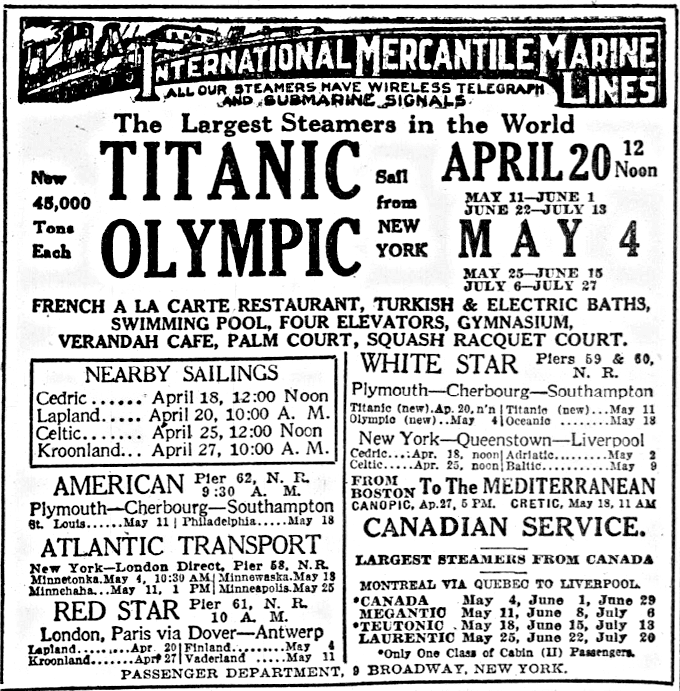
The ship was equipped with 16 watertight compartments and a double-bottom hull. She could remain afloat with up to four compartments flooded — a design that led many to describe her as 'practically unsinkable.' That phrase would prove catastrophically ironic. The iceberg punctured or buckled five compartments along her starboard bow, sealing her fate within minutes of impact.
The Maiden Voyage and a Fatal Night
The Titanic departed Southampton on April 10, 1912, stopping at Cherbourg, France, and Queenstown (now Cobh), Ireland, before striking out across the North Atlantic toward New York City. On board were some 2,224 passengers and crew, including some of the most prominent figures of the Gilded Age: businessman and millionaire John Jacob Astor IV, American socialite Margaret 'Molly' Brown, and White Star Line chairman J. Bruce Ismay himself.
Throughout April 14, the Titanic received multiple wireless warnings of ice in her path from other vessels. Captain Edward John Smith, a veteran mariner on his final voyage before planned retirement, did not significantly reduce speed — a decision consistent with the maritime practice of the era but one that would be scrutinized endlessly in the investigations that followed. That evening, the sea was unusually calm and starlit, conditions that paradoxically made ice harder to spot, as there were no waves breaking at the base of bergs.
After the collision, designer Thomas Andrews quickly surveyed the damage and delivered a grim assessment: the ship had an hour, perhaps an hour and a half, to live. The distress rockets were fired. The wireless operators sent out the newly adopted SOS signal as well as the traditional CQD. The nearest responding ship, the Carpathia, was 58 miles away — roughly four hours at full speed. The Titanic had perhaps 90 minutes.
Class, Chaos, and the Lifeboats
The Titanic carried 20 lifeboats, enough for only 1,178 people — roughly half of those on board, and well above the minimum required by the Board of Trade regulations of the time, which were woefully outdated. In the chaos of the sinking, many boats were launched only partially filled. Lifeboat No. 1, with a capacity of 40, left with just 12 people aboard.
Survival rates starkly reflected the ship's class divisions. Approximately 62 percent of first-class passengers survived, compared to 43 percent of second class and a devastating 25 percent of third class. The physical separation of third-class quarters deep in the ship, combined with language barriers and limited crew guidance, meant many steerage passengers never made it to the boat deck in time. Of the crew, only about 24 percent survived.
| Class | Aboard | Survived | Survival Rate |
|---|---|---|---|
| First Class | 325 | 202 | 62% |
| Second Class | 285 | 118 | 41% |
| Third Class | 706 | 178 | 25% |
| Crew | 908 | 212 | 23% |
| Total | 2,224 | 710 | 32% |
At 2:20 a.m. on April 15, 1912, the Titanic's stern rose into the night sky, her lights flickering out, before she split in two and plunged into the abyss. Those in the water died within minutes from hypothermia in the 28°F (-2°C) ocean. The Carpathia arrived around 4:00 a.m. and rescued 710 survivors.
Investigations, Reforms, and Reckoning
Both the United States Senate and the British Board of Trade launched formal inquiries. The American inquiry, led by Senator William Alden Smith, was notable for its swift convening and broad scope. Both investigations criticized the inadequacy of lifeboat provision, the excessive speed in known ice conditions, and failures of communication. J. Bruce Ismay, who had boarded a lifeboat and survived, faced public vilification on both sides of the Atlantic, condemned as a coward while so many others perished.
The disaster produced tangible and lasting reforms. In 1914, the first International Convention for the Safety of Life at Sea (SOLAS) was adopted, mandating that ships carry sufficient lifeboats for everyone aboard, and that lifeboat drills be conducted. The International Ice Patrol was established by the U.S. Coast Guard to monitor and report North Atlantic icebergs — a service that continues to this day.
Discovery, Memory, and Mythology
For 73 years, the Titanic lay undisturbed in the North Atlantic. On September 1, 1985, a joint American-French expedition led by oceanographer Dr. Robert Ballard located the wreck at a depth of approximately 12,500 feet (3,800 meters) off the coast of Newfoundland. The discovery revealed that the ship had broken in two as she sank — not, as many survivors had claimed, descended to the bottom intact. Subsequent dives recovered thousands of artifacts, now spread across museums worldwide.
The wreck is deteriorating rapidly due to the action of iron-eating bacteria and ocean currents. Scientists estimate that within decades, the recognizable structure of the hull may collapse entirely. The site has also been the subject of ongoing legal and ethical debate about the recovery and commercialization of artifacts from what many consider a mass grave.
James Cameron's 1997 film 'Titanic' reignited global fascination with the disaster, grossing over $2 billion worldwide and winning 11 Academy Awards. The story has inspired more than 200 non-fiction books, dozens of films, a Broadway musical, and countless exhibitions. In a tragic echo of Titanic mythology, the submersible Titan, operated by OceanGate, imploded in June 2023 during a tourist dive to the wreck site, killing all five people aboard.
Why the Titanic Still Matters
The Titanic endures in the human imagination because it crystallizes so many of modernity's deepest anxieties and contradictions. It was an emblem of the Edwardian faith in progress, technology, and industrial might — and it became the symbol of that faith's fragility. It exposed the brutal inequalities of a class-stratified society with savage literalness: your ticket price determined your chances of survival. And it reminded a generation drunk on technological confidence that nature remains indifferent to human ambition.
More than 110 years after she slipped beneath the North Atlantic, the Titanic continues to speak to us — about the price of hubris, the dignity of the lost, and the enduring need to ask hard questions whenever we declare anything unsinkable.