On the night of October 4, 1957, amateur radio operators around the world tuned their receivers to 20.005 MHz and heard something that would change history forever — a steady, rhythmic beep descending from the sky. The Soviet Union had just launched Sputnik 1, the world's first artificial satellite, and in doing so fired the opening shot in a contest that would consume two superpowers, consume billions of dollars, and ultimately push human beings beyond the cradle of Earth for the very first time.
The Space Race was, at its core, a proxy war fought not with bullets but with rockets. Between roughly 1957 and 1969, the United States and the Soviet Union competed relentlessly for supremacy beyond the atmosphere — each achievement a statement of ideological superiority, each failure a potential propaganda disaster. The stakes could not have felt higher: in the depths of the Cold War, the ability to loft a satellite into orbit implied the ability to loft a nuclear warhead onto any city on Earth.
The World Wakes Up: Sputnik and Its Shock
The United States had assumed it would be first into space. American scientists were openly planning a satellite launch as part of the International Geophysical Year (1957–58), and confidence in Western technological leadership was high. Sputnik shattered that confidence overnight. The polished aluminum sphere, roughly 58 centimeters in diameter and weighing just 83.6 kilograms, completed an orbit of Earth every 96 minutes. It was visible to the naked eye and audible on a transistor radio. Its message was unmistakable: the Soviets had arrived.
Washington responded with alarm bordering on panic. President Dwight D. Eisenhower attempted to downplay the achievement publicly while privately ordering an acceleration of American programs. Congress passed the National Defense Education Act in 1958, pouring federal money into science and mathematics education. That same year, NASA — the National Aeronautics and Space Administration — was formally established, replacing the older NACA and consolidating the nation's civilian space efforts under one roof.
The Soviet Juggernaut: Korolev's Secret Army
Behind the Soviet triumphs stood one towering figure whose name the Kremlin kept classified for decades: Sergei Pavlovich Korolev. A brilliant and stubborn engineer who had survived Stalin's gulags, Korolev served as Chief Designer of the Soviet space program, driving forward with visionary intensity. It was Korolev who masterminded not only Sputnik but the R-7 rocket that carried it — the world's first intercontinental ballistic missile repurposed for exploration.
The Soviets continued to rack up firsts at a dizzying pace. In November 1957, Sputnik 2 carried a dog named Laika into orbit — the first living creature to circle the Earth, though she did not survive the mission. In April 1961 came the achievement that electrified the world: cosmonaut Yuri Gagarin completed a single orbit of Earth aboard Vostok 1, becoming the first human being in space. His 108-minute flight made him an instant global icon. When asked afterward what he had seen, Gagarin reportedly smiled and said, 'The Earth is blue. How wonderful. It is amazing.'
America Fights Back: Mercury, Gemini, and the Apollo Gambit
The United States answered Gagarin with Alan Shepard's suborbital flight just 23 days later, on May 5, 1961. It was a modest response, but it signaled American resolve. Then, on May 25, 1961, President John F. Kennedy made one of the boldest declarations in modern political history, addressing Congress: 'I believe that this nation should commit itself to achieving the goal, before this decade is out, of landing a man on the Moon and returning him safely to the Earth.' The Apollo program was born — a $25 billion undertaking that would employ 400,000 people at its peak.
Project Mercury proved that Americans could endure spaceflight. John Glenn's orbital mission in February 1962 restored national pride. Project Gemini, running from 1961 to 1966, refined the techniques needed for a Moon mission: spacewalking, orbital rendezvous, and long-duration flight. With each Gemini mission, NASA's engineers were essentially rehearsing the steps Apollo would have to execute perfectly.
Tragedy struck both programs. On January 27, 1967, a fire ignited in the Apollo 1 command module during a ground test, killing astronauts Gus Grissom, Ed White, and Roger Chaffee. The Soviet program suffered its own disaster months later when cosmonaut Vladimir Komarov died during the troubled Soyuz 1 mission — the first in-flight fatality in spaceflight history. Both nations grieved and regrouped.
One Giant Leap: Apollo 11 and the Moon
By 1968, with Korolev dead and the Soviet Moon program beset by technical failures and internal rivalry, America had drawn level. Apollo 8 carried astronauts Frank Borman, James Lovell, and William Anders around the Moon at Christmas 1968 — the first humans to leave Earth's orbit. Anders captured the haunting 'Earthrise' photograph, an image that permanently altered how humanity perceived its home planet.
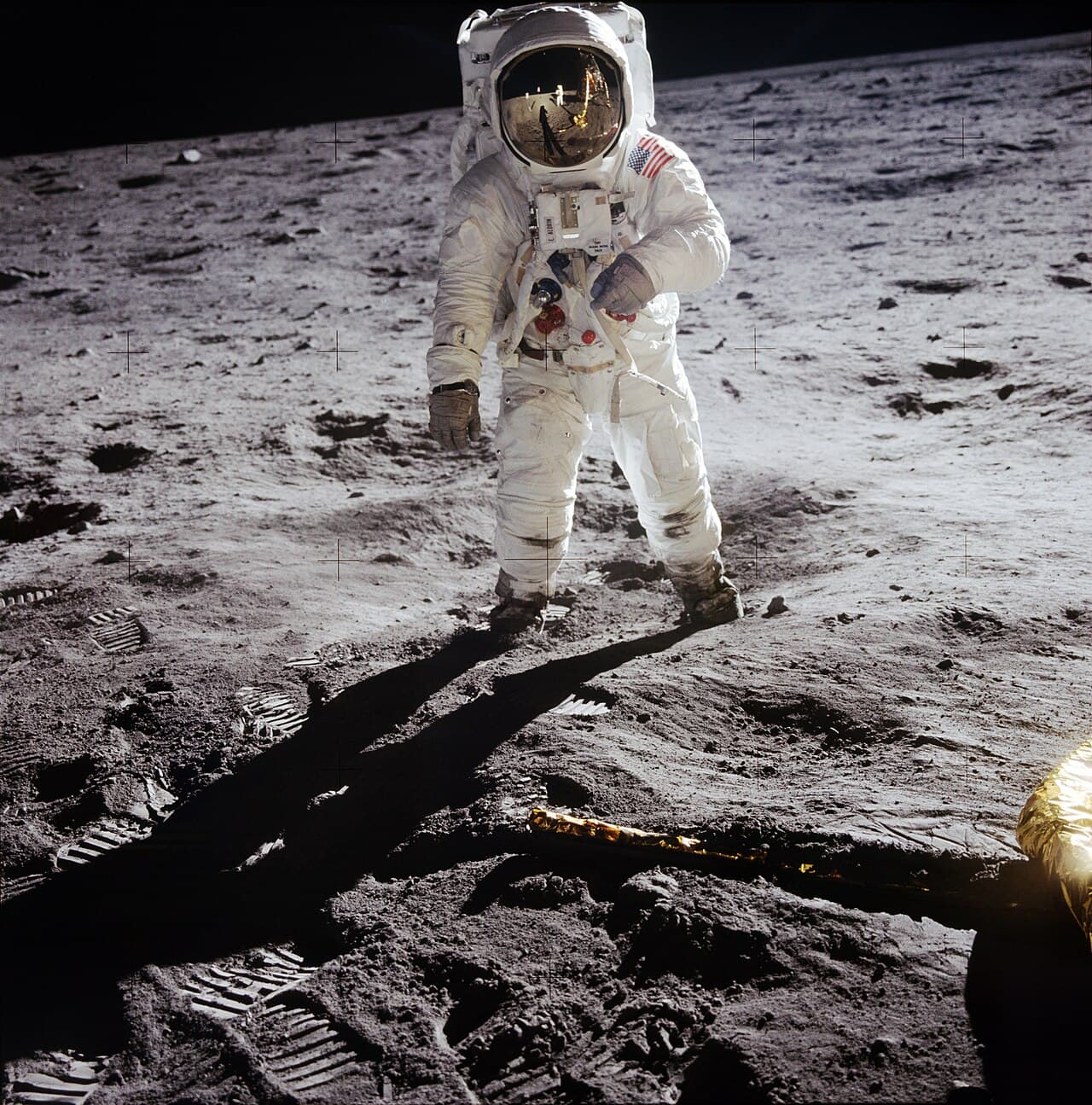
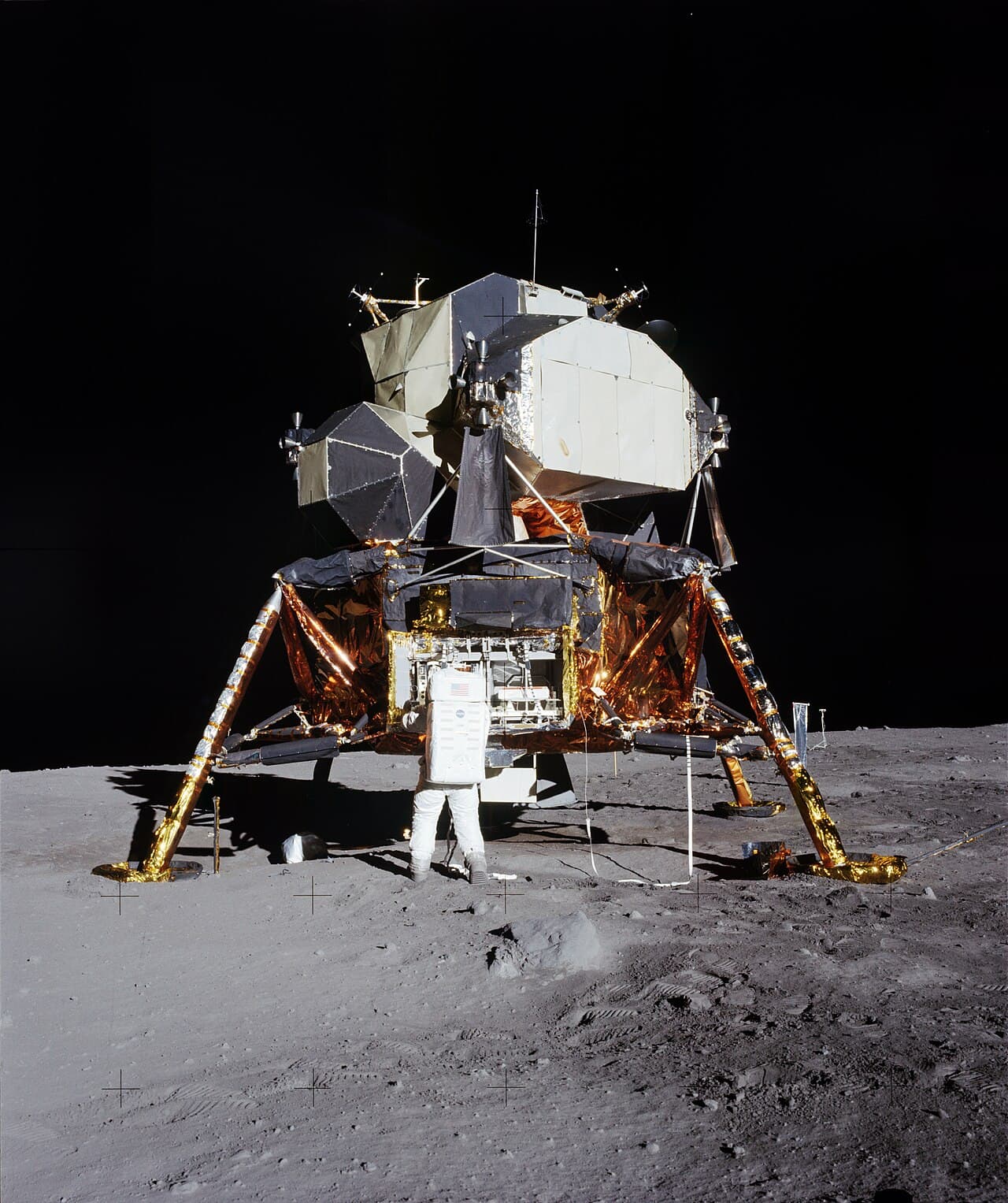
Then came July 20, 1969. Apollo 11 astronauts Neil Armstrong and Buzz Aldrin descended to the lunar surface in the Eagle lander while Michael Collins orbited above. At 10:56 PM EDT, Armstrong stepped onto the Moon's surface and spoke the words that echoed across every radio and television on Earth: 'That's one small step for man, one giant leap for mankind.' The United States had won the race. The Soviet Union, which had publicly denied competing for the Moon landing, quietly abandoned its crewed lunar program.
Legacy: What the Space Race Left Behind
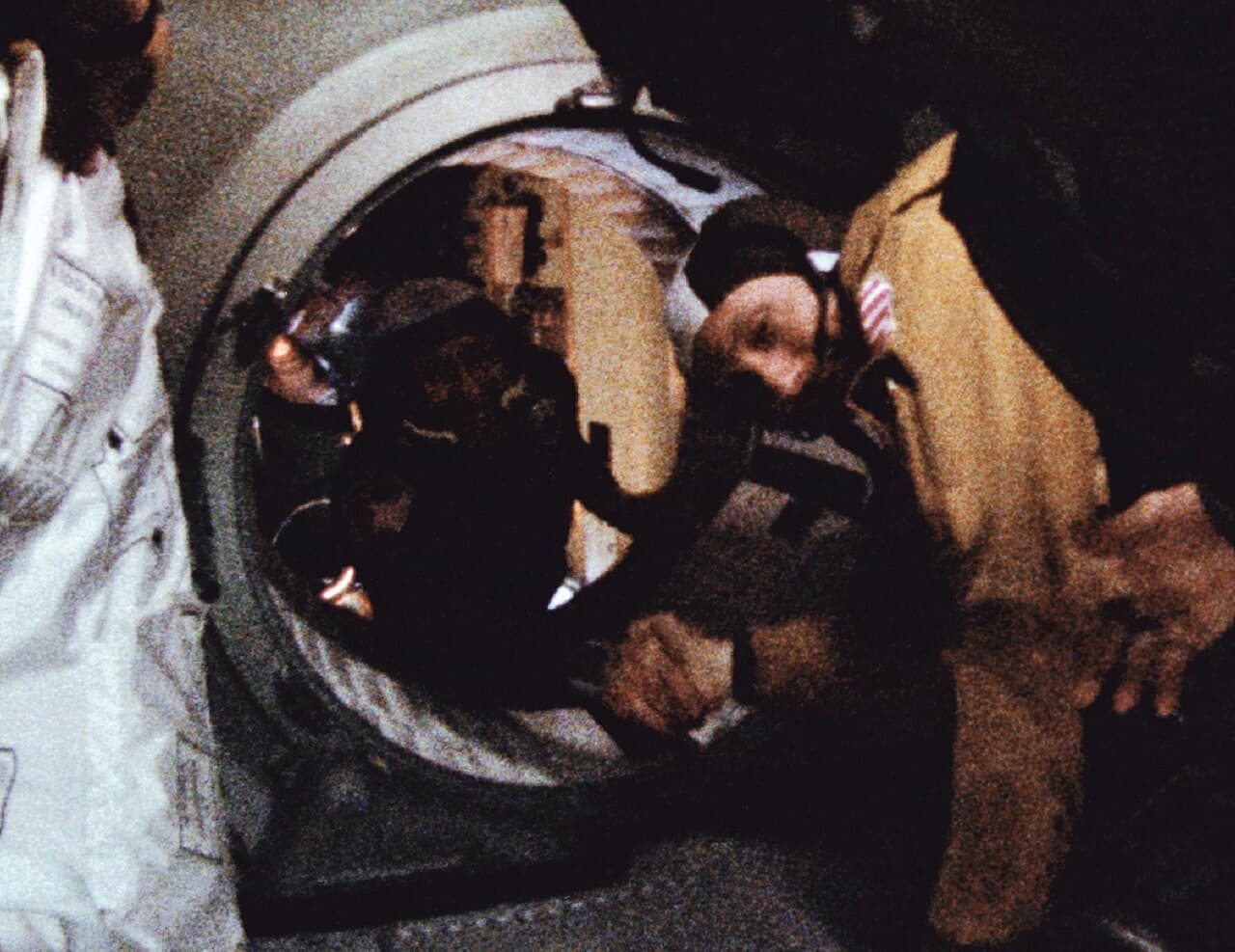
The Space Race did not end in 1969 — NASA flew five more successful lunar landings through 1972 — but the defining contest had been decided. Its legacy, however, transcends the politics that sparked it. The technologies developed during these frantic years gave humanity weather satellites, GPS precursors, freeze-dried food, memory foam, water filtration systems, and the integrated circuit advances that underpinned the digital revolution. NASA's Apollo Guidance Computer, tiny by the standards of its era, helped drive the miniaturization of electronics that led directly to the smartphone in your pocket.
Perhaps more profoundly, the Space Race forced humanity to see itself differently. The photographs of Earth from space — fragile, luminous, solitary against the black void — kindled the modern environmental movement and reshaped philosophy, art, and religion. In racing to outdo each other, the superpowers had inadvertently given all of humanity a mirror in which to see itself for the first time.
| Milestone | Nation | Date | Achievement |
|---|---|---|---|
| Sputnik 1 | USSR | Oct 4, 1957 | First artificial satellite |
| Laika / Sputnik 2 | USSR | Nov 3, 1957 | First animal in orbit |
| Explorer 1 | USA | Jan 31, 1958 | First American satellite |
| Yuri Gagarin / Vostok 1 | USSR | Apr 12, 1961 | First human in space |
| Alan Shepard / Freedom 7 | USA | May 5, 1961 | First American in space |
| John Glenn / Friendship 7 | USA | Feb 20, 1962 | First American to orbit Earth |
| Alexei Leonov / Voskhod 2 | USSR | Mar 18, 1965 | First spacewalk |
| Apollo 11 | USA | Jul 20, 1969 | First humans on the Moon |
Today, the United States and Russia — along with China, the European Space Agency, and a growing roster of private companies — cooperate and compete in orbit. The International Space Station has been continuously inhabited since November 2000, a symbol of what former rivals can build together. The Space Race was born of fear and rivalry, but it unlocked something larger: the permanent human presence beyond Earth, and the beginning of our species' long journey outward.