In the summer of 1945, the Allied powers celebrated the defeat of Nazi Germany and Imperial Japan with parades, tears, and relief. Yet within months, the uneasy alliance that had won the war began to fracture along a fault line of ideology, power, and suspicion. What emerged was not another world war fought with guns and tanks — at least not directly — but something stranger and more pervasive: a global contest of ideas, proxies, espionage, and nuclear brinkmanship that would define the second half of the twentieth century. The Cold War had begun.
Origins: A Fractured Alliance
The seeds of the Cold War were planted long before 1945. The United States and the Soviet Union had fundamentally incompatible visions of the post-war world. Washington championed liberal democracy and free-market capitalism; Moscow promoted Marxist-Leninist communism and Soviet-style centralized governance. Wartime cooperation had papered over these differences, but the Yalta Conference of February 1945 — where Roosevelt, Churchill, and Stalin divided Europe's future — exposed deep tensions over elections, sovereignty, and spheres of influence.
By 1947, the division was hardening rapidly. The Soviet Union installed communist governments across Eastern Europe, creating what Winston Churchill famously called an 'Iron Curtain' descending across the continent. President Harry Truman responded with the Truman Doctrine in March 1947, pledging U.S. support for free peoples resisting Soviet pressure, and the Marshall Plan, which pumped over $13 billion into rebuilding Western European economies — and cementing Western allegiances. The ideological battle lines were drawn.
Escalation: Bombs, Walls, and Proxy Wars
The Cold War accelerated dramatically when the Soviet Union tested its first atomic bomb in August 1949, shattering America's nuclear monopoly. Within a year, Communist forces under Mao Zedong had conquered mainland China, and North Korean troops crossed the 38th parallel, triggering a hot war in Korea that would claim over 36,000 American lives and millions of Korean and Chinese casualties. The Cold War was not always cold.
The arms race became the defining terror of the era. Both superpowers developed hydrogen bombs exponentially more destructive than the Hiroshima weapon. By the mid-1950s, the doctrine of Mutually Assured Destruction — grimly acronymed MAD — held that any nuclear exchange would annihilate both civilizations. This horror paradoxically served as a stabilizing force, preventing direct superpower conflict while fueling a frantic race for missiles, bombers, and submarines capable of delivering apocalypse from any corner of the globe.
The 1961 construction of the Berlin Wall became the Cold War's most visceral symbol. Overnight, East Germany sealed off its citizens from fleeing to the West, dividing families and turning a city into a living metaphor for the Iron Curtain. Meanwhile, proxy conflicts blazed across the developing world. In Vietnam, the United States committed over 500,000 troops in a failed effort to prevent communist unification. In Angola, Cuba, Afghanistan, and Central America, the superpowers funded, armed, and trained opposing factions in conflicts that killed millions of civilians who had little stake in the ideological contest above them.
The Cuban Missile Crisis: Thirteen Days at the Brink
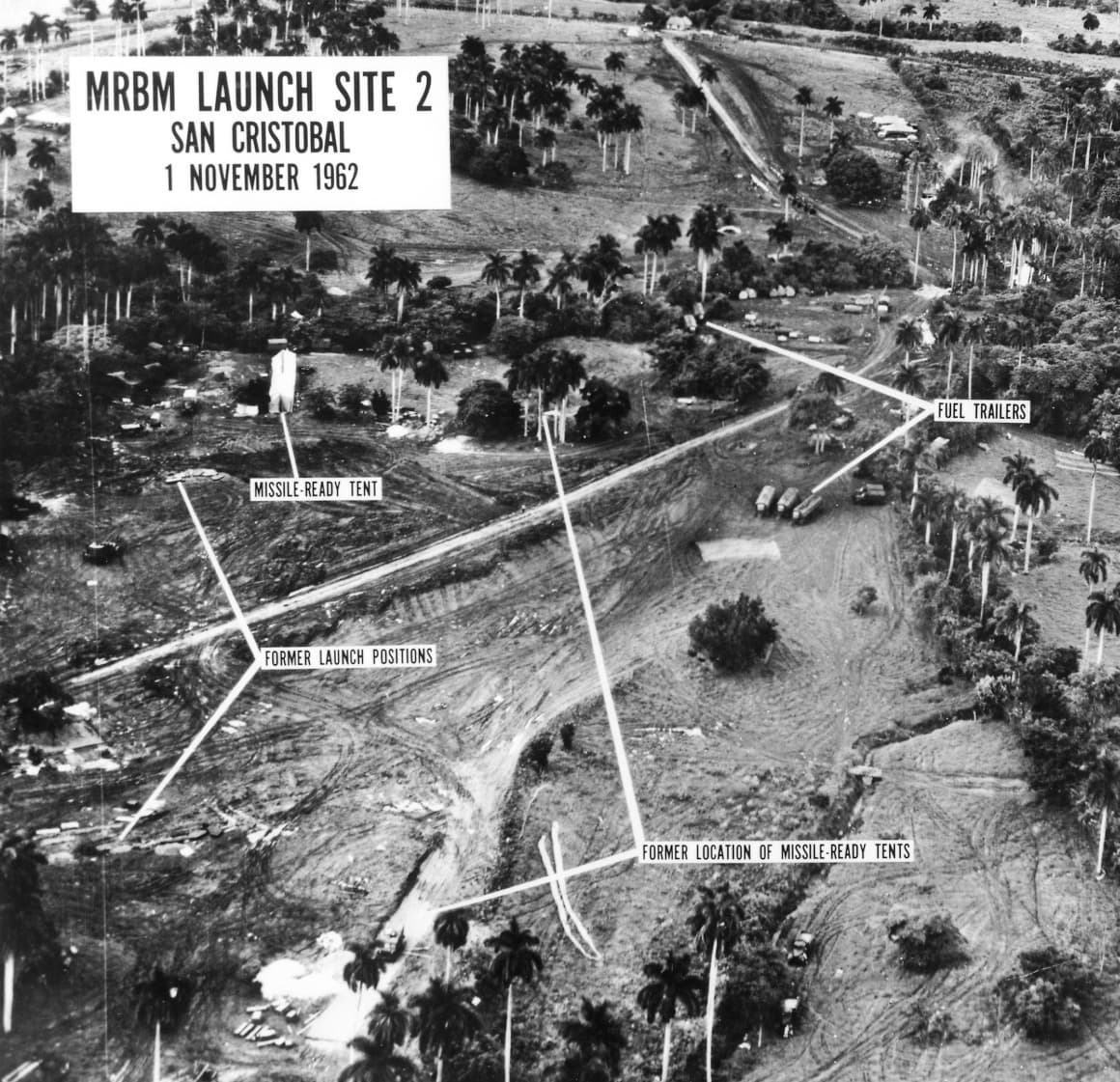
No episode brought the world closer to nuclear annihilation than the Cuban Missile Crisis of October 1962. When American U-2 spy planes photographed Soviet ballistic missile installations being constructed in Cuba — ninety miles from Florida — President John F. Kennedy and his advisors faced an agonizing choice. A naval blockade was ordered, Soviet ships steamed toward the quarantine line, and for thirteen days, the world held its breath. Behind the scenes, secret negotiations between Kennedy and Soviet Premier Nikita Khrushchev produced a fragile agreement: the Soviets would remove missiles from Cuba; the U.S. would pledge not to invade the island and would quietly remove its own missiles from Turkey. Nuclear catastrophe was averted by the narrowest of margins — and partly by luck, as later declassified documents revealed how close individual commanders came to launching weapons on their own authority.
The Space Race and the Cultural Cold War
The Cold War was fought not only in jungles and diplomatic chambers but in laboratories, classrooms, and living rooms. The Space Race became its most spectacular arena. When the Soviet Union launched Sputnik in October 1957 — the first artificial satellite — American confidence was shaken to its core. The United States responded with massive investment in science education and the creation of NASA. The contest culminated on July 20, 1969, when Neil Armstrong stepped onto the lunar surface, delivering perhaps the Cold War's most dramatic symbolic victory for the West.
Culture was equally contested terrain. The CIA covertly funded abstract expressionist art exhibitions and literary magazines to demonstrate Western creative freedom. Jazz musicians were sent on global tours as 'cultural ambassadors.' Hollywood churned out both anti-communist thrillers and, later, films questioning the morality of the arms race. The Soviet state promoted socialist realism and athletic excellence — most visibly through Olympic competition, where every medal was tallied as a point on the ideological scoreboard.
Détente, Reagan, and the Endgame
By the early 1970s, the costly stalemate in Vietnam and mutual economic pressures prompted both sides toward détente — a deliberate relaxation of tensions. President Richard Nixon's 1972 visit to China was a geopolitical masterstroke that exploited the Sino-Soviet split. The SALT arms control treaties placed formal limits on nuclear arsenals for the first time. Yet détente proved fragile. The Soviet invasion of Afghanistan in 1979 reignited hostilities, and the election of Ronald Reagan in 1980 brought a president determined to challenge Soviet power directly.
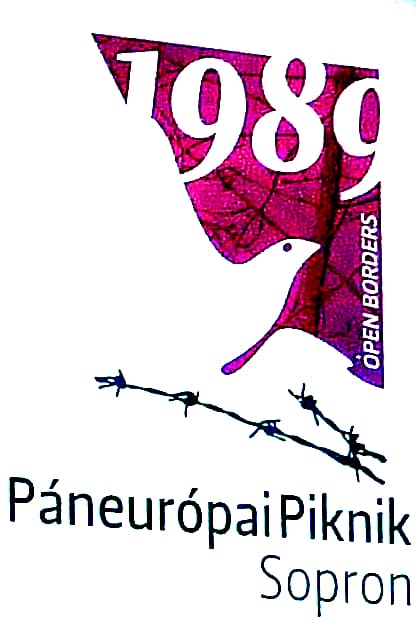
Reagan's strategy combined massive military spending — designed to exhaust the Soviet economy — with covert support for anti-communist movements from Poland to Afghanistan, and the Strategic Defense Initiative, a proposed missile-defense system that alarmed Moscow. When Mikhail Gorbachev came to power in 1985, he recognized that the Soviet system was failing. His reforms — glasnost (openness) and perestroika (restructuring) — were intended to save Soviet communism but instead accelerated its unraveling. In 1989, communist regimes fell across Eastern Europe in a cascade of largely peaceful revolutions. On November 9, the Berlin Wall was breached by jubilant crowds.
Legacy: A World Remade
The Soviet Union formally dissolved on December 25, 1991, when Gorbachev resigned and the USSR ceased to exist. The Cold War was over — but its legacy was vast and enduring. It had produced dozens of proxy conflicts that killed an estimated 20 to 40 million people. It had spread nuclear weapons technology and left a world with thousands of warheads still on hair-trigger alert. It had forged international institutions, military alliances, and political alignments that persist today. NATO, born to contain Soviet power, remains active. The United Nations, created to prevent superpower conflict, still bears the structural compromises of its Cold War origins.
Perhaps most profoundly, the Cold War shaped how whole generations understood the world — as a binary contest between freedom and tyranny, a zero-sum game in which every revolution, election, or economic crisis was a move on a global chessboard. That mental framework did not vanish with the Wall. Decades later, as great-power competition between the United States, Russia, and China once again defines international relations, historians and policymakers find themselves reaching, inevitably, back to the lessons — and the warnings — of the Cold War.
| Event | Year | Significance |
|---|---|---|
| Truman Doctrine announced | 1947 | U.S. commits to containing Soviet expansion globally |
| Soviet atomic bomb test | 1949 | Ends U.S. nuclear monopoly; intensifies arms race |
| Korean War begins | 1950 | First major hot conflict of the Cold War era |
| Sputnik launched | 1957 | Triggers Space Race; shocks Western confidence |
| Cuban Missile Crisis | 1962 | Closest point to nuclear war; resolved diplomatically |
| Moon Landing | 1969 | U.S. wins symbolic apex of the Space Race |
| SALT I Treaty signed | 1972 | First formal limits on superpower nuclear arsenals |
| Berlin Wall falls | 1989 | Symbolic end of the Cold War; communist bloc collapses |
| USSR dissolved | 1991 | Formal conclusion of the Cold War era |