Sometime in the mid-eighteenth century, in the coal-blackened towns of northern England, humanity crossed a threshold it would never recross. For thousands of years, the pace of daily life had been governed by the strength of human muscle, the pull of animal labor, and the capricious energy of wind and water. Then, in the space of a few remarkable decades, all of that changed. Machines began to do what men and horses once did—and they did it faster, cheaper, and without rest. The Industrial Revolution had begun, and nothing would ever be the same.
Seeds of Transformation: Why Britain First?
Historians have long debated why industrialization erupted in Britain rather than France, China, or the Ottoman Empire. Several converging factors made Britain uniquely fertile ground. The island nation possessed abundant coal and iron ore deposits lying close to navigable waterways, dramatically reducing the cost of transporting raw materials. Its constitutional monarchy, established after the Glorious Revolution of 1688, offered property rights and a relatively stable legal framework that encouraged investment and entrepreneurship. A growing colonial empire provided both raw materials from distant lands and captive markets for finished goods. Britain also benefited from an unusually practical culture of tinkering: artisans, millwrights, and instrument-makers mixed freely with gentlemen scientists, producing a class of pragmatic inventors hungry for profit as much as knowledge.
The Machines That Changed Everything
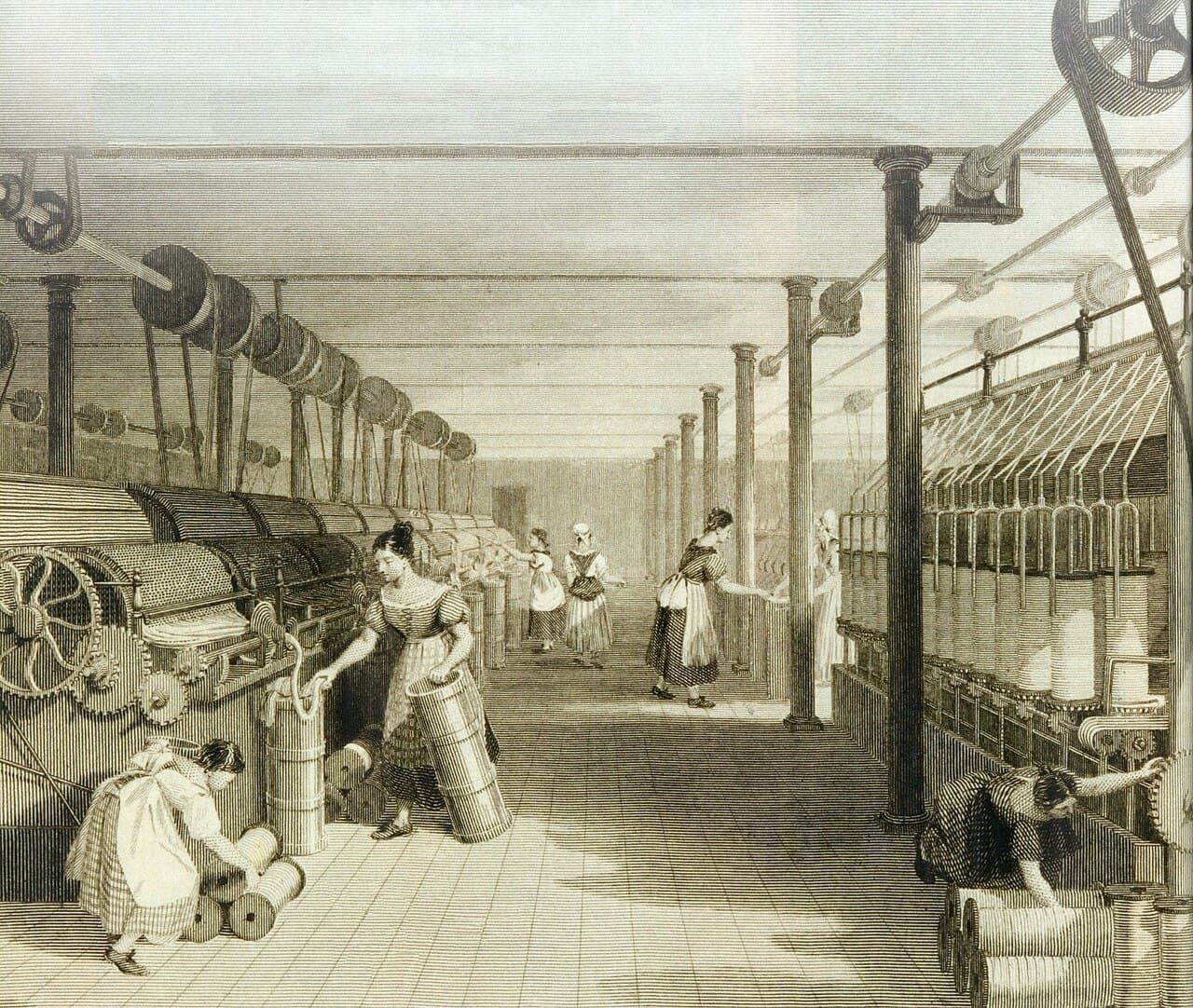
The textile industry was the revolution's first great laboratory. In 1764, James Hargreaves invented the spinning jenny, a hand-powered machine that allowed a single worker to spin multiple threads simultaneously. Richard Arkwright's water frame (1769) harnessed river current to drive spinning machines on an industrial scale, giving rise to the first true factories—enormous brick buildings filled with the roar of machinery and the labor of thousands. Edmund Cartwright's power loom (1785) mechanized weaving itself, making Britain the workshop of the world's clothing trade. But no invention proved more transformative than James Watt's improved steam engine, patented in 1769. By adding a separate condenser, Watt made steam power dramatically more efficient. Partnered with the entrepreneur Matthew Boulton, Watt's engines soon pumped water from mines, drove bellows in iron foundries, and eventually propelled locomotives across a continent.
Iron, Coal, and the Forging of a New Landscape
The demand for steam engines created insatiable appetites for iron and coal. Abraham Darby's use of coke—rather than charcoal—to smelt iron at Coalbrookdale in 1709 had quietly revolutionized metallurgy decades before the textile boom. By the early nineteenth century, Britain was producing more iron than the rest of the world combined. The Ironbridge Gorge in Shropshire, where Darby's descendants erected the world's first cast-iron bridge in 1779, became a symbol of the age: humanity bending nature to its will through metal and fire. Meanwhile, coal output soared from roughly three million tons per year in 1700 to over fifty million tons by 1850, powering not only factories but also the revolutionary new railway network that stitched the nation together.
Railways: Annihilating Time and Space
If the steam engine was the revolution's heart, the railway was its circulatory system. George Stephenson's Rocket, which triumphed at the Rainhill Trials in 1829, demonstrated that steam locomotion could be both reliable and fast. The opening of the Liverpool and Manchester Railway in 1830—the world's first inter-city passenger railway—stunned contemporaries. Goods and people that had once taken days to travel between cities now arrived in hours. By 1850, Britain had laid over six thousand miles of track. The psychological effect was as profound as the economic one: the Victorian writer Thomas Carlyle observed that railways had 'annihilated' time and space. Whole industries—canal companies, coaching inns, horse breeders—were swept aside; new ones, from civil engineering to tourism, rose to take their place.
The Human Cost: Labor, Children, and Urban Squalor
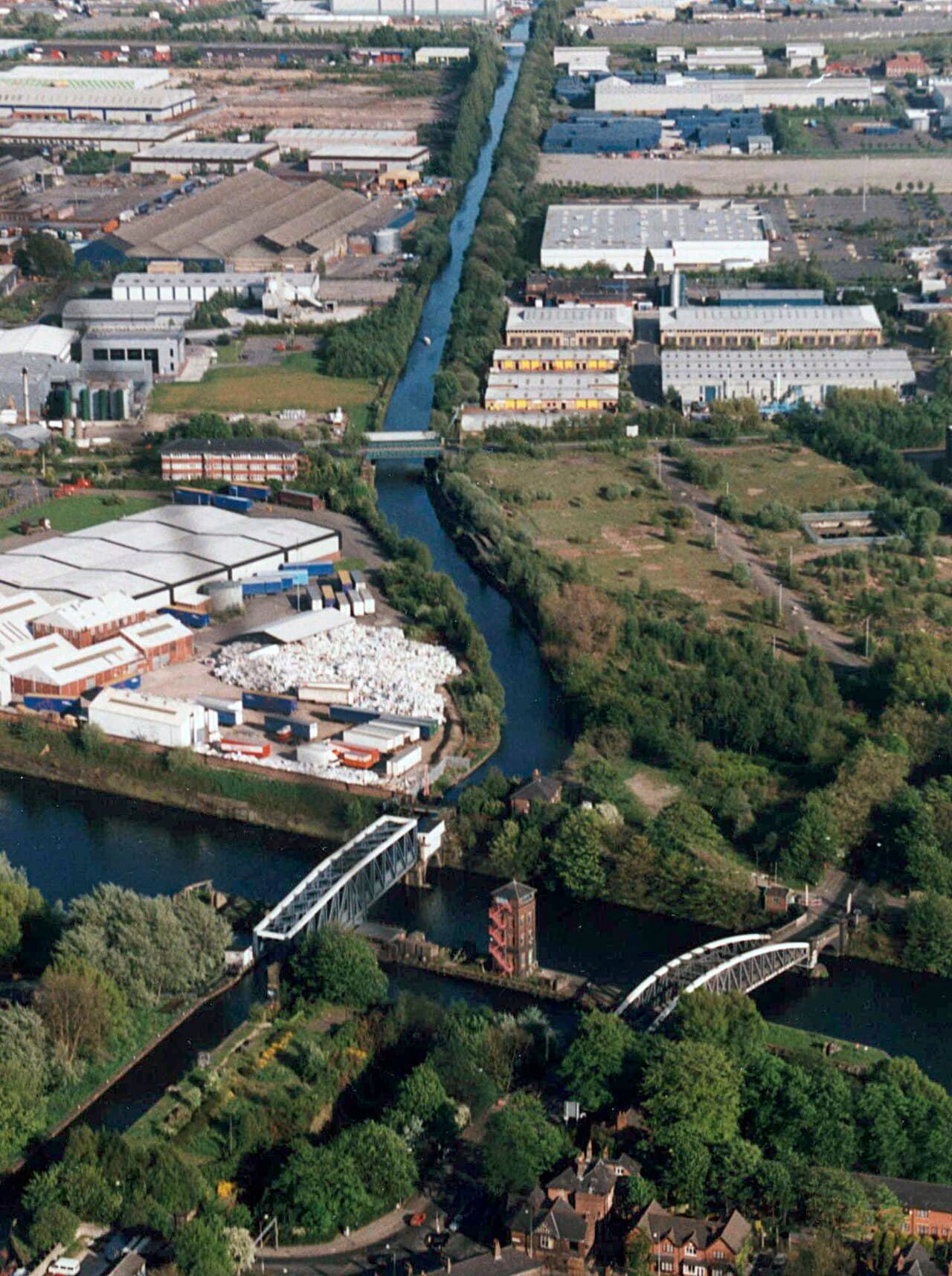
Progress was purchased at an enormous human price. Factories drew millions from the countryside into rapidly swelling towns wholly unprepared to receive them. Manchester's population grew from roughly 25,000 in 1772 to over 300,000 by 1850, yet sanitation, housing, and clean water lagged catastrophically behind. Cholera epidemics swept through overcrowded slums. Workers—men, women, and children as young as five—toiled for twelve to sixteen hours a day in dangerous conditions. Child labor in coal mines and cotton mills became a national scandal, eventually prompting Parliament to pass a series of Factory Acts beginning in 1833, which restricted child working hours and mandated minimum schooling. Friedrich Engels, observing Manchester in 1845, described conditions so appalling that they helped inspire his collaboration with Karl Marx on a new theory of class conflict.
Spreading Across the Globe
Britain jealously guarded its industrial secrets—it was illegal to export machinery or even emigrate as a skilled mechanic for much of the early period—but industrialization proved impossible to contain. By the 1830s and 1840s, Belgium and France were building their own factory systems. Prussia and the German states industrialized rapidly after mid-century, eventually surpassing Britain in steel production by the 1890s. The United States, blessed with vast resources and a culture of invention, generated its own industrial revolution centered on New England textiles, Pennsylvania steel, and the transcontinental railroad. By 1900, industrial production had spread to Japan, Russia, and parts of Latin America, reshaping global power structures entirely.
A World Remade
The Industrial Revolution's legacy is both dazzling and troubling. It generated wealth on a scale previously unimaginable, lifted hundreds of millions out of subsistence poverty over the following two centuries, and laid the technological foundations for modern medicine, communications, and transportation. It also entrenched new forms of exploitation, accelerated European imperialism as industrialized nations sought raw materials and markets, and began the large-scale burning of fossil fuels whose consequences—global climate change—now represent perhaps the gravest challenge humanity has ever faced. Understanding the Industrial Revolution is not merely an academic exercise. It is an attempt to understand who we are, how we got here, and what responsibilities we carry from that first furnace lit in the English Midlands so many years ago.
| Invention | Inventor | Year | Significance |
|---|---|---|---|
| Spinning Jenny | James Hargreaves | 1764 | Multiplied thread production per worker |
| Water Frame | Richard Arkwright | 1769 | Enabled large-scale factory spinning |
| Improved Steam Engine | James Watt | 1769 | Powered factories, mines, and railways |
| Power Loom | Edmund Cartwright | 1785 | Mechanized weaving at industrial scale |
| Steam Locomotive (Rocket) | George Stephenson | 1829 | Launched the railway age |
| Bessemer Converter | Henry Bessemer | 1856 | Mass production of cheap steel |