Sometime in the fourteenth century, in the prosperous city-states of northern Italy, an extraordinary experiment in human possibility began. Artists started studying ancient Roman sculptures with feverish intensity. Scholars hunted down forgotten Greek manuscripts. Merchants and princes competed to fund the most brilliant minds of their age. The movement that emerged — the Renaissance, from the French word for 'rebirth' — would ultimately shatter the medieval worldview and lay the foundations for the modern West.
The Renaissance was not a sudden revolution but a gradual cultural transformation spanning roughly from 1300 to 1600. It began in Italy, nourished by the wealth of cities like Florence, Venice, and Rome, before spreading north into France, the Low Countries, Germany, England, and Spain. At its core was a new philosophy called humanism — a belief that the study of classical antiquity, and the capacities of human beings themselves, deserved to stand at the centre of intellectual life.
The Italian Seedbed: Why Florence?
No city was more central to the early Renaissance than Florence. Strategically positioned in Tuscany and enriched by the wool trade and international banking, Florence in the 1400s was governed by the Medici family, whose patronage of the arts was as calculated as it was genuine. Cosimo de' Medici and later his grandson Lorenzo the Magnificent bankrolled poets, philosophers, architects, and painters on a scale previously unimaginable. The Medici court became a laboratory of ideas, hosting Platonic academies where scholars debated ancient philosophy by torchlight.
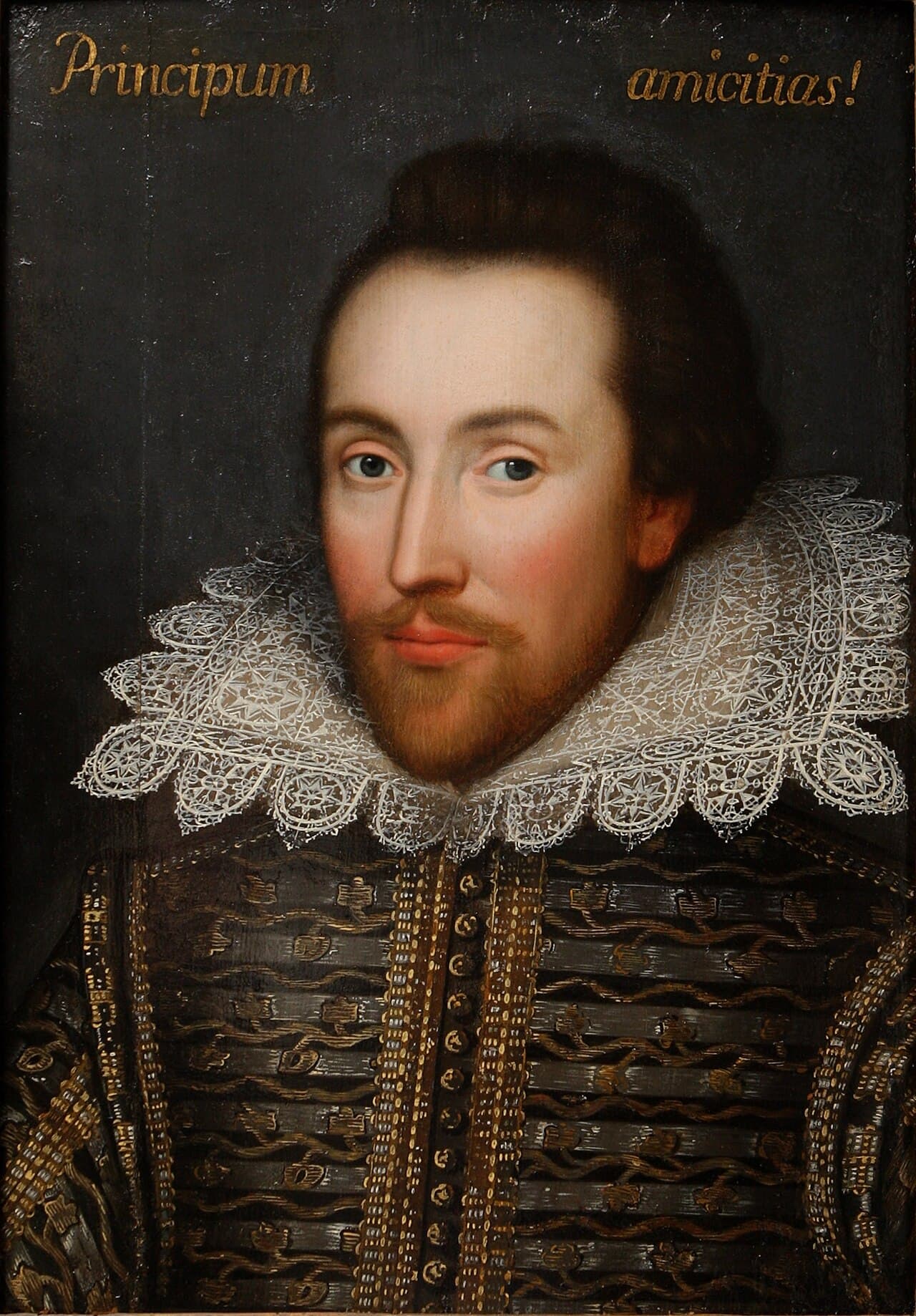
But Florence was not alone. Venice thrived as a crossroads of Eastern and Western trade, absorbing Byzantine artistic influences. Rome, under ambitious popes such as Nicholas V and Julius II, reinvented itself as a monumental capital worthy of Christendom. Milan, Naples, and Ferrara each cultivated their own Renaissance courts. The competition between these city-states fuelled a remarkable creative energy that could not have flourished under a single centralised monarchy.
Art Reborn: Perspective, Anatomy, and the Human Form
The most visible legacy of the Renaissance is its art. Medieval painting had served primarily devotional purposes, presenting spiritual hierarchies in flat gold-leafed icons. Renaissance artists shattered this convention. Filippo Brunelleschi's discovery of linear perspective around 1420 gave painters a mathematical tool to depict three-dimensional space on a two-dimensional surface. Masaccio applied it almost immediately in his frescoes in the Brancacci Chapel, producing figures of startling psychological weight.
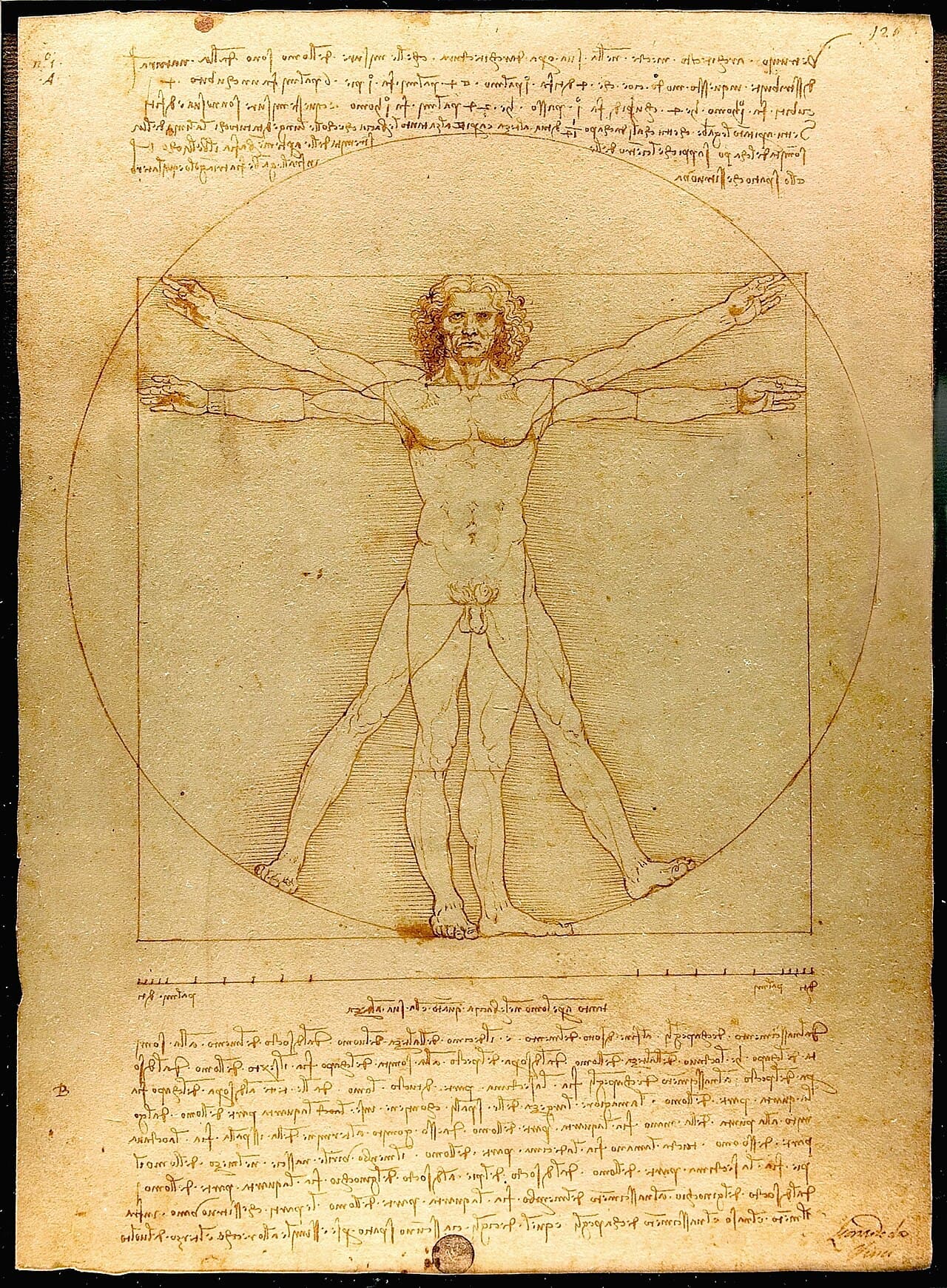
Leonardo da Vinci took the revolution further. He dissected human corpses — at considerable legal and spiritual risk — to understand musculature and anatomy with scientific precision, filling thousands of notebook pages with observations that straddled art and science. His 'Vitruvian Man' became an icon of the age's central conviction: that the human body was a divinely proportioned microcosm of the universe. Michelangelo Buonarroti pushed sculpture and painting to their emotional limits, carving his 'David' from a single marble block and covering the Sistine Chapel ceiling with a vision of creation so ambitious it nearly broke his health. Raphael synthesised the achievements of his predecessors into serene, luminous works that would define ideal beauty for centuries.
| Artist / Thinker | Dates | Key Work or Contribution |
|---|---|---|
| Dante Alighieri | 1265–1321 | The Divine Comedy — precursor to Renaissance humanism |
| Filippo Brunelleschi | 1377–1446 | Dome of Florence Cathedral; discovery of linear perspective |
| Leonardo da Vinci | 1452–1519 | The Last Supper; anatomical studies; engineering designs |
| Niccolò Machiavelli | 1469–1527 | The Prince — foundations of modern political science |
| Michelangelo Buonarroti | 1475–1564 | David; Sistine Chapel ceiling; St. Peter's Basilica |
| Raphael Sanzio | 1483–1520 | The School of Athens; Vatican frescoes |
| Desiderius Erasmus | 1466–1536 | In Praise of Folly — Northern Renaissance humanism |
| William Shakespeare | 1564–1616 | Plays and sonnets — summit of English Renaissance literature |
The Humanist Revolution in Thought and Letters
Alongside the visual arts, Renaissance humanism transformed literature, philosophy, and education. Petrarch, often called the 'first humanist,' scoured monasteries for ancient Latin texts and wrote poetry celebrating earthly love and fame alongside spiritual aspiration. His work inspired a new generation of scholars who treated Cicero, Virgil, and Plato not as dry authorities but as living voices offering guidance on how to live well. The studia humanitatis — grammar, rhetoric, poetry, history, and moral philosophy — became the new educational ideal, producing civic-minded citizens rather than merely devout monks.
The invention of the printing press by Johannes Gutenberg around 1440 amplified every idea the Renaissance produced. Books that had previously existed in a handful of hand-copied manuscripts could now reach thousands of readers within years. Humanist texts, editions of classical authors, and eventually the Bible in vernacular languages spread across Europe with unstoppable momentum. The printing press did not cause the Renaissance, but it ensured that the Renaissance could not be contained.
Science, Nature, and a New Way of Seeing
The Renaissance spirit of empirical observation did not stop at the canvas. The same impulse that led Leonardo to dissect bodies led Nicolaus Copernicus to question whether the Earth truly stood at the centre of the cosmos. Published in 1543, his 'De revolutionibus' proposed a heliocentric model that quietly detonated centuries of Ptolemaic astronomy. Andreas Vesalius, working at almost the same moment, published 'De humani corporis fabrica,' the first rigorously accurate atlas of human anatomy, directly challenging the long-unchallenged authority of the ancient physician Galen. The Renaissance had begun to transform natural philosophy into what we would eventually recognise as modern science.
The Northern Renaissance and Its Discontents
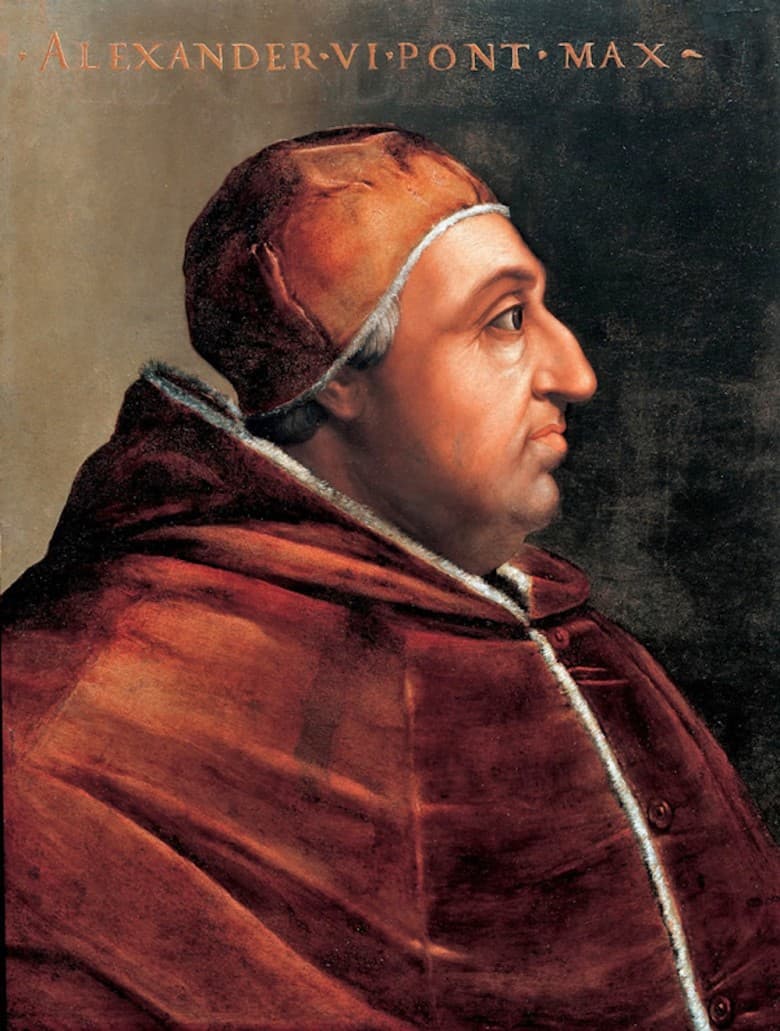
As Renaissance ideas moved north of the Alps, they took on different flavours. Erasmus of Rotterdam used humanist scholarship to expose the corruption and superstition he saw in the Church, lampooning it with devastating wit in 'In Praise of Folly.' Thomas More imagined an idealised society in 'Utopia.' Northern painters like Jan van Eyck had already pioneered oil painting techniques of extraordinary subtlety. Albrecht Dürer brought Italian perspective and self-portraiture north to Germany. In England, the Renaissance blossomed magnificently in the Elizabethan era, producing the poetry of Edmund Spenser and, above all, the theatrical genius of William Shakespeare, whose plays drew on classical models while capturing the full range of human experience with unmatched psychological complexity.
The Northern Renaissance also deepened the religious crisis the humanists had stoked. When Martin Luther nailed his Ninety-Five Theses to the church door in Wittenberg in 1517, he used humanist textual scholarship — the ability to read scripture in its original Greek — as a weapon against Church doctrine. The Protestant Reformation that followed was in part a child of the Renaissance, sharing its reverence for ancient sources and its suspicion of medieval accretions.
Legacy: The Renaissance and the Making of the Modern World
The Renaissance did not end so much as it dissolved into the Reformation, the Scientific Revolution, and the age of European exploration — all movements it helped to create. It gave the West the idea of the individual genius, the possibility of secular knowledge, the prestige of empirical observation, and a visual language of beauty and proportion still embedded in our museums, cities, and imaginations. Its darker consequences deserve acknowledgment too: Renaissance courts were centres of political manipulation and dynastic violence; humanist confidence in European civilisation would help rationalise colonial conquest; the same print culture that spread learning also spread polemic and persecution.
Yet the Renaissance remains a hinge moment in human history. It dared to ask whether the world could be understood on its own terms, whether human beings could aspire to know as well as to believe, and whether beauty was not merely a foretaste of heaven but a value worthy of pursuit in itself. Those questions have never stopped resonating. Every time a student studies the liberal arts, every time a scientist insists on observation over authority, every time an artist reaches for the fullest possible expression of human experience — the Renaissance endures.