Sephardic Jews, also known as Sephardi Jews or Sephardim, and rarely as Iberian Peninsular Jews, are a Jewish diaspora population associated with the historic Jewish communities of the Iberian Peninsula (Spain and Portugal) and their descendants. The term "Sephardic" comes from Sepharad, the Hebrew word for Iberia. These communities flourished for centuries in Iberia until they were expelled in the late 15th century. Over time, Sephardic has also come to refer more broadly to the diverse Jewish peoples, particularly in the Middle East and North Africa, who adopted Sephardic religious customs and legal traditions (often due to the influences of exiles). In some cases, Ashkenazi Jews who settled in Sephardic communities and adopted Sephardic liturgy are also included under this term. Today, Sephardic Jews form a major component of the global Jewish population, with the largest Sephardic-Jewish population now living in Israel.
The earliest documented Jewish presence in the Iberian Peninsula dates to the Roman period, beginning in the first centuries CE. After facing persecution under the pagan and later Christian Visigothic Kingdom, Jewish communities flourished for centuries under Muslim rule in Al-Andalus following the Umayyad conquest (711–720s), a period often seen as a golden age. Their status declined under the radical Almoravid and Almohad dynasties and during the Christian Reconquista. In 1391, anti-Jewish riots in Castile and Aragon led to massacres and mass forced conversions. In 1492, the Alhambra Decree by the Catholic Monarchs expelled Jews from Spain, and in 1496, King Manuel I of Portugal issued a similar edict. These events led to migrations, forced conversions, and executions.
Sephardic Jews widely dispersed throughout the Mediterranean basin. Many found refuge throughout the Ottoman Empire, settling in such cities as Istanbul, Salonica, and İzmir; even more Sephardic Jews found refuge in the Mediterranean Maghreb — settling in Tétouan, Fez, Algiers, and Tunis, forming a major Sephardic population: the Maghrebi Jews.
Some Sephardim also settled in Italian ports including Venice and Livorno, as well as in parts of the Balkans, and the Levant (notably Safed).
Reading level
Audio Summary
Played with your browser's voice. Studio-quality audio can be added with a text-to-speech service.
Ask about this article
📝 Quick Quiz1 / 4
What is "Sephardic Jews" primarily known for?
Vocix Daily — In Your Inbox
Top stories, deep-dive articles, and "On This Day" history — one crisp digest delivered every morning.
Sources & references
Reference material for this entry is drawn from the open encyclopedic record, including Wikipedia , available under the CC BY-SA 4.0 license. Images are credited individually beside each photo.
Smaller communities relocated to the Netherlands (notably Amsterdam). Smaller communities also emerged in France, England, and the Americas, where Sephardim often played key roles in commerce and diplomacy.
Historically, the vernacular languages of the Sephardic Jews and their descendants have been variants of either Spanish, Portuguese, or Catalan, though they have also adopted and adapted other languages. The historical forms of Spanish that differing Sephardic communities spoke communally were related to the date of their departure from Iberia and their status at that time as either New Christians or Jews. Judaeo-Spanish and Judaeo-Portuguese, also called Ladino, is a Romance language derived from Old Spanish and Old Portuguese that was spoken by the eastern Sephardic Jews who settled in the Eastern Mediterranean after their expulsion from Spain in 1492; Haketia (also known as "Tetuani Ladino"), an Arabic-influenced variety of Judaeo-Spanish, was spoken by North African Sephardic Jews who settled in the region after the 1492 Spanish expulsion.
In 2015, more than five centuries after the expulsion, both Spain and Portugal enacted laws allowing Sephardic Jews who could prove their ancestral origins in those countries to apply for citizenship. The Spanish law that offered citizenship to descendants of Sephardic Jews expired in 2019, although subsequent extensions were granted by the Spanish government —due to the COVID-19 pandemic— in order to file pending documents and sign delayed declarations before a notary public in Spain. In the case of Portugal, the nationality law was modified in 2022 with very stringent requirements for new Sephardic applicants, effectively ending the possibility of successful applications without evidence of a personal travel history to Portugal —which is tantamount to prior permanent residency— or ownership of inherited property or concerns on Portuguese soil.
Etymology
The name Sephardi means "Iberian" or "Hispanic,” derived from Sepharad (Hebrew: סְפָרַד, Modern: Sfarád, Tiberian: Səp̄āráḏ), a Biblical location. The location of the Biblical Sepharad points to the Iberian peninsula, then the westernmost outpost of Phoenician maritime trade. Jewish presence in Iberia is believed to have started during the reign of King Solomon, whose excise imposed taxes on Iberian exiles. Although the first date of arrival of Jews in Iberia is the subject of ongoing archaeological research, there is evidence of established Jewish communities as early as the 1st century CE.
Modern transliteration of Hebrew romanizes the consonant פ (pe without a dagesh dot placed in its center) as the digraph ph, in order to represent fe or the single phoneme /f/, the English sound that is voiceless labiodental fricative. In other languages and scripts, "Sephardi" may be translated as plural Hebrew: סְפָרַדִּים, Modern: Sfaraddim, Tiberian: Səp̄āraddîm; Spanish: sefardíes; Portuguese: sefarditas; Catalan: sefardites; Aragonese: safardís; Basque: Sefardiak; French: Séfarades; Galician: sefardís; Italian: sefarditi; Greek: Σεφαρδίτες, romanized: Sephardites; Serbo-Croatian: Сефарди, Sefardi; Ladino: sefaradies, sefaradim; and Arabic: سفارديون, romanized: Safārdiyyūn.
In the narrower ethnic definition, a Sephardic Jew is one descended from the Jews who lived in the Iberian Peninsula in the late 15th century, immediately prior to the issuance of the Alhambra Decree of 1492 by order of the Catholic Monarchs in Spain, and the decree of 1496 in Portugal by order of King Manuel I.
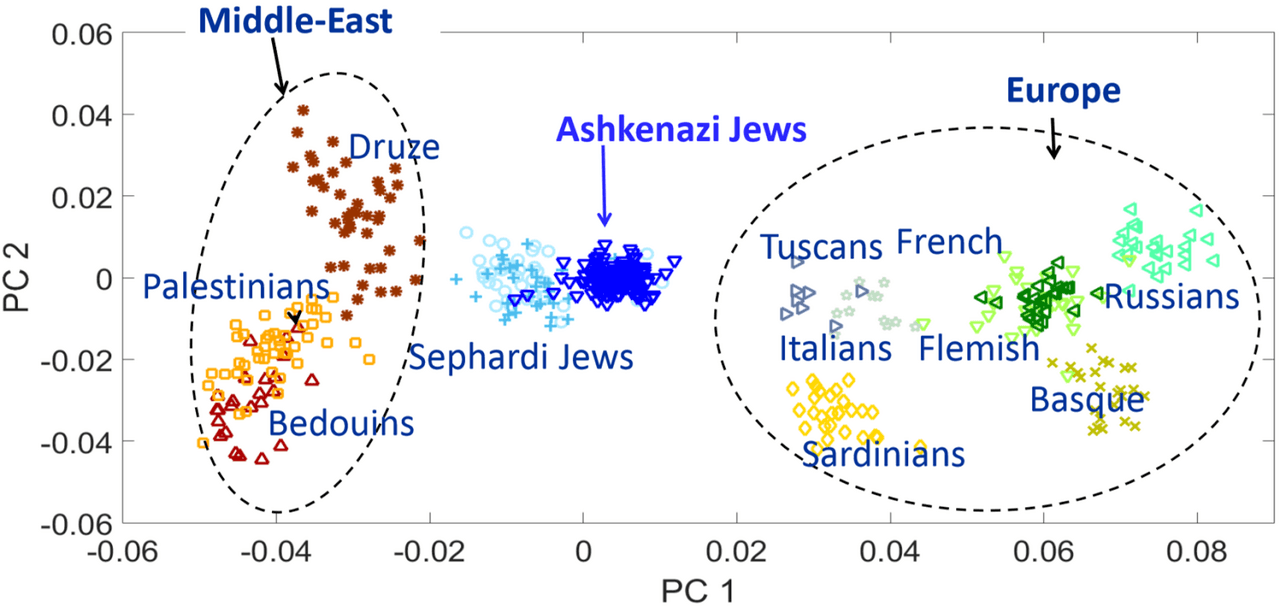
In Hebrew, the term "Sephardim Tehorim" (ספרדים טהורים, literally "Pure Sephardim"), derived from a misunderstanding of the initials ס"ט "Samekh Tet" traditionally used with some proper names (which stand for sofo tov, "may his end be good" or "sin v'tin", "mire and mud" has in recent times been used in some quarters to distinguish Sephardim proper, "who trace their lineage back to the Iberian/Spanish population", from Sephardim in the broader religious sense. This distinction has also been made in reference to 21st-century genetic findings in research on 'Pure Sephardim', in contrast to other communities of Jews today who are part of the broad classification of Sephardi.
Ethnic Sephardic Jews have had a presence in North Africa and various parts of the Mediterranean and Western Asia due to their expulsion from Spain. There have also been Sephardic communities in South America and India.
Originally the Jews spoke of Sefarad referring to Al-Andalus and not the entire peninsula, nor as it is understood today, in which the term Sefarad is used in modern Hebrew to refer to Spain. This has caused a long misunderstanding, since traditionally the entire Iberian Diaspora has been included in a single group. But the historiographical research reveals that that word, seen as homogeneous, was actually divided into distinct groups: the Sephardim, coming from the countries of the Castilian crown, Castilian language speakers, and the Katalanim / Katalaní, originally from the Crown of Aragon, Judeo-Catalan speakers.
Broad religious definition
The modern Israeli Hebrew definition of Sephardi is a much broader, religious based, definition that generally excludes ethnic considerations. In its most basic form, this broad religious definition of a Sephardi refers to any Jew, of any ethnic background, who follows the customs and traditions of Sepharad. For religious purposes, and in modern Israel, "Sephardim" is most often used in this wider sense. It encompasses most non-Ashkenazi Jews who are not ethnically Sephardi, but are in most instances of West Asian or North African origin. They are classified as Sephardi because they commonly use a Sephardic style of liturgy; this constitutes a majority of Mizrahi Jews in the 21st century.
The term Sephardi in the broad sense, describes the nusach (Hebrew language, "liturgical tradition") used by Sephardic Jews in their Siddur (prayer book). A nusach is defined by a liturgical tradition's choice of prayers, order of prayers, text of prayers and melodies used in the singing of prayers. Sephardim traditionally pray using Minhag Sefarad.
The term Nusach Sefard or Nusach Sfarad does not refer to the liturgy generally recited by Sephardim proper or even Sephardi in a broader sense, but rather to an alternative Eastern European liturgy used by many Hasidim, who are Ashkenazi.
Additionally, Ethiopian Jews, whose branch of practiced Judaism is known as Haymanot, have been included under the oversight of Israel's already broad Sephardic Chief Rabbinate.
History in Spain and Portugal
Arrival and early history
The earliest significant Jewish presence in the Iberian Peninsula is typically traced back to the Roman period, during the first centuries CE. Evidence includes an amphora discovered in Ibiza, stamped with two Hebrew letters in relief, indicating possible trade between Judaea and the Balearics in the first century. Additionally, the Epistle to the Romans records Paul's intent to visit Spain, hinting at a Jewish community in the region during the mid-first century CE. Josephus writes that Herod Antipas was deposed and exiled to Spain, possibly to Lugdunum Convenarum, in 39 CE.
Archaeological evidence of a Jewish presence in Spain prior to the third century CE is limited. However, from the third to sixth centuries, inscriptions confirm the existence of Jewish communities, particularly in the more Romanized regions of the south and east, such as Toledo, Mérida, Seville, and Tarragona. Additionally, these inscriptions suggest a Jewish presence in other locations, including Elche, Tortosa, Adra, and the Balearic Islands. Rabbinic literature from the Amoraic era references Spain as a distant land with a Jewish presence. For example, a tradition passed down by Rabbi Berekiah and Rabbi Shimon bar Yochai, quoting second-century tanna Rabbi Meir, states: "Do not fear, O Israel, for I help you from remote lands, and your seed from the land of their captivity, from Gaul, from Spain, and from their neighbors."
Medieval legends often traced the arrival of Jews in Spain to the First Temple period, with some associating the biblical Tarshish with Tartessus and suggesting Jewish traders were active in Spain during the Phoenician and Carthaginian eras. One such legend from the 16th century claimed that a funeral inscription in Murviedro belonged to Adoniram, a commander of King Solomon, who had supposedly died in Spain while collecting tribute. Another legend spoke of a letter allegedly sent by the Jews of Toledo to Judaea in 30 CE, asking to prevent the crucifixion of Jesus. These legends aimed to establish that Jews had settled in Spain well before the Roman period and to absolve them of any responsibility for the death of Jesus, a charge often leveled at them in later centuries.
Rabbi and scholar Abraham ibn Daud wrote in 1161: "A tradition exists with the [Jewish] community of Granada that they are from the inhabitants of Jerusalem, of the descendants of Judah and Benjamin, rather than from the villages, the towns in the outlying districts [of Israel]." Elsewhere, he writes about his maternal grandfather's family and how they came to Spain after Jerusalem's destruction in 70 CE: "When Titus prevailed over Jerusalem, his officer who was appointed over Hispania appeased him, requesting that he send to him captives made-up of the nobles of Jerusalem, and so he sent a few of them to him, and there were amongst them those who made curtains and who were knowledgeable in the work of silk, and [one] whose name was Baruch, and they remained in Mérida."
Under Late Roman and Visigothic rule (4th–7th century)
Around 300 CE, the Synod of Elvira, an ecclesiastical council convened in southern Spain, and enacted several decrees to restrict interactions between Christians and Jews. Among the measures were prohibitions on intermarriage between Jews and Christians, communal dining, and the participation of Jews in blessing fields. Despite these efforts, aimed to diminish Jewish influence on Christian communities, evidence indicates that everyday social relations between Jews and Christians continued to be prevalent in various locales.
By the mid-5th century, Spain came under the control of the Visigothic Kingdom, following a period of significant instability caused by Barbarian invasions that led to the collapse of the Western Roman Empire. Initially, the Christian Visigoths practiced Arianism and, while they generally did not engage in the persecution of Jews, they did not extend particular favor to them either. It was not until the reign of Alaric II (484–507) that a Visigothic king concerned himself with the Jews, as evidenced by the publication of the Breviary of Alaric in 506, which incorporated Roman legal precedents into Visigothic law.
The situation for Jews in Spain shifted dramatically after the conversion of the Visigothic monarchs to Catholicism under King Reccared in 587. As the Visigoths sought to unify the realm under their new religion, their policies towards Jews evolved from initial marginalization to increasingly aggressive measures aimed at their complete eradication from the kingdom. Under successive Visigothic kings and under ecclesiastical authority, many orders of expulsion, forced conversion, isolation, enslavement, execution, and other punitive measures were made. By 612–621, the situation for Jews became intolerable and many left Spain for nearby northern Africa. In 711, thousands of Jews from North Africa accompanied the Muslims who invaded Spain, subsuming Catholic Spain and turning much of it into an Arab state, Al-Andalus.
Jewish Life in al-Andalus (711–1085)
In 711, Muslim forces crossed the Strait of Gibraltar from North Africa and launched a successful military campaign in the Iberian Peninsula. This conquest resulted in the establishment of Muslim rule over much of the region, which they referred to as "Al-Andalus". The territory would remain under varying degrees of Muslim control for several centuries. The Jewish community, having faced persecution under Visigothic rule, largely welcomed the new Muslim rulers who offered greater religious tolerance. Under Islamic rule, Jews, like Christians, were designated as dhimmis—protected but second-class monotheists—permitted to practice their religion with relative autonomy in exchange for paying a special tax.
Within half a century of the Islamic conquest, the Umayyad dynasty—overthrown by the Abbasids in 750—established an independent emirate in al-Andalus, with Córdoba as its capital. In 929, the Umayyad emir 'Abd al-Raḥmān III declared himself caliph, asserting full political and religious independence from eastern Islamic authority and initiating a new era of prosperity that increasingly attracted Jewish migrants from the less stable east. During this period of rising stability and cultural exchange, Ḥasdai ibn Shaprūṭ, a Jewish physician, scholar, and court official, emerged as a trusted advisor to the caliph. He played a key role in the Jewish cultural renaissance of the period, fostering the work of Hebrew poets and scholars such as Menaḥem ben Saruq and Dunash ben Labraṭ. He benefitted world Jewry not only indirectly by creating a favorable environment for scholarly pursuits within Iberia, but also by using his influence to intervene on behalf of foreign Jews: in his letter to Byzantine Princess Helena, he requested protection for the Jews under Byzantine rule, attesting to the fair treatment of the Christians of al-Andalus, and perhaps indicating that such was contingent on the treatment of Jews abroad. During this period, the Jews served as merchants, artisans and craftsmen, and were hired by the government for those services.
By the 9th century, some members of the Sephardic community felt confident enough to take part in proselytizing amongst Christians. This included the heated correspondences sent between Bodo Eleazar, a former Christian deacon who had converted to Judaism in 838, and the Bishop of Córdoba Paulus Albarus, who had converted from Judaism to Christianity. Each man, using such epithets as "wretched compiler", tried to convince the other to return to his former faith, to no avail.
In 1031, the Umayyad Caliphate of Córdoba disintegrated into smaller Muslim principalities known as taifas. Some were ruled by Berber military leaders, and Jewish courtiers often held influential roles. Jewish intellectual life flourished in Spain's major urban centers. Commentaries on the Bible and Talmud were developed, and a vibrant poetic tradition emerged. One of its most prominent figures was Samuel ha-Nagid (Samuel ibn Naghrillah), who served as vizier and military commander of the Muslim principality of Granada between 993 and 1056. A prolific poet and halakhic scholar, Samuel emphasized his Jewish identity and role as a representative of the Jewish community in official correspondence.
The cultural Golden Age of Jewish life in Muslim Spain produced major Hebrew poets whose works spanned from secular themes—such as love, friendship, and nature—to sacred hymns and religious reflection. Among the most prominent were Solomon ibn Gabirol, Moses ibn Ezra, and Judah ha-Levi (c. 1075–1141). Born in Tudela, ha-Levi became renowned for both his secular and liturgical poetry, particularly his celebrated "Zion poems" that express deep yearning for the Land of Israel. He also authored The Kuzari, a philosophical dialogue defending Judaism and critiquing rationalist philosophy and other faiths; in it, he ultimately affirms the centrality of the Land of Israel and reflects that remaining in the diaspora is a form of hypocrisy. One notable contribution to Christian intellectualism from this period is Ibn Gabirol's neo-Platonic Fons Vitae ("The Source of Life;" "Mekor Hayyim"). Thought by many to have been written by a Christian, this work was admired by Christians and studied in monasteries throughout the Middle Ages, though the work of Solomon Munk in the 19th century proved that the author of Fons Vitae was the Jewish ibn Gabirol.Arabic culture, of course, also made a lasting impact on Sephardic cultural development. General re-evaluation of scripture was prompted by Muslim anti-Jewish polemics and the spread of rationalism, as well as the anti-Rabbanite polemics of Karaites. The cultural and intellectual achievements of the Arabs, and much of the scientific and philosophical speculation of Ancient Greek culture, which had been best preserved by Arab scholars, was made available to the educated Jew. The meticulous regard the Arabs had for grammar and style also had the effect of stimulating an interest in philological matters in general among Jews. Arabic became the main language of Sephardic science, philosophy, and everyday business, as had been the case with Babylonian geonim. This thorough adoption of the Arabic language also greatly facilitated the assimilation of Jews into Moorish culture, and Jewish activity in a variety of professions, including medicine, commerce, finance, and agriculture increased.
The first major and most violent persecution in Islamic Spain was the 1066 Granada massacre, which occurred on 30 December, when a Muslim mob stormed the royal palace in Granada, crucified Jewish vizier Joseph ibn Naghrela and massacred most of the Jewish population of the city after rumors spread that the powerful vizier was plotting to kill the weak-minded and drunk King Badis ibn Habus. An estimated 4,000 Jews were reportedly killed during the Granada riots, though some historians question this figure, viewing it as a possible exaggeration typical of historical number reporting.
Under Christian and Berber rule (1085–1215)
In the late 11th century, Christian kingdoms in northern Iberia intensified their campaign to reconquer Muslim-held territories, known as the "Reconquista". The conquest of Toledo by King Alfonso VI of Castile in 1085 marked a turning point. Facing mounting external pressure, Muslim rulers invited the Almoravids—a fundamentalist Berber group—to defend their lands. The Almoravids established an empire spanning parts of Iberia and West Africa and expelled Jews from administrative positions in Granada and Seville.
Despite relatively better conditions, Jews in Christian Spain also faced restrictions. In 1081, Pope Gregory VII forbade the Castilian king from appointing Jews to positions of power. In 1108, the Jewish advisor Solomon ibn Farusal was murdered, and by 1118, Alfonso VII banned both Jews and recent Jewish converts to Christianity from holding authority in Toledo. Nevertheless, Jewish scholarship persisted. The historian Abraham ibn Daud, active in Toledo during this time, authored the Sefer ha-Qabbalah and translated key works across disciplines.
In 1147–1148, much of Islamic Spain fell to the Almohads, another Berber dynasty, even more intolerant than the Almoravids. They abolished the protected status for Jews and Christians, imposing forced conversions. As a result, many Jews fled to other parts of the Muslim world or sought refuge in Christian Iberia and southern France. Among them were members of the Ibn Tibbon family, who became renowned translators of Jewish and philosophical texts. One of the most significant Jewish figures of this era was Moses ben Maimon, known as Maimonides (or the Rambam). Born in Córdoba, he was forced to flee persecution multiple times—first to Fez, Morocco, later to the Land of Israel, and finally to Egypt, where he settled in Fustat. A towering figure in Jewish thought, Maimonides was a physician, legal codifier, philosopher, and religious leader. His Mishneh Torah systematized Jewish law, earning widespread authority, while his Guide for the Perplexed sought to reconcile Jewish theology with Aristotelian philosophy. His writings influenced both Jewish and broader intellectual traditions across the medieval world.
Meanwhile, Jewish cultural life continued in Christian Spain. Authors such as Yehuda Alharizi, Meshullam da Piera, and Todros Abulafia contributed to a growing body of Hebrew prose and poetry. In Portugal, the Sephardim were given important roles in the sociopolitical sphere and enjoyed a certain amount of protection from the Crown (e.g. Yahia Ben Yahia, first "Rabino Maior" of Portugal and supervisor of the public revenue of the first King of Portugal, D. Afonso Henriques). Even with the increasing pressure from the Catholic Church, this state of affairs remained more or less constant and the number of Jews in Portugal grew with those fleeing from Spain.
Rising pressures (1215–1391)
By the 13th century, Jewish life in Spain had largely shifted to Christian territories, following a decline under Almoravid rule and the harsh repression of the Almohads, with only small communities remaining under Muslim control. Alfonso X of Castile, nicknamed The Wise, ruled from 1252 to 1284 and was noted for his patronage of literature, science, and translation. Alfonso surrounded himself with scholars of diverse backgrounds, including Jews, and promoted the School of Translators of Toledo. This institution became a major intellectual hub, facilitating the translation of works from Arabic and Hebrew, thus contributing to the transmission of classical and scientific knowledge in medieval Europe. Under Alfonso's reign, the Siete Partidas, a comprehensive legal code, was compiled and promulgated, imposing significant restrictions on Jews. These included regulations inspired by the Fourth Council of the Lateran (1215), such as the mandatory wearing of distinguishing clothing, prohibitions on the construction of new houses of worship, residential segregation, bans on interfaith marriages and nursing arrangements, and other forms of social and legal marginalization. Additionally, Alfonso's Cantigas de Santa Maria, a celebrated collection of devotional songs, contains several compositions that reflect negative views toward Jews.
A pivotal moment in Jewish–Christian relations during this period was the Barcelona Disputation of 1263, a formal debate convened by royal order between Jewish and Christian scholars. Representing the Jewish side was Nachmanides, a prominent philosopher, kabbalist, and commentator from Girona. The debate, while framed as a theological exchange, was part of broader Church efforts to challenge Jewish beliefs and promote conversion.
Around 1280, Moses de León, a Jewish mystic and writer in Castile, composed or disseminated the Zohar, a foundational work of Kabbalah. Written in Aramaic and attributed pseudepigraphically to the 2nd-century sage Rabbi Shimon bar Yochai, the Zohar became one of the most influential texts in Jewish mystical tradition.
The 14th century witnessed increasing hostility toward Jews, partly fueled by the activities of Dominican preachers, who traveled across the Iberian Peninsula delivering sermons against Judaism and inciting anti-Jewish sentiment among Christian populations. One of the most prominent figures was Vicente Ferrer, a Dominican friar active in the latter half of the century. His preaching played a significant role in the social atmosphere that culminated in the pogroms of 1391, a wave of violent anti-Jewish riots that devastated Jewish communities across Spain.
Waves of violence, forced conversions, and expulsion (1391–1492/1497)
In the summer of 1391, a wave of violent anti-Jewish riots swept across the Iberian Peninsula and the Balearic Islands. The unrest began in Seville and rapidly spread to other parts of Castile and Aragon, affecting towns such as Córdoba, Toledo, Cuenca, Burgos, Palma de Mallorca, Barcelona, and Girona. Only the Jews of Portugal and Navarre were spared. During the riots, Jewish quarters were attacked and looted, synagogues were destroyed, thousands of Jews were murdered, and thousands more were forcibly baptized into Christianity. While many Jews fled or resisted, others accepted conversion under extreme duress; some chose martyrdom, and a few prominent figures converted voluntarily. One of those was Solomon ha-Levi, a leading rabbi from Burgos who converted and later became known as Pablo de Santa María, a bishop and vocal opponent of Judaism. The Jewish communities of Valencia and Barcelona were wiped out entirely, while others were severely diminished, prompting many survivors to relocate to rural regions.
The 15th century saw the intensification in the persecution of Jews across the Iberian Peninsula. Beginning in 1411, the Dominican friar Vincent Ferrer led preaching campaigns, prompting both forced conversions and harsh segregation measures. In the 1410s, a new wave of violence and restrictive legislation targeted Jewish communities. The same decade saw the Disputation of Tortosa (1413–1414), a prolonged public spectacle initiated by Pope Benedict XIII and led by the convert Gerónimo de Santa Fe. Though framed as a religious debate, it forced Jewish scholars to defend their faith under duress. The event, lasting nearly two years, led to widespread despair, numerous conversions, and harsh new laws. During this period, the first Limpieza de sangre (Purity of Blood) laws emerged, barring conversos from certain positions based on ancestry. The earliest known case arose in Toledo in 1449, amid a tax revolt that also targeted conversos. Though Pope Nicholas V condemned these laws, certain religious orders, such as the Hieronymites, later received papal permission to enforce them as criteria for entry into monastic life.
In 1478, the Catholic Monarchs, Ferdinand II of Aragon and Isabella I of Castile, received papal authorization to establish the Spanish Inquisition as a permanent tribunal under royal control. Its purpose was to identify and punish conversos suspected of secretly practicing Judaism. The first tribunal was established in Seville in 1480, and additional ones were gradually established throughout Spain. At the Inquisition's helm stood Tomás de Torquemada, a Dominican friar who led a powerful faction at court advocating for the expulsion of the Jews. In January 1483, likely with royal approval, the Inquisition ordered the expulsion of Jews from Andalusia. In the following years, several murder accusations were leveled against Jews. In 1485, the inquisitor Pedro de Arbués was assassinated at the cathedral of Zaragoza in a plot attributed primarily to conversos; although contemporary sources noted the involvement of some old Christians, only conversos were prosecuted, with many tortured, executed, or having their property confiscated, suggesting that the trials were also used to remove influential converso officials. In 1491, the infamous 'Holy Child of La Guardia' blood libel involved the false accusation of Jews and conversos for the ritual murder of a Christian child; confessions were extracted under torture, and all defendants were burned at the stake, despite no evidence that a child had disappeared.
With the fall of the Emirate of Granada, the last Muslim stronghold in Iberia, in January 1492, Ferdinand and Isabella quickly moved to expel the Jewish population from their kingdoms. On March 31, 1492, they issued the Alhambra Decree, mandating that all Jews in Castile and Aragon either convert to Christianity or leave the country within four months. Although Jews were technically allowed to sell their property and take portable goods (excluding gold, silver, and currency), the short timeframe, restrictions, and widespread exploitation made fair transactions nearly impossible. Several thousand chose baptism and remained, and some of them continued to practice Judaism in secret. Others chose exile, but the exact number is unknown. Estimates range from a few tens of thousands to approximately 200,000 expelled. Abraham Senior, the elderly court rabbi of Castile, converted to Christianity under royal sponsorship. In contrast, Don Isaac Abravanel, a leading financier, biblical commentator, and statesman, joined his fellow Jews in leaving Spain. Many Jews fled to the nearby kingdoms of Portugal and Navarre, where they were temporarily welcomed, while others sailed to more distant lands across the Mediterranean and beyond.
In 1497, just five years after the expulsion from Spain, King Manuel I of Portugal issued a decree mandating the forced conversion of all Jews in his realm. Although initially welcoming Jewish refugees from Spain, Manuel reversed course under pressure from the Catholic Monarchs, whose daughter Isabella of Aragon he sought to marry. Rather than permitting Jews to leave the country, as many had planned, Manuel banned emigration and orchestrated mass baptisms. Jewish families were told to bring their children to public squares under the pretense of official registration or medical inspection, only for the children to be taken and baptized without parental consent. In other cases, entire communities were herded into churches and forcibly converted en masse. These coerced converts, known as New Christians (Cristãos-Novos), were legally forbidden from practicing Judaism, yet many continued to observe Jewish customs in secret.
Expulsion and dispersion
In the Ottoman Empire
Following the eradication of Jewish life in Spain and Portugal in the late 15th century, many Jews found refuge in the lands of the Ottoman Empire, where they established vibrant communities. Over the course of a few generations, these communities emerged as the heart of the Sephardic world. Census data confirm a dramatic demographic shift: Istanbul's Jewish population quintupled to around 40,000 people between 1477 and 1535, while Thessaloniki's Jewish community, nonexistent in 1478, grew to over 16,500 by 1519, accounting for more than 60% of the city's population by 1567–68. Similar growth occurred in cities such as Edirne and Bursa.Similarly, Safed expanded rapidly in the 16th century, emerging as a major spiritual and scholarly center that drew scholars from across the Ottoman Empire, Italy, and North Africa. Under the leadership of figures such as Solomon Alkabetz, Moses Cordovero, and Isaac Luria, the town produced influential works of Jewish liturgy and mysticism. The halakhic codification by Joseph Karo in his Beit Yosef and Shulchan Aruch established normative standards across the Jewish world.
In North Africa
In Algiers, Sephardic figures such as Simon ben Zemah Duran, who fled Mallorca after 1391, and his son Solomon became prominent leaders in both rabbinic and scientific thought. Meanwhile, Abraham Zacuto, who fled Portugal in 1497, continued his astronomical work in Tunis.