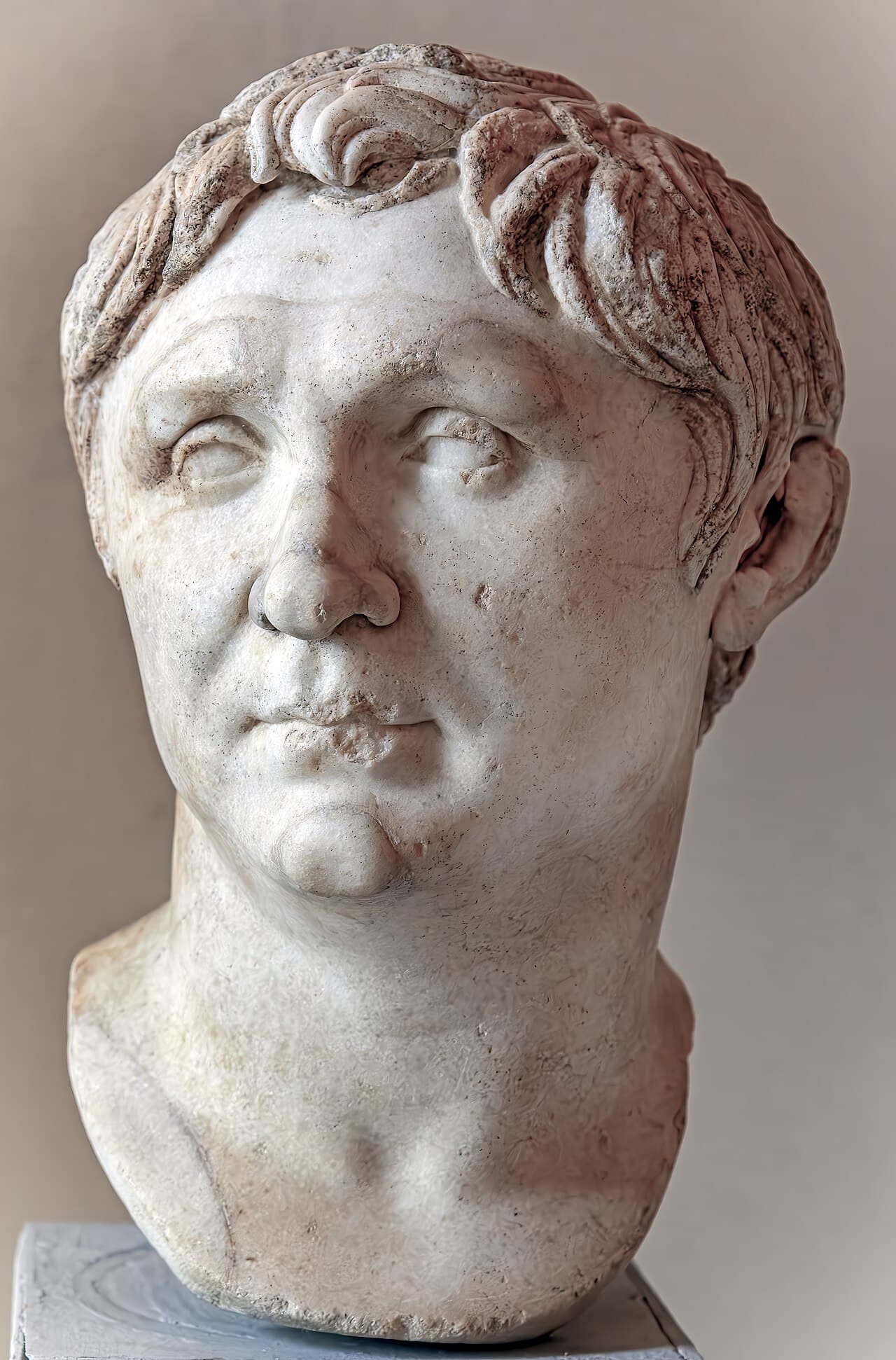
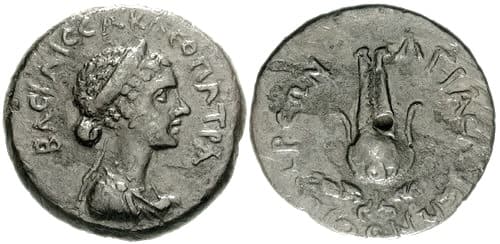
Few figures in history have been as mythologized — and as misunderstood — as Cleopatra VII Philopator. The last active ruler of the Ptolemaic Kingdom of Egypt, she governed a civilization already three thousand years old, navigated the treacherous politics of a dying empire, and forged alliances with the two most powerful men in Rome. Yet for centuries, popular culture reduced her to a footnote of romance. The real Cleopatra was something far more formidable: a brilliant administrator, a gifted linguist, a naval commander, and the final monarch to rule Egypt as an independent state before it fell to Rome.
A Dynasty Born from Conquest
Cleopatra was born around 69 BC into the Ptolemaic dynasty, a royal line established by Ptolemy I Soter — one of Alexander the Great's generals — following the death of Alexander in 323 BC. The Ptolemies ruled Egypt for nearly three centuries, yet remained distinctly Macedonian Greek in culture and language. Before Cleopatra, no Ptolemaic ruler had bothered to learn the Egyptian language. She would change that. Ancient sources, including the historian Plutarch, credit her with fluency in nine languages, including Egyptian, Ethiopian, Hebrew, Aramaic, Arabic, and Latin — in addition to her native Greek. This linguistic mastery was not merely intellectual vanity; it was a calculated tool of statecraft that allowed her to negotiate directly with foreign dignitaries and endear herself to native Egyptians as no Ptolemaic ruler had before.
Rise to Power: Sibling Rivalry and Civil War
Cleopatra assumed co-rule of Egypt with her father Ptolemy XII around 52 BC, and after his death in 51 BC, she became queen alongside her younger brother Ptolemy XIII, whom she was required by tradition to marry — a purely political arrangement. The siblings quickly fell into conflict, and by 48 BC, Cleopatra had been driven out of Alexandria by her brother's powerful advisors. She gathered an army on Egypt's eastern border, setting the stage for civil war.

Into this volatile situation sailed Julius Caesar, who arrived in Alexandria in pursuit of his rival Pompey — only to find that Pompey had already been assassinated on Egyptian soil. According to legend, Cleopatra had herself smuggled into Caesar's presence rolled inside a carpet or a linen sack to bypass her brother's guards. Whether or not the story is literally true, the meeting proved epoch-defining. Caesar, then 52, and Cleopatra, 21, quickly became allies — and lovers. Caesar supported her claim to the throne, defeated Ptolemy XIII's forces, and Cleopatra was restored to power. Ptolemy XIII drowned in the Nile during battle in 47 BC.
Caesar, Caesarion, and the Politics of Motherhood
Following Caesar's victory, Cleopatra gave birth to a son she named Ptolemy Caesar — nicknamed Caesarion, meaning 'little Caesar.' She publicly claimed Caesar as the father, a declaration that carried enormous political weight, linking her dynasty to the most powerful man in the Roman world. Caesar never formally acknowledged the boy under Roman law, but neither did he deny paternity. Cleopatra visited Rome with Caesarion around 46 BC, where Caesar controversially erected a golden statue of her in the Temple of Venus Genetrix — a direct association with the goddess herself.
Caesar's assassination on the Ides of March, 44 BC, shattered this arrangement. Cleopatra returned to Egypt, her Roman lifeline severed. Within months, she had Ptolemy XIV — her second brother and co-ruler — killed, elevating Caesarion as her co-regent. She was now the sole power behind Egypt's throne.
Mark Antony and the Alliance That Defied Rome
After Caesar's death, Rome fractured into competing factions. Mark Antony emerged as one of the triumvirate rulers governing the Roman world. In 41 BC, he summoned Cleopatra to the city of Tarsus in modern-day Turkey to account for Egypt's perceived support of his enemies. Instead of arriving as a supplicant, she sailed in on a golden barge with silver oars and purple sails, dressed as Aphrodite, surrounded by attendants costumed as Cupids. The spectacle was a masterwork of political theater — a deliberate reversal of power dynamics that left Antony, not Cleopatra, in the position of seeking favor.
Their alliance, political and romantic, lasted over a decade. Antony would give Cleopatra and her children significant territories — including Cyprus, parts of the Levant, and portions of Arabia — in an arrangement Rome viewed as scandalous. He fathered three children with her: twins Alexander Helios and Cleopatra Selene II, and a younger son, Ptolemy Philadelphus. Their relationship became the fault line in a new Roman civil war, pitting Antony against Caesar's heir, Octavian.
The Battle of Actium and the Fall of Egypt
The final confrontation came at the Battle of Actium on September 2, 31 BC, fought off the western coast of Greece. Octavian's admiral Agrippa outmaneuvered Antony and Cleopatra's combined fleet in a decisive engagement. Cleopatra's squadron withdrew during the battle — whether in retreat, panic, or tactical design remains debated by historians — and Antony followed. Their land forces surrendered shortly thereafter. Egypt itself fell within the year.
As Octavian's forces closed in on Alexandria in August 30 BC, Antony, reportedly told that Cleopatra was already dead, fell on his own sword. He died in her arms. Cleopatra, facing the prospect of being paraded through Rome as a captive in Octavian's triumph, chose death on her own terms. The most enduring tradition holds that she died from the bite of an asp — an Egyptian cobra, symbol of royal authority and divine protection. She was 39 years old.
Legacy: History's Most Misread Ruler
With Cleopatra's death, the Ptolemaic dynasty ended, and Egypt became a Roman province. Caesarion was captured and executed on Octavian's orders — the last threat of a rival Caesarean bloodline eliminated. Octavian, who would become Augustus, the first Roman Emperor, understood the danger of leaving even a symbolic heir alive.
Cleopatra's legend has proven more durable than any of her enemies anticipated. Roman propaganda portrayed her as a seductive Eastern temptress who corrupted Roman men — a narrative that shaped Western perceptions for two millennia. Shakespeare's 'Antony and Cleopatra,' painted portraits, and Hollywood epics perpetuated the romanticized image. The scholarly rehabilitation of Cleopatra as a sophisticated ruler accelerated significantly in the 20th and 21st centuries, with historians such as Stacy Schiff emphasizing her administrative competence, diplomatic acumen, and intellectual achievements.
She governed one of the ancient world's wealthiest states, maintained Egypt's independence against overwhelming Roman pressure for two decades, and left behind a cultural imprint that outlasted the empire that destroyed her. Cleopatra was not Rome's victim — she was its greatest challenge, and it took the combined might of two Roman civil wars to finally extinguish her flame.
| Key Figure | Relationship to Cleopatra | Significance |
|---|---|---|
| Julius Caesar | Ally and lover | Restored her to the throne; fathered Caesarion |
| Ptolemy XIII | Brother and co-ruler | Rival driven from power; drowned at Battle of the Nile |
| Mark Antony | Ally and lover | Military partner; died after Actium defeat |
| Octavian (Augustus) | Enemy | Defeated her at Actium; conquered Egypt |
| Caesarion | Son | Executed by Octavian; end of Ptolemaic line |