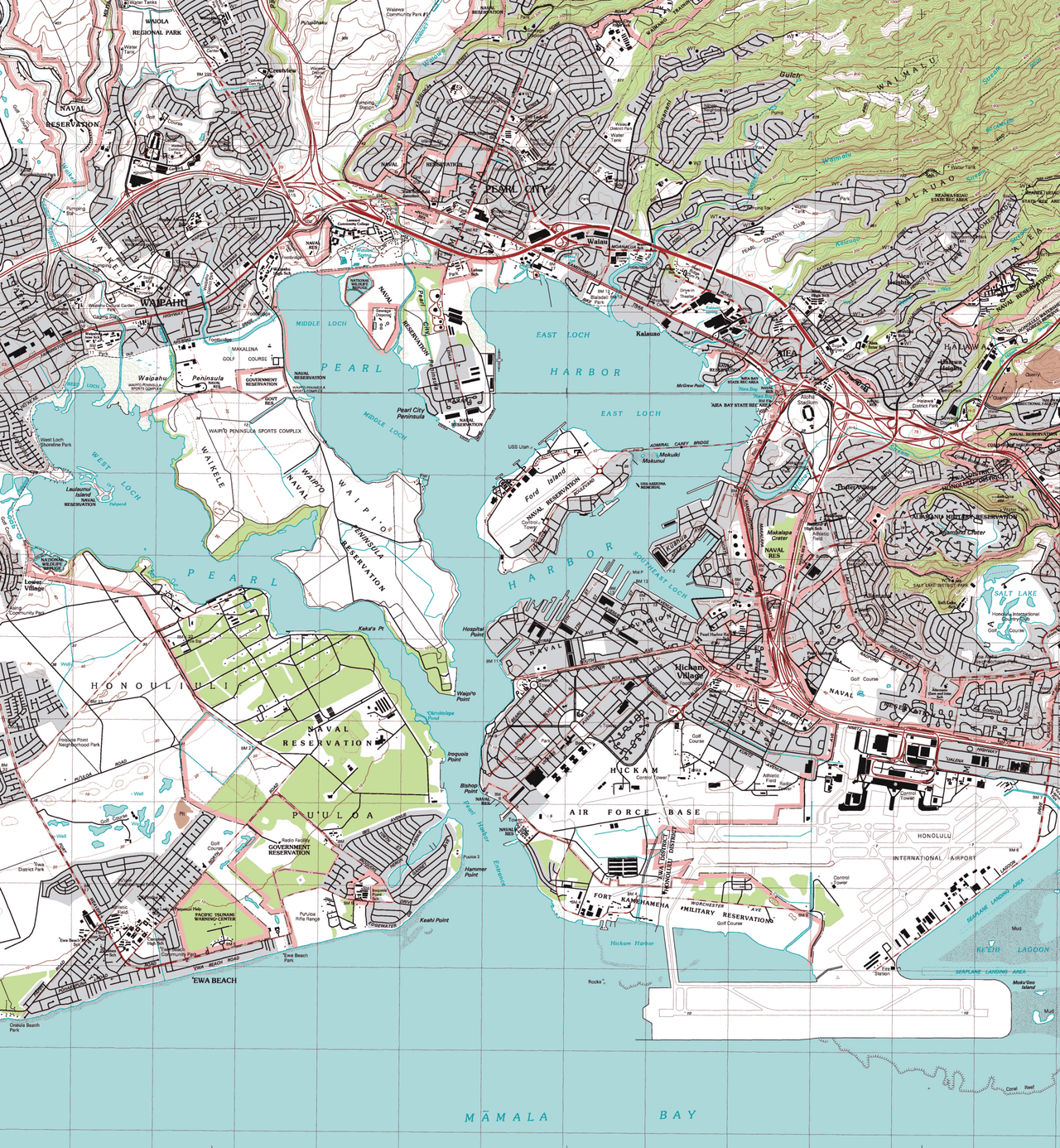
At 7:48 a.m. on a quiet Sunday morning, the skies above Battleship Row on Ford Island, Pearl Harbor, Hawaii, erupted with the roar of Japanese aircraft engines and the thunder of bombs. Within two hours, the Imperial Japanese Navy had executed one of the most audacious surprise attacks in modern military history, sinking or damaging 21 U.S. naval vessels, destroying nearly 300 aircraft, and killing 2,403 Americans. By the time the smoke cleared over Oahu, the United States was irrevocably changed — and so was the trajectory of the Second World War.
The Road to December 7
The attack did not emerge from a vacuum. For years, tensions between Japan and the United States had been escalating as Imperial Japan expanded aggressively across Asia and the Pacific. Japan's invasion of China in 1937, followed by its occupation of French Indochina in 1940, alarmed Western powers. The United States responded with increasingly severe economic pressure, culminating in a sweeping oil embargo in July 1941 that threatened to strangle Japan's war machine. Japan imported roughly 80 percent of its oil from America, making the embargo an existential challenge. Japanese military planners, led by Admiral Isoroku Yamamoto, concluded that the only way to secure the resources Japan needed — particularly the oil fields of the Dutch East Indies — was to neutralize the United States Pacific Fleet before it could interfere.
Yamamoto, paradoxically, harbored deep reservations about a war with America. He had studied at Harvard and served as a naval attaché in Washington, and he understood American industrial capacity. 'I fear all we have done is to awaken a sleeping giant and fill him with a terrible resolve,' he reportedly reflected after the attack — a sentiment that proved prophetic. Nevertheless, he devised Operation Z, a bold plan to strike Pearl Harbor with six fleet carriers and over 350 aircraft in two waves, hoping to buy Japan eighteen months to consolidate its conquests before America could regroup.
The Attack Unfolds
A Japanese strike force of 33 warships, including six aircraft carriers — the Akagi, Kaga, Soryu, Hiryu, Shokaku, and Zuikaku — had departed Hitokappu Bay in the Kuril Islands on November 26, 1941, maintaining strict radio silence as it crossed the North Pacific. Early on December 7, the carriers reached their launch point approximately 230 miles north of Oahu. At 6:00 a.m., the first wave of 183 aircraft lifted off under the command of Commander Mitsuo Fuchida, who famously radioed the code words 'Tora! Tora! Tora!' — meaning 'Tiger! Tiger! Tiger!' — to signal that complete surprise had been achieved.
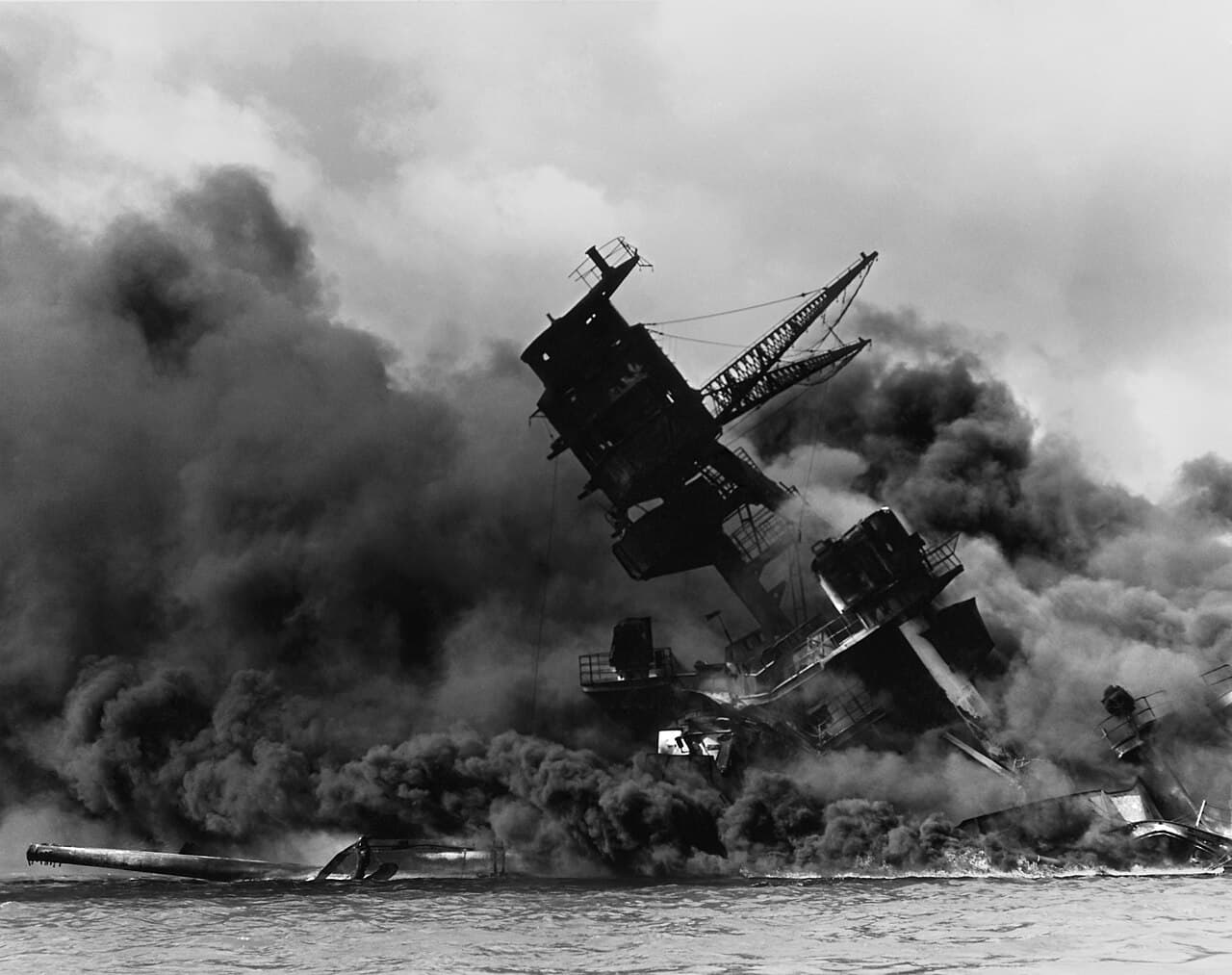
The first wave targeted battleships, airfields, and aircraft. Torpedo bombers skimmed across the harbor at low altitude, deploying specially modified shallow-water torpedoes developed specifically for Pearl Harbor's relatively shallow depths. The battleship USS Arizona was struck by an armor-piercing bomb that detonated her forward ammunition magazine in a catastrophic explosion that killed 1,177 of her 1,512 crew members — nearly half of all deaths at Pearl Harbor. The USS Oklahoma capsized after taking five torpedo hits, trapping hundreds of sailors below decks. A second wave of 167 aircraft arrived at 8:54 a.m., targeting shipyard facilities and any remaining undamaged vessels.
Despite the chaos, American resistance was fierce. Anti-aircraft batteries returned fire, and U.S. Army Air Corps pilots managed to get several aircraft airborne. In total, Japanese forces lost 29 aircraft, 5 midget submarines, and 64 men — modest losses compared to the devastation they inflicted. Critically, however, the three Pacific Fleet aircraft carriers — the Enterprise, Lexington, and Saratoga — were not in port that day, a fact that would prove decisive in the months ahead.
The Human Cost and Immediate Aftermath
| Category | U.S. Losses | Japanese Losses |
|---|---|---|
| Personnel killed | 2,403 | 64 |
| Personnel wounded | 1,178 | ~unknown minor |
| Aircraft destroyed/damaged | ~300 | 29 |
| Ships sunk or damaged | 21 | 5 midget submarines |
| Battleships sunk or beached | 4 (Arizona, Oklahoma, California, West Virginia) | 0 |
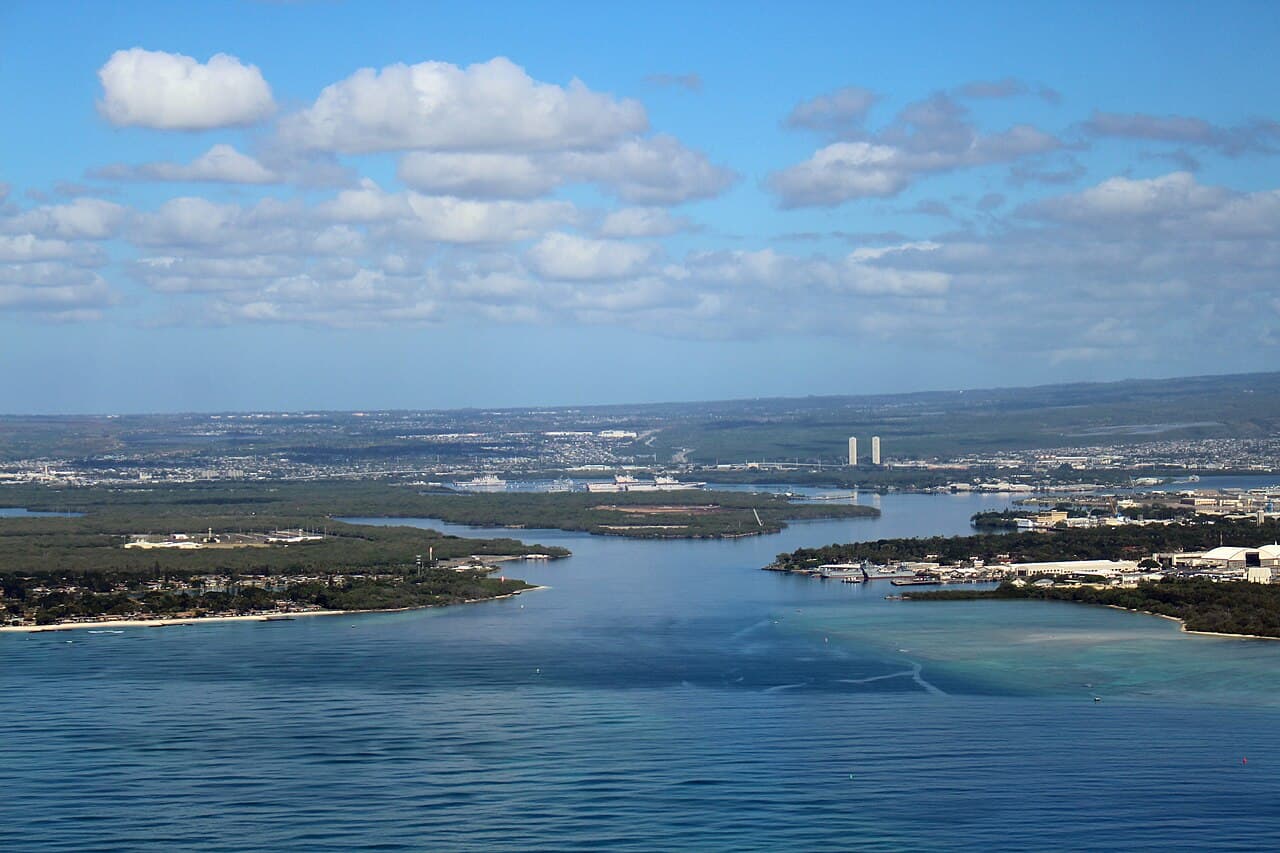
The human toll was staggering. Sailors were burned alive in oil fires that spread across the harbor's surface, soldiers were strafed on open airfields, and civilians in Honolulu were struck by errant anti-aircraft shells. The wreck of the USS Arizona, which settled to the harbor bottom in minutes, became a permanent tomb for her crew. Today, the USS Arizona Memorial — built directly over the sunken hull — draws over one million visitors annually and remains one of the most solemn war memorials in the world.
A Nation Transformed: The Declaration of War
The following day, President Franklin D. Roosevelt stood before a joint session of Congress and delivered one of the most famous speeches in American history. 'Yesterday, December 7, 1941 — a date which will live in infamy — the United States of America was suddenly and deliberately attacked by naval and air forces of the Empire of Japan,' he declared. Congress voted to declare war on Japan within hours, with only a single dissenting vote — that of pacifist Congresswoman Jeannette Rankin of Montana. Three days later, Germany and Italy declared war on the United States, bringing America fully into both the European and Pacific theaters.
The attack shattered the powerful isolationist movement in America. Prior to December 7, organizations like America First had commanded significant popular support, arguing that the United States should stay out of Europe's and Asia's wars. In a single morning, that argument became untenable. Public opinion shifted almost instantaneously to overwhelming support for war. American industry mobilized with remarkable speed: within a year, U.S. factories were outproducing Japan in virtually every category of war material. By 1944, American shipyards were launching an escort carrier every week.

Strategic Miscalculation and Legacy
Historians have long debated the strategic wisdom of Japan's decision. While the attack was a tactical success — the Pacific Fleet's battleship force was temporarily neutralized — it failed on several critical counts. The fuel storage facilities at Pearl Harbor, which held 4.5 million barrels of oil essential to Pacific Fleet operations, were left intact. The submarine base and repair facilities were undamaged. Most consequentially, the aircraft carriers were not sunk. It was carrier aviation, not battleships, that would decide the Pacific War — a fact demonstrated conclusively at the Battle of Midway in June 1942, where American carriers sank four of the six carriers that had struck Pearl Harbor, permanently shifting the balance of naval power in the Pacific.
The attack also had profound and deeply troubling domestic consequences. In the months following Pearl Harbor, the U.S. government, under Executive Order 9066, forcibly relocated approximately 120,000 Japanese Americans from the West Coast to internment camps — one of the most egregious civil liberties violations in American history, driven by wartime hysteria and racial prejudice. The government formally apologized and offered reparations in 1988 through the Civil Liberties Act.
Remembrance and Historical Significance
Pearl Harbor fundamentally altered the shape of the twentieth century. It ended American isolationism as a serious political force, inaugurated the United States as the world's preeminent military and economic power, and set in motion the chain of events that would end with Japan's surrender aboard the USS Missouri in Tokyo Bay on September 2, 1945. The phrase 'Remember Pearl Harbor' became a national rallying cry, and the date December 7 entered the American consciousness as a moment of both tragedy and awakening. More than eight decades later, the last survivors of the attack have nearly all passed on, but the memory of that Sunday morning — and its world-historical consequences — endures as one of the defining chapters of modern history.