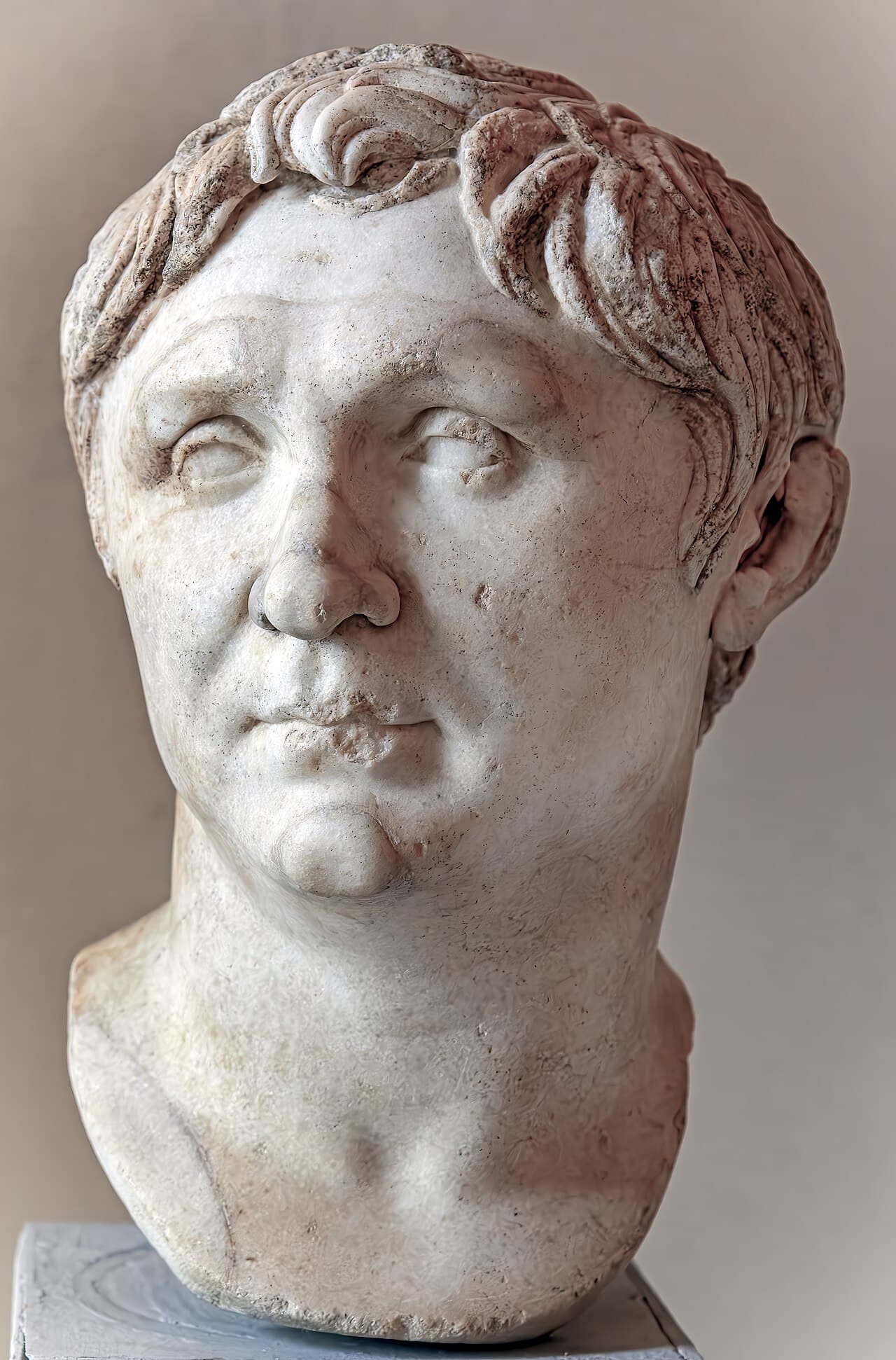
On the Ides of March, 44 BC, a man who had conquered Gaul, crossed the Rubicon, and made himself dictator of the most powerful state in the Western world fell to twenty-three stab wounds on the floor of the Theatre of Pompey. Julius Caesar's death was as dramatic as his life — and just as consequential. He did not merely die; he ignited a chain of civil wars that would eventually transform the Roman Republic into an Empire, reshaping the course of Western civilization for centuries to come.
Origins and the Making of a Politician
Gaius Julius Caesar was born around July 12 or 13, 100 BC, into the patrician gens Julia, a family that traced its lineage — with characteristic Roman grandeur — all the way to the goddess Venus. Despite their noble bloodline, the Julii were not among Rome's wealthiest clans, and Caesar grew up in the Subura, a crowded, rough neighborhood of Rome rather than the aristocratic hills. This modest upbringing, paradoxically, may have sharpened his political instincts. From an early age, Caesar aligned himself with the populares, the faction that championed the interests of common Roman citizens against the entrenched senatorial elite known as the optimates.
His early career was marked by audacious bravado. When pirates captured him in the Aegean around 75 BC and demanded a ransom, Caesar reportedly laughed at the sum, insisted they double it, and cheerfully promised to return and crucify them — a promise he kept. After his ransom was paid and he was freed, he raised a fleet, hunted the pirates down, and had them crucified. It was a preview of the man to come: brilliant, pitiless, and utterly unafraid.
The First Triumvirate and the Road to Power
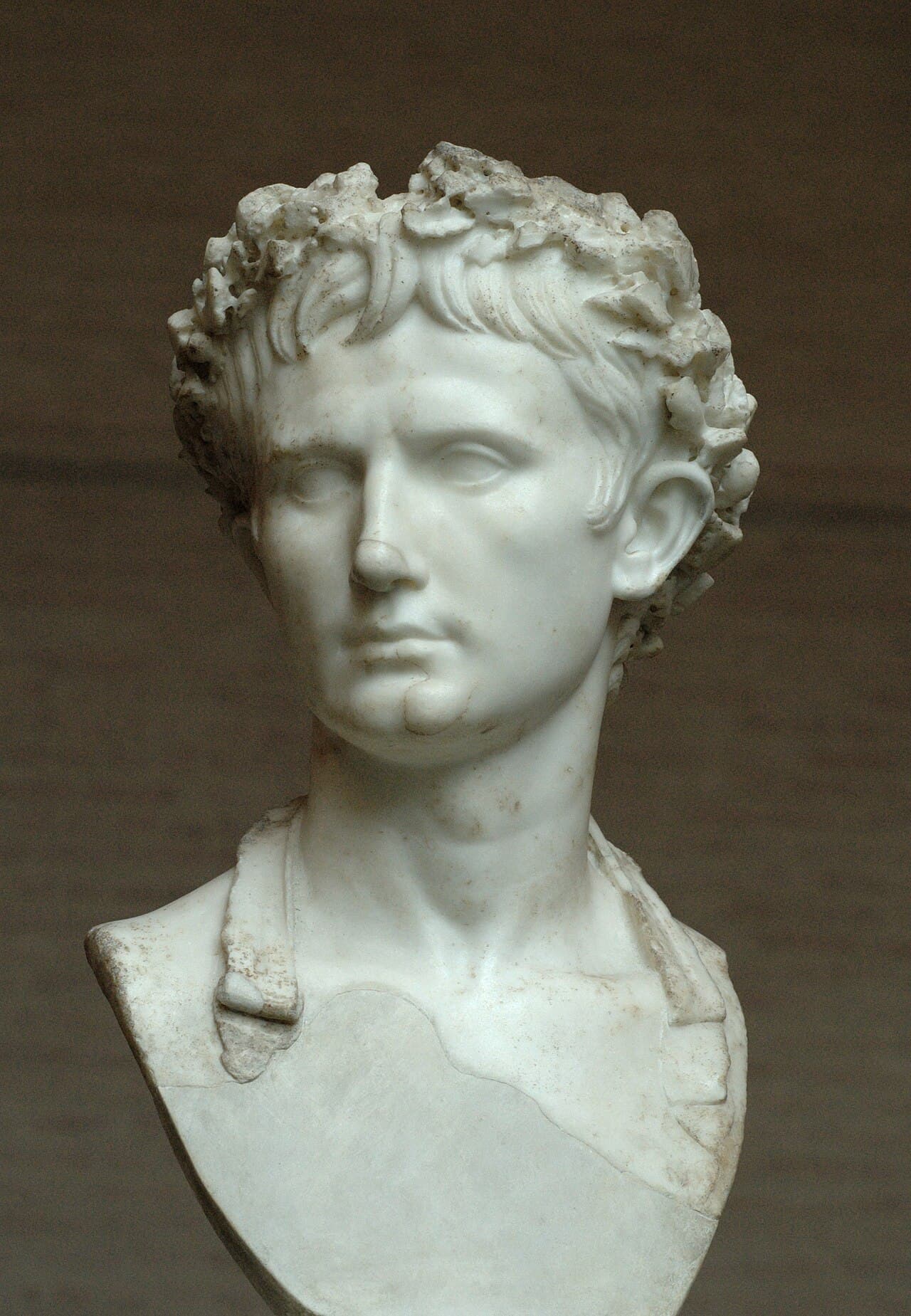
Caesar's ascent through Rome's political cursus honorum was fueled by prodigious debt, equally prodigious charm, and an unsurpassed genius for alliance-building. By 60 BC, he had forged the informal political coalition known as the First Triumvirate with two of Rome's most powerful men: the wealthy Marcus Licinius Crassus, who financed much of Caesar's early career, and Gnaeus Pompeius Magnus — Pompey the Great — Rome's most celebrated general. Together, the three men effectively dominated Roman politics, circumventing a Senate that had grown ossified and self-serving.
As consul in 59 BC, Caesar pushed through landmark legislation on land reform and provincial governance, often over fierce senatorial opposition. He then secured a proconsular command in Gaul — a posting that would define his legacy. What followed over the next eight years was one of the most brutal and consequential military campaigns in ancient history.
The Conquest of Gaul: Glory Built on Blood
From 58 to 50 BC, Caesar waged war across the territories that correspond roughly to modern France, Belgium, Switzerland, and parts of Germany and the Netherlands. His Commentarii de Bello Gallico — the Gallic War Commentaries — present these campaigns in Caesar's own crisp, third-person prose, a masterpiece of military literature and political self-promotion simultaneously. The reality on the ground was far grimmer. Ancient sources, including Caesar's own accounts, suggest that roughly one million Gauls were killed and another million enslaved during the conquest. The siege of Alesia in 52 BC, where Caesar defeated the unified Gallic rebellion led by the chieftain Vercingetorix, stands as one of antiquity's greatest feats of military engineering and tactical brilliance.
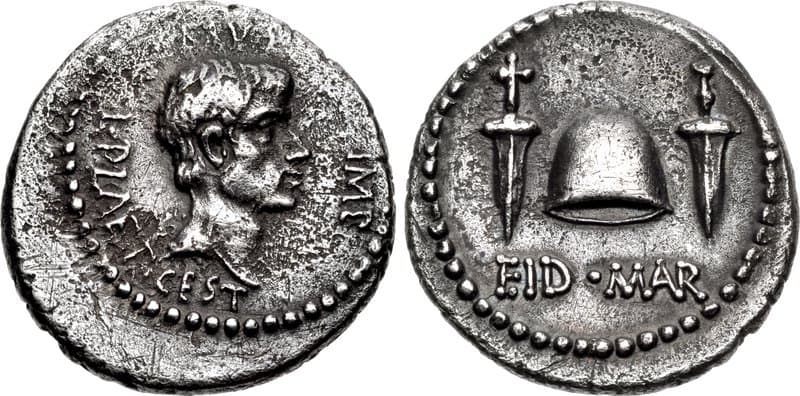
The Gallic Wars made Caesar fabulously wealthy from plunder, gave him a battle-hardened, intensely loyal army, and elevated his popularity in Rome to unprecedented heights. They also terrified the Senate. The old guard — led by men like Cato the Younger and Cicero's sometime ally Pompey — saw in Caesar an existential threat to the Republic itself.
Crossing the Rubicon: The Point of No Return
In January 49 BC, the Senate ordered Caesar to disband his army before returning to Rome. To comply would have left him legally vulnerable to his enemies. Instead, Caesar led his Thirteenth Legion across the Rubicon River — the boundary between Gaul and Italy that no Roman general was permitted to cross with an army — uttering, according to later tradition, either 'The die is cast' or simply quoting a line of Menander: 'Let the die be thrown.' It was treason. It was also genius. Pompey and the senators fled Rome in panic, and Caesar swept down the Italian peninsula almost without a fight.
The ensuing civil war lasted four years and sprawled across the entire Mediterranean world — Spain, Greece, Egypt, North Africa, and Asia Minor. Caesar defeated Pompey's forces at the Battle of Pharsalus in 48 BC; Pompey himself fled to Egypt, where he was murdered on the orders of the young pharaoh Ptolemy XIII. Caesar pursued him there, famously encountered Cleopatra VII — smuggled to him rolled in a carpet, according to legend — and became her ally and lover. Together they defeated Ptolemy and secured her throne.
Dictator Perpetuo: A Republic Hollowed Out
By 45 BC, Caesar stood unchallenged. The Senate, broken and compliant, appointed him dictator perpetuo — dictator in perpetuity. He embarked on sweeping reforms: overhauling the Roman calendar (producing the Julian calendar that underpins our modern Gregorian system), restructuring provincial governance, expanding the Senate to 900 members with men loyal to him, and initiating grand public works. He even planned a campaign against Parthia to avenge the defeat and death of Crassus at Carrhae in 53 BC.
Yet the trappings of monarchy repelled Roman republicans to their core. Rumors swirled that Caesar wished to be crowned king — a title Romans had despised since expelling their last king, Tarquin the Proud, in 509 BC. A conspiracy formed among senators who styled themselves Liberatores, including Marcus Junius Brutus, a man Caesar regarded almost as a son, and Gaius Cassius Longinus. On March 15, 44 BC — the Ides of March — they struck.
Assassination and Aftermath
The conspirators numbered perhaps sixty men, yet the actual killing fell to a much smaller group who surrounded Caesar at a Senate meeting near the Theatre of Pompey. He was stabbed twenty-three times. Roman physician Antistius later examined the body and concluded that only one wound — to the chest — had been fatal. The Senate chamber erupted in chaos; the assassins had no coherent plan for what came next.
What came next was catastrophe for the Republic. Caesar's lieutenant Mark Antony inflamed the Roman populace with a funeral oration that turned the mob against the conspirators. Caesar's adopted son and heir, the eighteen-year-old Octavian, proved a ruthless political operator who ultimately outmaneuvered everyone. After another decade of civil wars, Octavian — now Augustus — became Rome's first emperor in 27 BC. The Republic Caesar had strained was now truly dead.
Caesar's Enduring Legacy
The name Caesar itself became a title. Roman emperors bore it; so did the German Kaisers and the Russian Tsars — both words derived directly from Caesar. His Julian calendar remained the standard of the Western world for over 1,600 years. His Gallic Commentaries are still read in Latin classrooms. Shakespeare immortalized him on stage. And the phrase 'crossing the Rubicon' has entered every major language as shorthand for an irreversible, fateful decision. Julius Caesar was a man of towering contradictions — merciful to defeated enemies yet responsible for staggering mass death; a champion of the common people who made himself a monarch; a writer of pellucid clarity who dealt in ruthless political opacity. He did not save the Republic. He ended it. And in doing so, he reshaped the world.
| Key Role | Years Active | Major Achievement |
|---|---|---|
| Military Tribune | 73–72 BC | Early military service |
| Quaestor | 69 BC | Provincial administration in Spain |
| Consul | 59 BC | Land reform legislation passed |
| Proconsul of Gaul | 58–50 BC | Conquest of Gaul; Commentarii written |
| Dictator | 49–44 BC | Calendar reform; consolidated Roman power |