On the morning of June 8, 793 AD, monks at the monastery of Lindisfarne, on a tidal island off the northeast coast of England, looked up to see dragon-prowed ships emerging from the North Sea mist. What followed was swift and brutal: the raiders plundered the monastery's treasures, killed several monks, and carried others away as slaves. To the Christian world, it felt like divine punishment. To historians, it marks the opening salvo of the Viking Age — a period of Norse expansion that would last nearly three centuries and fundamentally reshape the medieval world.
Who Were the Vikings?
The word 'Viking' likely derives from the Old Norse 'víkingr,' meaning a pirate or sea-raider, though the vast majority of Scandinavians during this era were farmers, craftspeople, and traders rather than warriors. The term has since been applied broadly to the Norse peoples of Denmark, Norway, and Sweden who sailed outward from roughly 793 to 1066 AD. They were not a unified nation but a collection of chieftains, jarls, and free farmers bound by shared language, mythology, and a remarkable seafaring technology. Their longships — sleek, shallow-drafted, and capable of navigating both open ocean and inland rivers — were the technological marvel that made their reach possible.
The Ships That Conquered Horizons
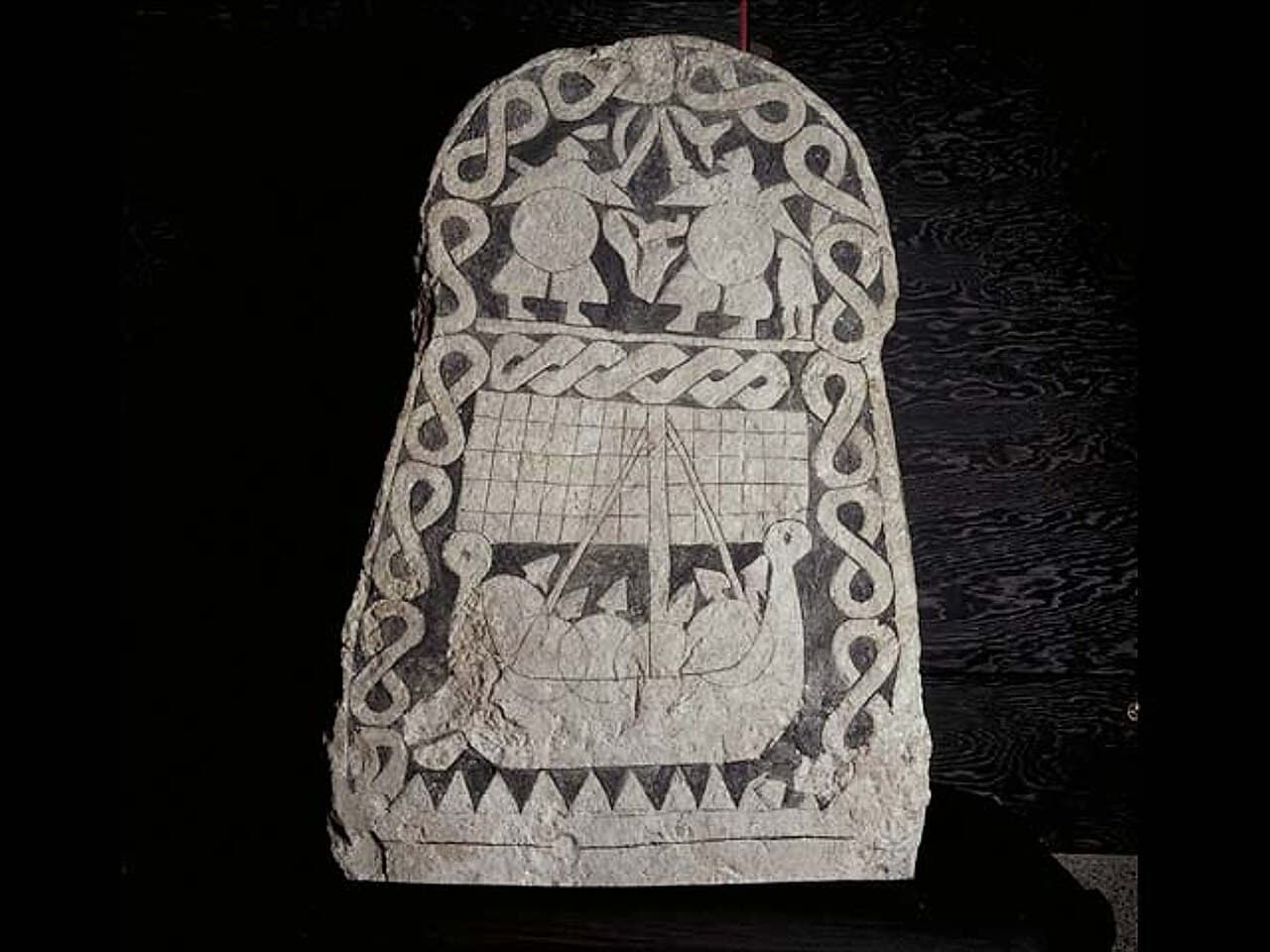
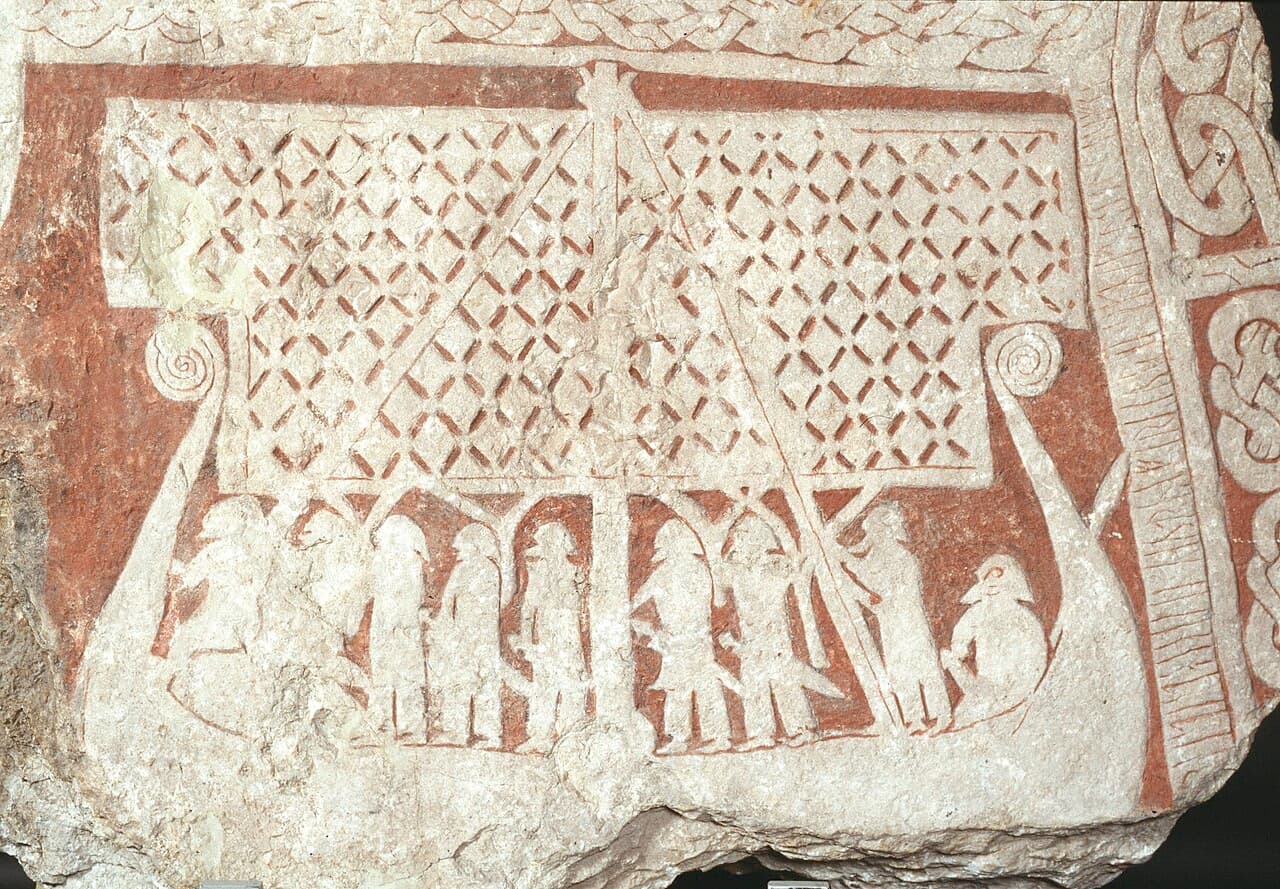
The Viking longship was an engineering masterpiece. Built using clinker construction — overlapping planks riveted together — these vessels were extraordinarily flexible, bending with ocean swells rather than breaking against them. The largest war vessels, known as 'drakkars' or dragon ships, could carry upward of 60 warriors and reach speeds of 15 knots under sail. Crucially, their shallow draft meant they could be beached directly on coastlines and rowed far up rivers, allowing raids deep into the European interior. The Gokstad and Oseberg ships, both discovered in Norwegian burial mounds in the 19th century, remain the finest surviving examples of this extraordinary craftsmanship.
Raiders, Traders, and Settlers: A World in Motion
The popular image of the Viking as a horned-helmeted berserker is largely a romantic invention — Norse helmets were conical iron affairs with nose guards, and horned helmets were largely ceremonial. More importantly, the Viking Age was as much about commerce and colonization as it was about raiding. Norwegian Vikings pushed west and north, settling the Faroe Islands around 825 AD, Iceland from 874 AD, and Greenland from 985 AD. Around 1000 AD, Leif Eriksson established a settlement at L'Anse aux Meadows in present-day Newfoundland — making Norse explorers the first Europeans to reach the Americas, nearly five centuries before Columbus.
Danish Vikings swept south and west, raiding the Frankish Empire, besieging Paris in 845 AD, and eventually settling in the region of northwestern France that became Normandy — the 'land of the Northmen.' It was the descendants of these Danish settlers, now thoroughly Gallicized, who under William the Conqueror would invade England in 1066, an event sometimes cited as the symbolic close of the Viking Age. Swedish Vikings, meanwhile, pushed east along Russian river systems, establishing trade routes from the Baltic to the Byzantine Empire and the Abbasid Caliphate. Known as the Varangians, they founded or dominated early Russian city-states such as Novgorod and Kyiv, giving their name — possibly derived from 'Rus,' meaning 'men who row' — to the nascent Russian state.
Norse Society and Culture
Viking society was hierarchical but not rigidly so. At the top sat kings and powerful jarls (earls); below them were the karls, free farmers and craftspeople who formed the backbone of Norse society; and at the bottom were thralls, enslaved people often captured during raids. Women in Norse society enjoyed comparatively greater legal rights than many of their European contemporaries — they could own property, initiate divorce, and manage estates in their husbands' absence. The sagas, those extraordinary prose narratives composed primarily in Iceland between the 12th and 14th centuries, record women such as Gudrid Thorbjarnardóttir, who traveled to North America, and Aud the Deep-Minded, who led her clan to Iceland and converted to Christianity.

Norse religion centered on a rich mythological pantheon — Odin, Thor, Freya, Loki — housed in the cosmic tree Yggdrasil, with realms ranging from Asgard to Midgard to the underworld of Hel. Sacrifice, both animal and occasionally human, featured in religious practice. Elaborate burial rites, including ship burials for the elite, reflected beliefs about the afterlife — particularly the warrior's paradise of Valhalla. Runic writing, used across Scandinavia and its colonies, served both practical and magical purposes, inscribed on weapons, memorial stones, and everyday objects.
The Danelaw and Political Impact on Europe
The political impact of Viking incursions reshaped kingdoms across Europe. In England, decades of Danish raids and invasion culminated in the establishment of the Danelaw — a broad swath of eastern and northern England under Norse law and custom, formalized in a treaty between Alfred the Great of Wessex and the Danish leader Guthrum in 886 AD. Place names across Yorkshire, Lincolnshire, and East Anglia still bear their Norse roots: '-by' (village), '-thorpe' (hamlet), '-thwaite' (clearing). King Cnut, who ruled England, Denmark, and Norway simultaneously from 1016 to 1035 AD, represented the apex of Danish power in Britain.
| Region | Norse Group | Key Settlements / Events |
|---|---|---|
| England & Ireland | Norwegian & Danish | Danelaw, Dublin founded c.841 AD |
| France | Danish | Normandy granted 911 AD; Paris besieged 845 AD |
| Iceland & Greenland | Norwegian | Iceland settled 874 AD; Greenland 985 AD |
| North America | Norwegian | L'Anse aux Meadows c.1000 AD |
| Russia & Ukraine | Swedish (Varangians) | Novgorod & Kyiv established |
| Byzantine Empire | Swedish (Varangians) | Varangian Guard formed c.988 AD |
Christianization and the Close of an Era
The gradual Christianization of Scandinavia was perhaps the single greatest factor in transforming and ultimately ending the Viking Age as a distinct phenomenon. Norway's King Olaf Haraldsson (later Saint Olaf) imposed Christianity by sword and persuasion in the early 11th century. Denmark and Sweden followed similar trajectories. As Norse rulers converted, the ideological justification for raiding monasteries evaporated, trade networks became more regularized, and Scandinavian kingdoms were absorbed into the broader framework of Christian European politics. The Norman Conquest of England in 1066 — itself a product of Viking heritage — is the conventional endpoint, though Norse influence continued to reverberate for generations.
The Viking Legacy
The imprint of the Viking Age is indelible. English alone contains hundreds of Norse loan words — 'sky,' 'window,' 'knife,' 'husband,' 'ugly,' 'berserk.' The legal and parliamentary traditions of Iceland's Althing, established in 930 AD and still functioning, make it arguably the world's oldest parliament. The demographic legacy is measurable in DNA: studies show significant Norse ancestry in populations from Orkney to Normandy to Newfoundland's Indigenous-Norse contact zones. Modern nations — Russia, Normandy, the British Isles — bear the structural fingerprints of Norse settlement and governance. Far from being mere destroyers, the Vikings were architects of a connected medieval world, their longships threading together continents in ways that presaged the age of exploration to come.