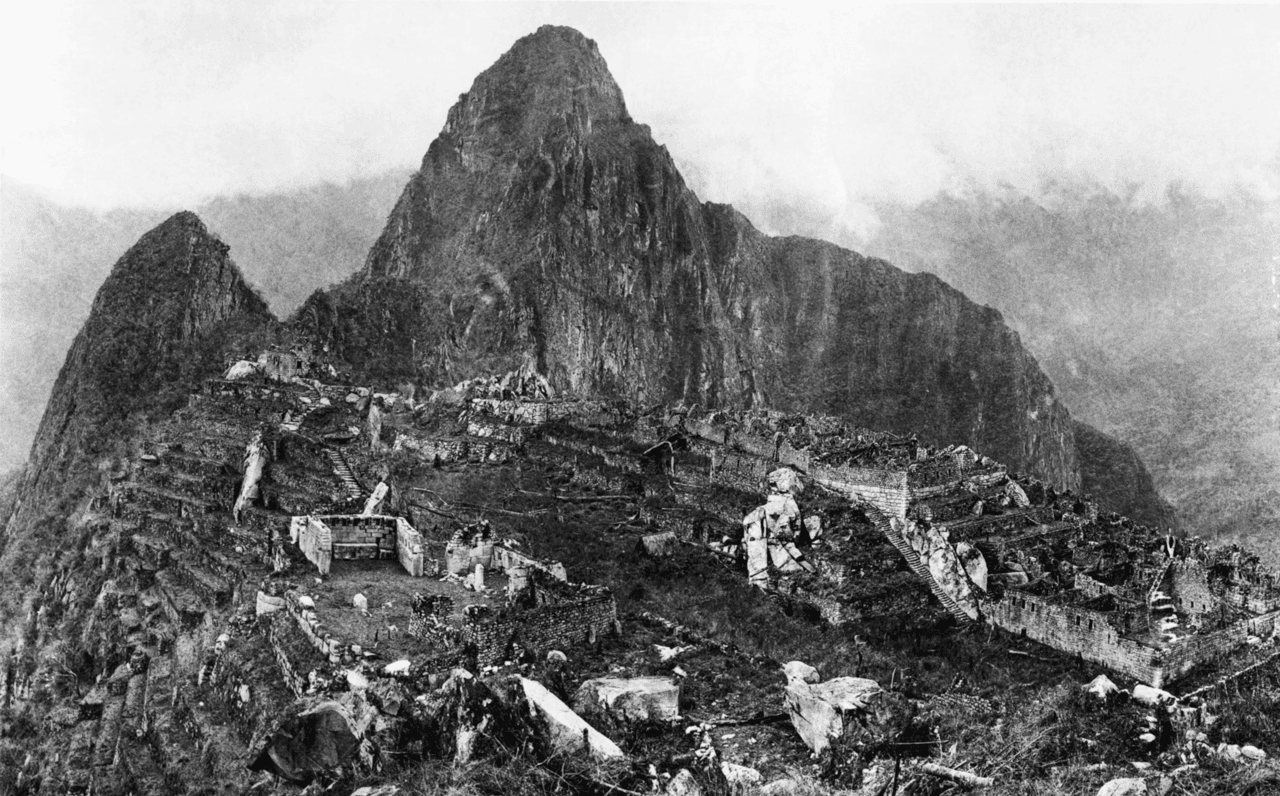
Machu Picchu is a 15th-century Inca citadel built around 1450 AD on a 2,430-metre mountain ridge above the Urubamba River valley in present-day Peru. Constructed under the reign of Sapa Inca Pachacuti, it served as a royal estate and religious sanctuary before being abandoned roughly a century later during the Spanish conquest. Rediscovered by American historian Hiram Bingham III on July 24, 1911, it is today recognised as one of the greatest architectural and archaeological achievements in human history.
Who Built Machu Picchu and When Was It Constructed?
Machu Picchu was built under the orders of Sapa Inca Pachacuti (born c. 1418, reigned 1438–1471), the ninth ruler of the Inca Empire and arguably its greatest military and architectural visionary. Construction is generally dated to around 1450 AD, though some radiocarbon analyses of human remains at the site, published in a 2021 study in the journal Antiquity by researchers from Yale and Tulane universities, suggest the estate may have been established as early as 1420 AD — potentially during Pachacuti's rise to power rather than after his coronation. The citadel was built using a workforce drawn primarily through the Inca system of mit'a, a form of obligatory public service labour. Thousands of skilled stonemasons, labourers, and specialists transported massive granite blocks — some weighing over 50 tonnes — from quarries located on the mountain itself and from the valley below, without the use of the wheel, iron tools, or draft animals such as horses. Llamas were used to carry lighter loads, but the primary engine of construction was human labour organised with extraordinary logistical precision. At its peak, Machu Picchu housed an estimated 500 to 750 permanent residents, though population figures during royal visits and religious ceremonies may have temporarily exceeded 1,000.
What Was the Purpose of Machu Picchu?
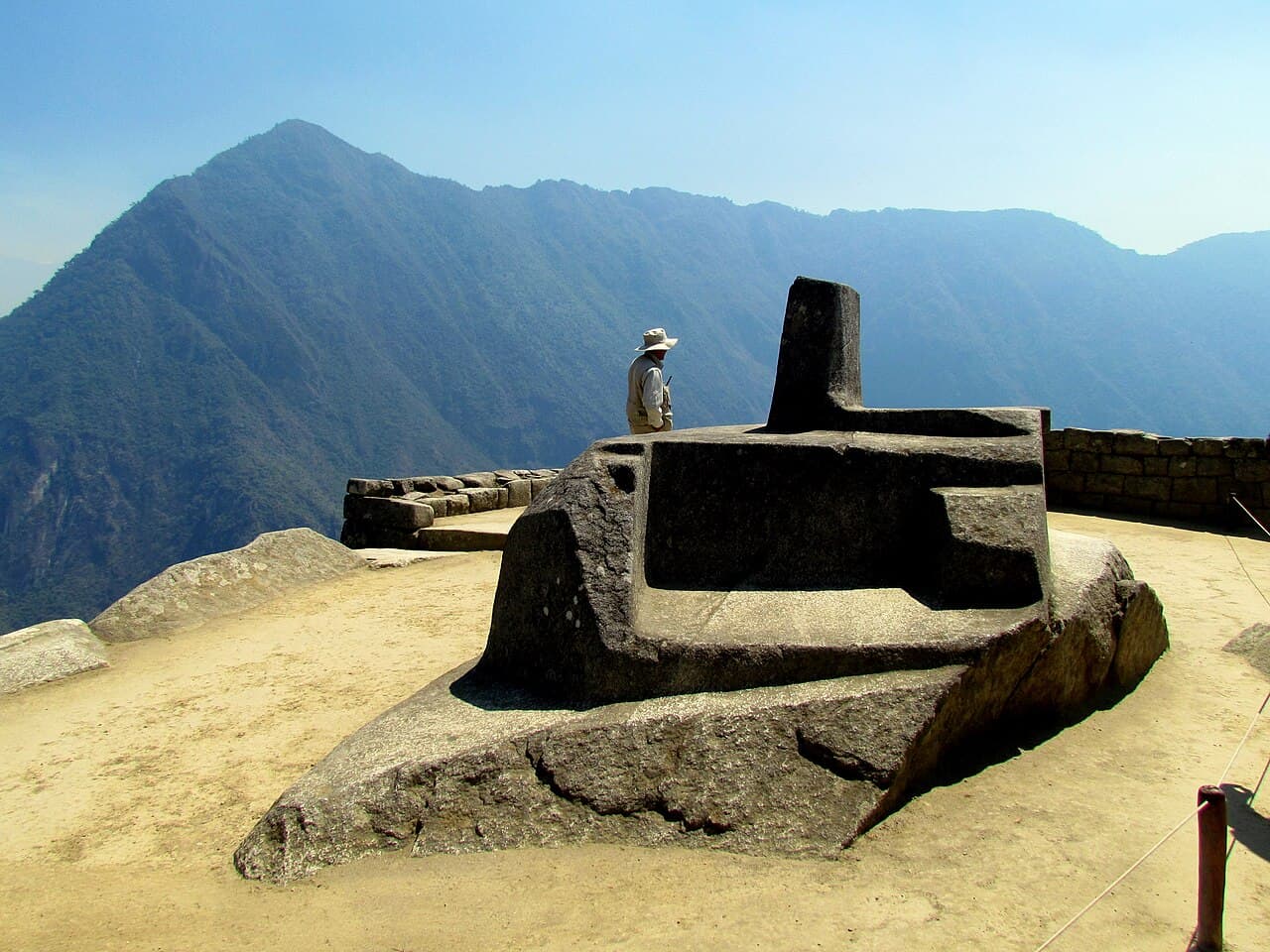
For much of the 20th century, Machu Picchu was popularly described as a 'Lost City,' implying it was a major urban centre unknown to the wider world. Modern scholarship has significantly refined this picture. The scholarly consensus now views Machu Picchu primarily as a royal llacta — an Inca estate built for the personal use of Pachacuti and his royal panaca (royal clan) — rather than a commercial city or military fortress. Archaeological evidence supports multiple overlapping functions. The site contains a sophisticated astronomical observatory centred on the Intihuatana stone, a carved granite pillar whose name translates roughly as 'hitching post of the sun.' During the winter solstice on June 21, the sun sits almost directly above the stone, casting virtually no shadow — a feature that almost certainly served ritual and calendrical purposes in the Inca solar religion. The Temple of the Sun, a semi-circular tower built directly over a natural rock, contains two trapezoidal windows aligned so that on the winter solstice and the Pleiades rising, sunlight strikes specific interior points. There are also strong indications of agricultural experimentation: the site's 700-plus terraces, known as andenes, were not merely for feeding residents but served as a botanical laboratory for cultivating crops at varying altitudes and microclimates. The presence of at least three distinct water channels drawing from a spring above the site demonstrates advanced hydraulic engineering capable of supplying the entire complex year-round.
How Did the Inca Build Machu Picchu Without Modern Technology?
The engineering of Machu Picchu remains a source of enduring fascination. The Inca employed a construction technique called ashlar, in which stones are precisely cut and fitted together without mortar. The precision is so extreme that a sheet of paper cannot be inserted between many of the joints. This technique, combined with the slight inward lean of walls and the use of trapezoidal rather than rectangular windows and doorways, gave structures exceptional resistance to the frequent earthquakes that rock the Andean region. Geologists estimate that the site sits above an intersection of two fault lines, making seismic resilience not a luxury but a necessity. Stones were shaped using harder stone tools such as quartzite hammers, abraded with sand, and moved using earthen ramps, wooden sledges, and large numbers of workers pulling with ropes made from plant fibres. The city's layout was also designed with drainage in mind: approximately 60 percent of the construction effort went underground, creating deep foundations and drainage channels that have kept the terraces from collapsing for nearly 600 years. Of the roughly 200 structures at the site, the great majority are still standing today, a testament to the sophistication of Inca engineering.
Why Was Machu Picchu Abandoned?
Machu Picchu was not destroyed by the Spanish — it was simply left behind. The site was abandoned around 1572, approximately 40 years after Francisco Pizarro's conquest of the Inca Empire began in 1532. The reasons are both political and epidemiological. Following Pachacuti's death in 1471, the estate passed to his royal panaca, who maintained it as a ceremonial and agricultural site. When the Spanish arrived, they rapidly dismantled the Inca administrative hierarchy, cutting off the tribute and labour networks that sustained royal estates. Simultaneously, European diseases — principally smallpox — swept through the Andean population with catastrophic speed, killing an estimated 50 to 90 percent of the indigenous population within decades. With no labour force, no political structure to compel maintenance, and Spanish colonial authorities showing no interest in a remote mountain retreat they did not know existed, Machu Picchu was simply vacated. The jungle encroached rapidly, and within a generation the site had become invisible from the valleys below. Crucially, while local Quechua-speaking farmers in the Urubamba Valley retained knowledge of the site's existence — and Hiram Bingham was in fact led to it by a local farmer named Melchor Arteaga in 1911 — it never appeared on any Spanish colonial map or document, which accounts for its later designation as 'lost' by Western historians.
How Was Machu Picchu Rediscovered in 1911?
On July 24, 1911, Hiram Bingham III, a Yale University historian and explorer leading a National Geographic-sponsored expedition, was guided up the mountain by Melchor Arteaga, a local farmer who charged Bingham one Peruvian sol for the service. When Bingham reached the ridge, he found a young Quechua boy named Pablito Alvarez living among the ruins with his family, who had been farming the terraces for years. Bingham immediately recognised the significance of what he was seeing, though he initially believed he had found Vilcabamba, the legendary last refuge of the Inca resistance against Spain — a conclusion later disproved when the actual Vilcabamba was identified at Espíritu Pampa, 130 kilometres to the northwest, in the 1960s. Bingham returned to the site in 1912 and 1915, excavating extensively and removing an estimated 46,000 artefacts — including ceramics, jewellery, and human remains — to Yale University's Peabody Museum. The repatriation of these artefacts became a major diplomatic dispute between Peru and Yale, ultimately resolved in 2010–2012 when Yale agreed to return the collection to Peru, where it is now housed at the Museo Machu Picchu in Cusco.
What Are the Most Important Structures at Machu Picchu?
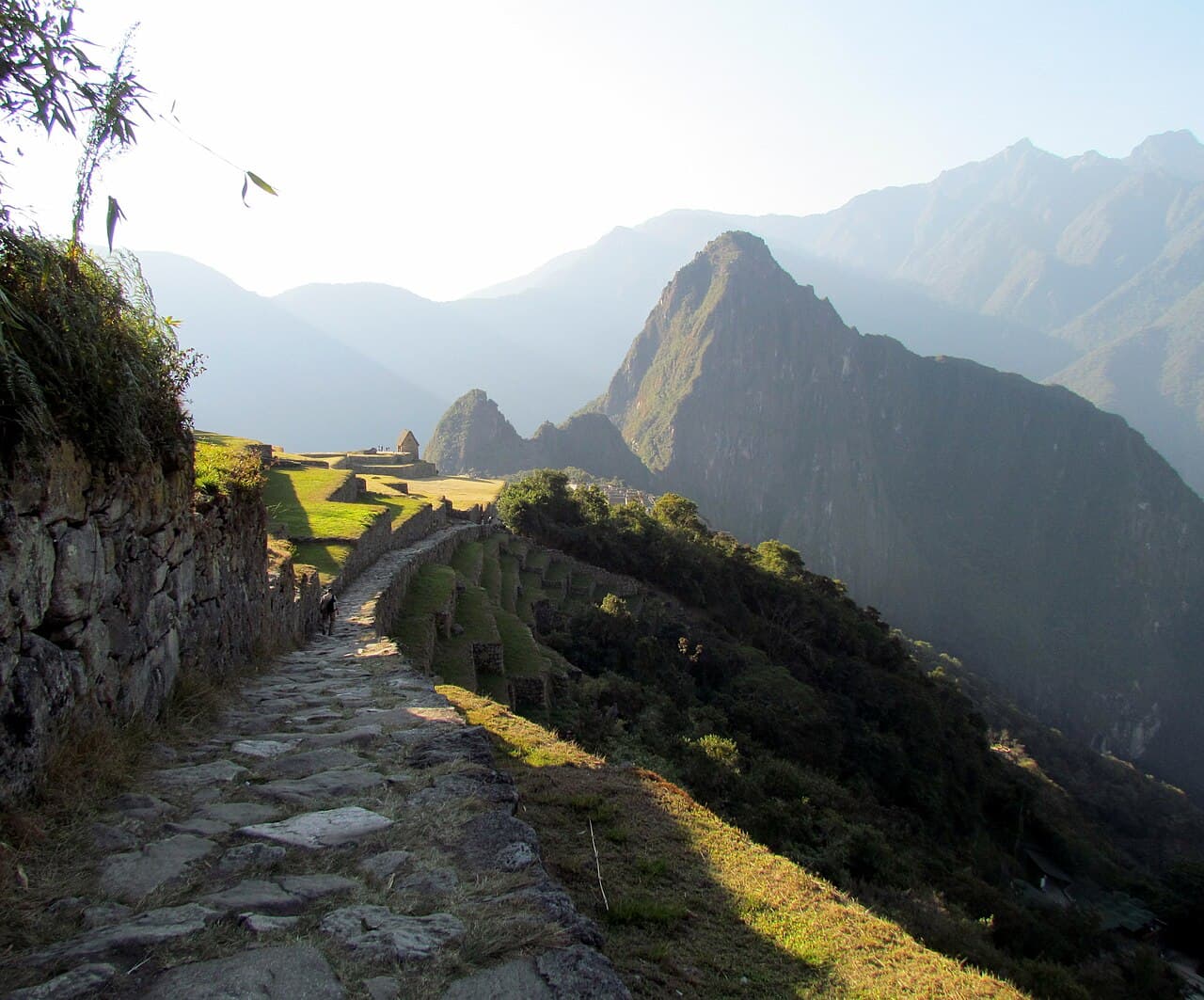
Machu Picchu is divided into two principal zones: the agricultural sector, dominated by its cascading terraces, and the urban sector, which contains the civic, religious, and residential architecture. The Temple of the Sun is perhaps the most finely crafted building at the site, featuring curved ashlar stonework of extraordinary precision aligned with solar events. Directly below it lies the Royal Tomb, a natural cave adapted into a ritual space. The Intihuatana, located at the highest point of the urban sector, is one of the few such ceremonial stones in the Inca world that was not destroyed by Spanish missionaries, who systematically smashed similar stones at other sites. The Room of the Three Windows frames a dramatic panorama of the surrounding mountains and is believed to carry cosmological significance linked to Inca creation mythology. The Temple of the Condor incorporates a natural rock formation into a stylised image of the Andean condor, the most sacred bird in Inca religion. The residential sector contains the Palace of the Princess, the Inca's royal quarters, and numerous smaller dwellings thought to have housed the aqllakuna — chosen women who produced textiles and chicha (maize beer) for religious ceremonies. Huayna Picchu, the steep peak looming directly behind the citadel in its most famous photographs, contains additional terracing and a temple near its summit, reachable by a narrow Inca stairway.
| Structure | Function | Notable Feature |
|---|---|---|
| Temple of the Sun | Solar observatory and worship | Winter solstice window alignment |
| Intihuatana Stone | Astronomical/ritual calendar | Near-zero shadow at June solstice |
| Room of the Three Windows | Religious/cosmological ceremony | Aligned with Inca creation myth |
| Temple of the Condor | Religious ritual | Natural rock shaped as condor wings |
| Royal Tomb | Funerary/ritual use | Carved natural cave beneath Temple of the Sun |
| Agricultural Terraces (700+) | Farming and botanical research | Prevent erosion, create microclimates |
| Huayna Picchu Peak | Temple and observation | Accessible via steep Inca stairway |
| Water Channels (16 fountains) | Hydraulic engineering | Fed by spring above the site year-round |
Why Is Machu Picchu a UNESCO World Heritage Site and Why Is It Threatened?
UNESCO designated Machu Picchu a World Heritage Site in 1983, recognising it for both its outstanding universal cultural value and its exceptional natural landscape within the broader Machu Picchu Historical Sanctuary, a 32,592-hectare protected area. In 2007, it was voted one of the New Seven Wonders of the World in a global poll attracting over 100 million votes, dramatically accelerating its tourism profile. Today, Machu Picchu receives approximately 1.5 million visitors per year, generating over $60 million USD annually for Peru's tourism economy. However, this volume of visitation poses existential threats. UNESCO and the Peruvian Ministry of Culture have repeatedly warned that foot traffic, vibrations from walking, and the humidity introduced by large crowds are accelerating the erosion of stone surfaces and destabilising terraces. A 2019 audit by Peru's Comptroller General found that actual daily visitor numbers regularly exceeded the officially permitted cap of 2,500 per day. In response, Peru has progressively tightened regulations: as of 2023, daily entry is capped at 4,044 visitors across two time slots, timed tickets are mandatory, and visitors must follow designated one-way circuits. The site also faces geological risk — a 2019 landslide temporarily closed access, and experts from the University of Cusco have identified ongoing slow-motion slope instability beneath several key structures. Climate change is compounding these risks by intensifying seasonal rainfall in the region.
What Is the Lasting Legacy and Historical Significance of Machu Picchu?
Machu Picchu stands as the single most powerful surviving symbol of the Inca Empire, a civilisation that, at its height in the early 16th century, ruled the largest empire in the pre-Columbian Americas — stretching 4,300 kilometres from present-day Colombia to central Chile and encompassing an estimated 12 million people across diverse ecological zones. The site demonstrates that complex, sophisticated civilisation emerged independently in the Andean world without many of the technological foundations — writing, the wheel, iron metallurgy — that Western historiography long treated as prerequisites. Its astronomical alignments reveal a society with deep mathematical and observational knowledge. Its terracing and hydraulic systems showcase environmental engineering that modern conservationists are actively studying for insights into sustainable hillside agriculture. For contemporary Peruvians and Quechua-speaking communities in particular, Machu Picchu is not merely a tourist attraction but a living symbol of indigenous identity, resilience, and cultural continuity. The ongoing repatriation of Inca artefacts from institutions worldwide, the growing academic recognition of Quechua oral traditions as valid historical sources, and the site's central role in Peru's national identity all reflect a broader global reassessment of the Inca achievement — one that places Machu Picchu not as a curiosity of a vanished world, but as evidence of one of humanity's most remarkable civilisations.