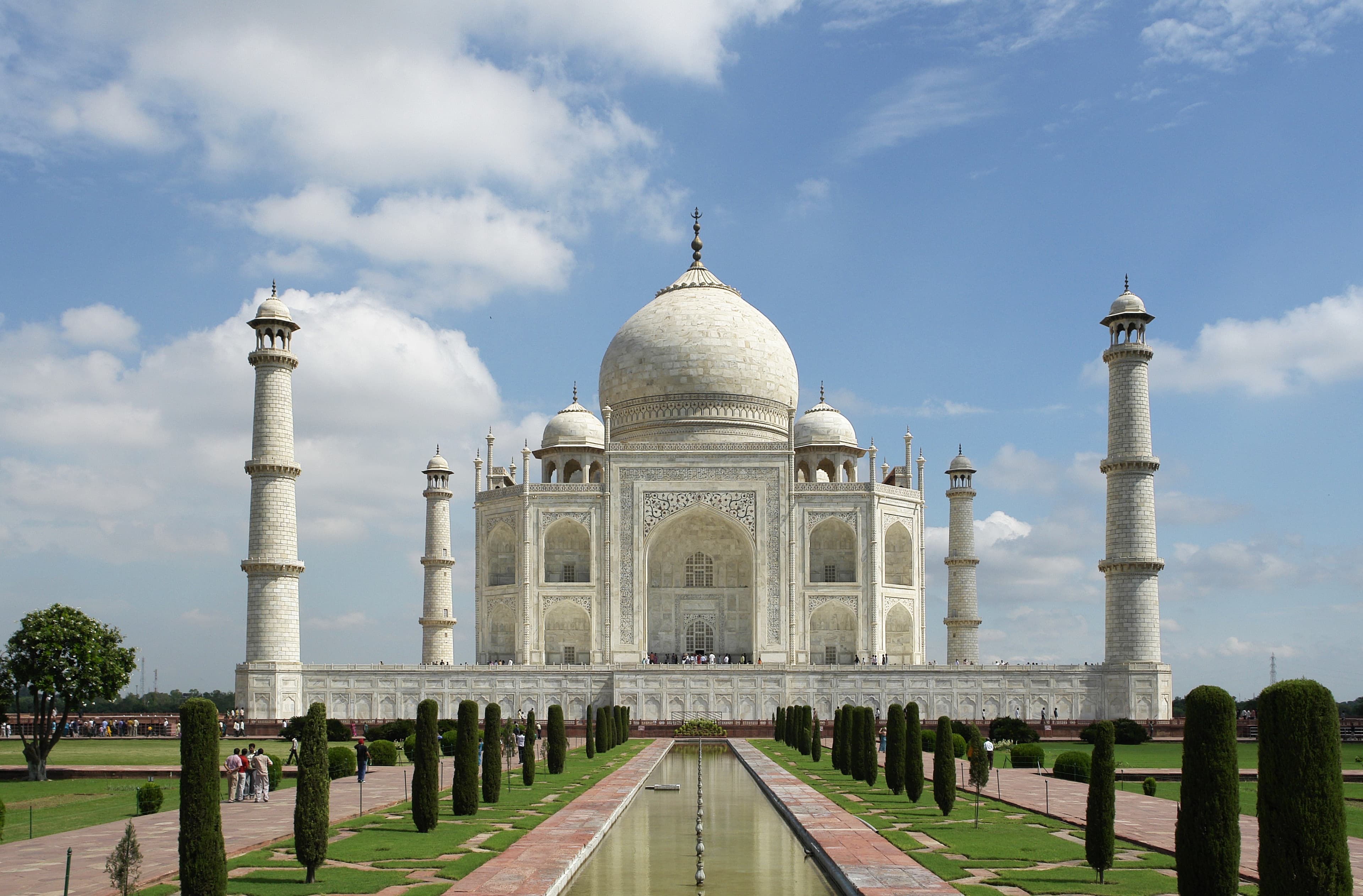
The Taj Mahal is a white marble mausoleum built by Mughal Emperor Shah Jahan between 1632 and 1653 in Agra, India, to house the tomb of his beloved wife Mumtaz Mahal, who died in childbirth in 1631. Regarded as the finest example of Mughal architecture and one of the most recognizable structures on Earth, it was designated a UNESCO World Heritage Site in 1983 and named one of the New Seven Wonders of the World in 2007. More than 8 million tourists visit it each year, making it India's most visited monument.
Who Built the Taj Mahal and Why?
The Taj Mahal was commissioned by Emperor Shah Jahan (born Shahab-ud-din Muhammad Khurram, 1592–1666), the fifth ruler of the Mughal Empire. Its construction was a direct response to the death of his third and most beloved wife, Arjumand Banu Begum, known posthumously as Mumtaz Mahal — meaning 'Chosen One of the Palace.' She died on June 17, 1631, in Burhanpur, during the birth of their fourteenth child, Gauhara Begum. Contemporary accounts describe Shah Jahan as inconsolable, reportedly emerging from mourning with his hair turned white. He vowed to build the grandest tomb the world had ever seen, a monument that would reflect the depth of his grief and the glory of Mughal power. The tomb was thus both a deeply personal act of devotion and a deliberate statement of imperial magnificence.
When Was the Taj Mahal Built? Timeline of Construction
Construction began in 1632, just one year after Mumtaz Mahal's death, and the main mausoleum was completed in 1643, though work on the surrounding complex — including the mosque, guest house, and elaborate gardens — continued until approximately 1653. The project took over 22 years in total. An estimated 20,000 artisans and laborers were recruited from across the Mughal Empire, Central Asia, and Persia. The chief architect is believed to have been Ustad Ahmad Lahauri, a Persian-born designer mentioned in court documents, though some historians attribute the overall design to a council of architects working under Shah Jahan's personal direction. The emperor himself is said to have been deeply involved in the design process, reviewing plans and making alterations.
What Materials Were Used to Build the Taj Mahal?
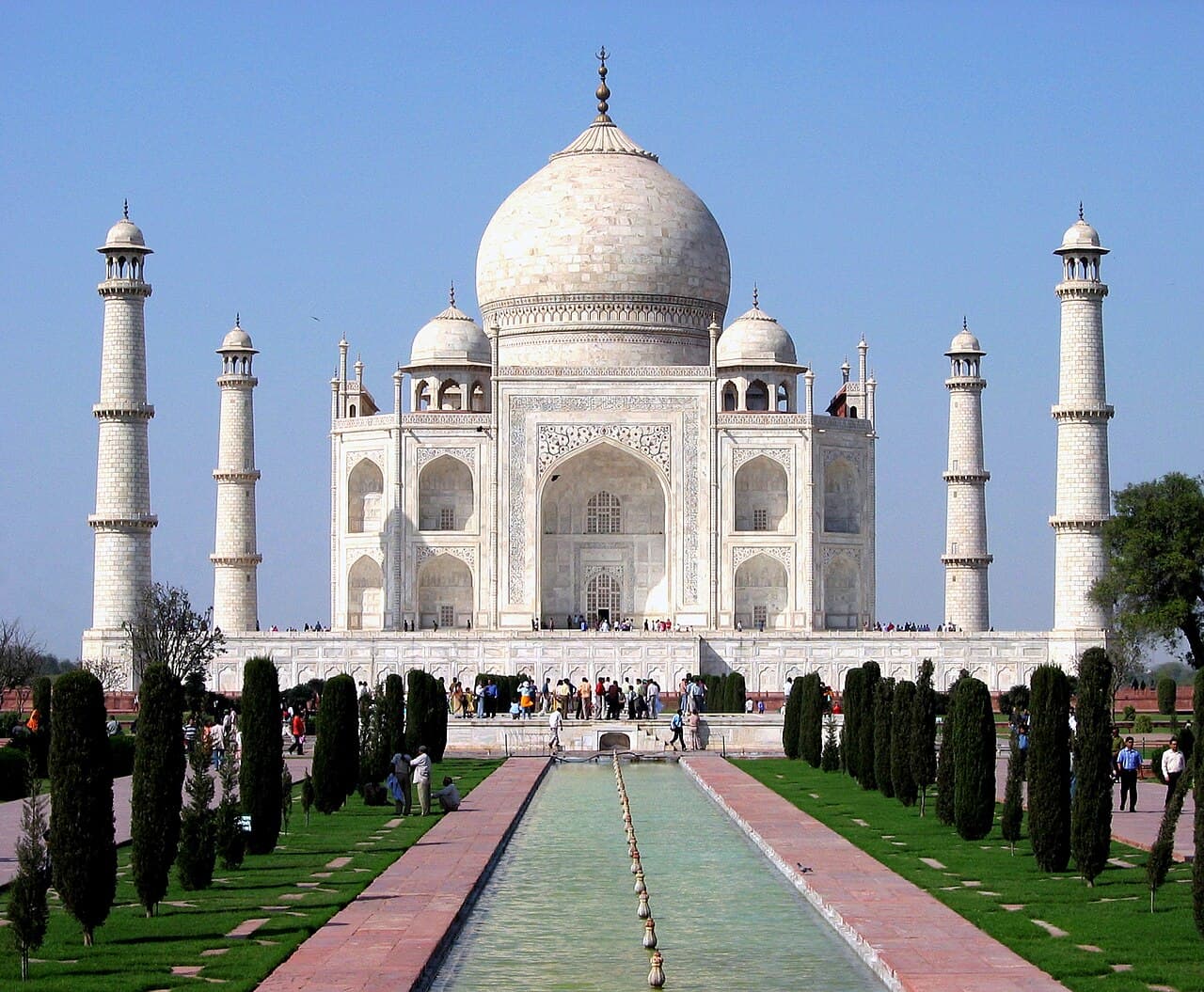
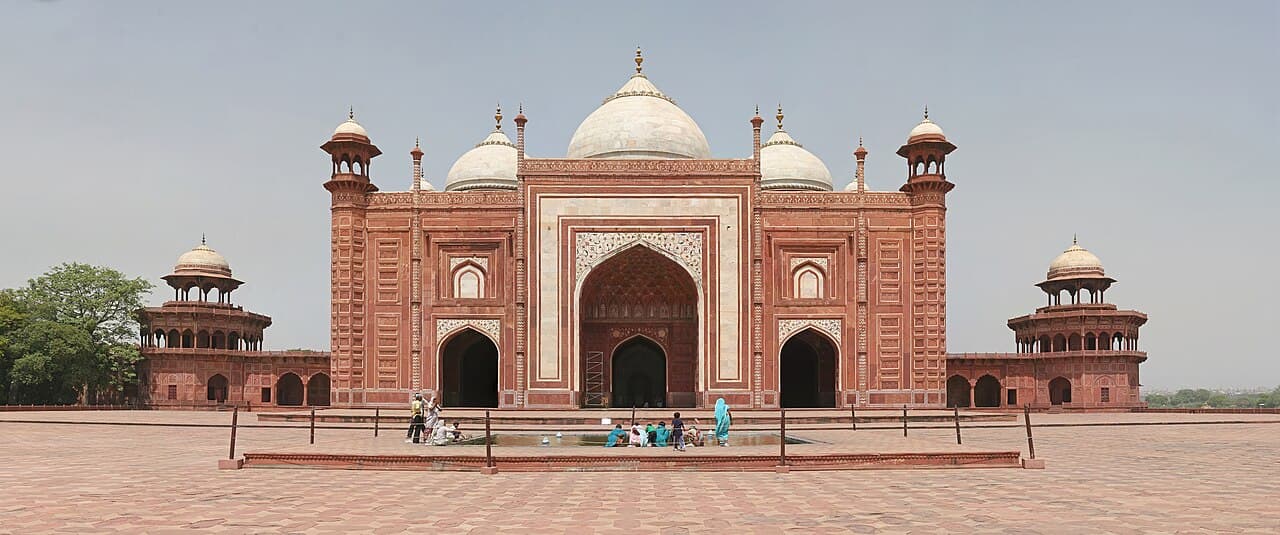
The Taj Mahal's gleaming white exterior is made from translucent Makrana marble quarried in Rajasthan, approximately 250 miles from Agra. The marble was transported on specially constructed wagons pulled by teams of elephants along purpose-built roads. In total, the complex used materials sourced from more than 22 countries. Turquoise arrived from Tibet and China; lapis lazuli from Afghanistan; jasper from Punjab; carnelian from Arabia; onyx, crystal, and coral from various parts of Asia and Europe. The inlay technique used — pietra dura, or 'parchin kari' in Mughal Persian — involves setting semi-precious stones into marble in intricate floral and geometric patterns. Approximately 28 varieties of precious and semi-precious stones were used throughout the interior. The foundation and basement structures, hidden beneath the marble surface, are built from red sandstone, which also forms the mosque and jawab (guest house) flanking the main tomb.
How Is the Taj Mahal Designed? Architecture Explained
The Taj Mahal complex covers approximately 42 acres (17 hectares) and is organized along a strict north-south axis of perfect symmetry. The main tomb sits on a raised marble plinth measuring 186 feet (56.7 metres) square, elevated 23 feet (7 metres) above the surrounding garden. The central onion-shaped dome reaches a height of 240 feet (73 metres) from the base and is surrounded by four smaller chhatri (octagonal kiosks) that amplify the visual effect. Four minarets, each standing 137 feet (41.8 metres) tall, frame the tomb at the corners of the plinth; they are slightly angled outward by about 2 degrees so that in the event of an earthquake they would fall away from the main structure rather than onto it. The double-shell dome — an outer dome and a lower inner dome visible from inside the chamber — is a classic Persian innovation that Shah Jahan's architects refined to near perfection. The interior cenotaphs of Mumtaz Mahal and Shah Jahan (added after his death in 1666) are enclosed by an octagonal marble screen inlaid with precious stones, while the actual sarcophagi rest in a plain crypt directly below at garden level. Calligraphic inscriptions from the Quran, executed by the master calligrapher Amanat Khan, adorn every major gateway and facade in black marble inlay.
What Is the Char Bagh Garden and Why Does It Matter?
The Taj Mahal's garden is a classic Mughal char bagh — a 'four-part garden' — divided by raised marble and sandstone water channels into four symmetrical sections, each subdivided into 16 flower beds. In total the garden contains over 400 trees, including cypress (symbolizing death and eternity) and fruit trees. A long central reflecting pool aligns perfectly with the tomb, creating the iconic mirror image seen in millions of photographs. The garden layout is derived from the Islamic concept of paradise (the word 'paradise' itself derives from the Old Persian 'pairidaeza,' meaning walled garden). Water was supplied from the Yamuna River via a complex system of underground pipes and a large storage tank, from which water was lifted by a series of animal-powered pulleys into elevated distribution channels. The use of water as both a functional and aesthetic element — in pools, fountains, and channels — was central to Mughal garden design.
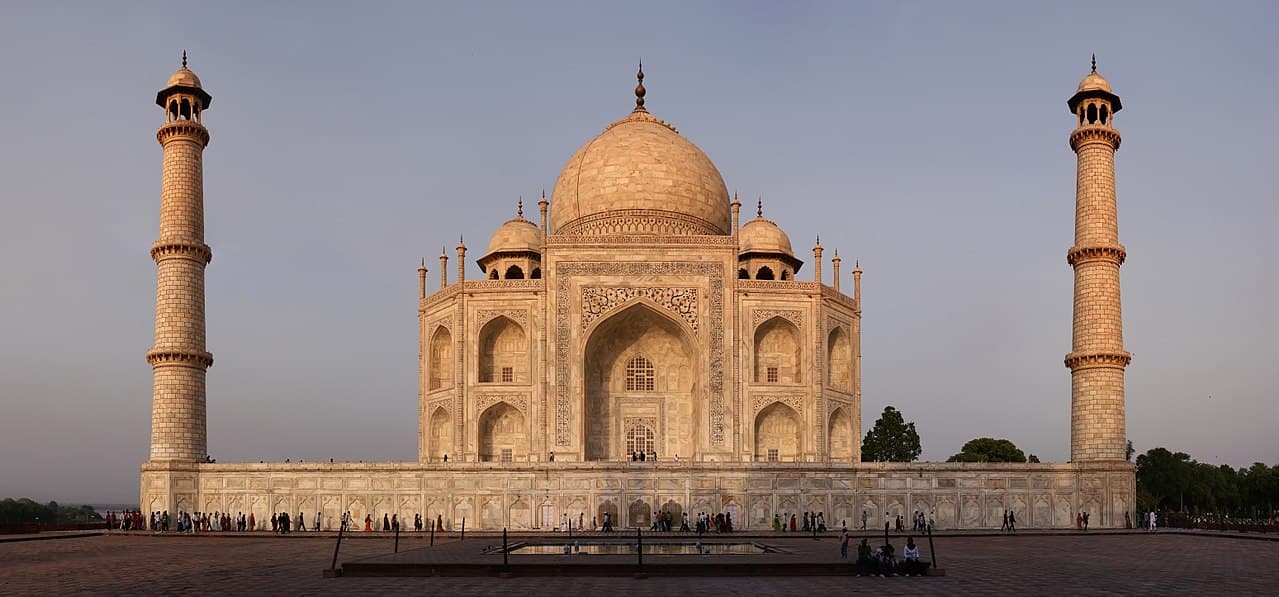
| Feature | Measurement / Detail |
|---|---|
| Total complex area | 42 acres (17 hectares) |
| Main dome height | 240 feet (73 metres) |
| Minaret height | 137 feet (41.8 metres) |
| Plinth dimensions | 186 × 186 feet (56.7 × 56.7 metres) |
| Construction period | 1632–1653 (approx. 22 years) |
| Workers employed | ~20,000 artisans and laborers |
| Primary material | Makrana white marble (Rajasthan) |
| Semi-precious stone varieties | 28 types from 22+ countries |
| Annual visitors | ~8 million (pre-pandemic peak) |
| UNESCO designation | 1983 |
What Happened to Shah Jahan After the Taj Mahal Was Built?
Shah Jahan's later years were marked by political tragedy. In 1657, he fell seriously ill, triggering a war of succession among his four sons. His third son, Aurangzeb, emerged victorious, executing his brothers and, in 1658, imprisoning his own father in Agra Fort — visible from the Taj Mahal across the Yamuna River. According to Mughal court historians, Shah Jahan spent his final eight years gazing at the Taj Mahal from a window in the Musamman Burj tower of the fort. He died on January 22, 1666, at the age of 74. Aurangzeb, despite their fraught relationship, honored his father's implicit wish by having him interred beside Mumtaz Mahal in the Taj Mahal's crypt. Shah Jahan's cenotaph, notably larger and less ornate than Mumtaz's, breaks the otherwise perfect symmetry of the interior — the only deliberate asymmetry in the entire complex.
How Has the Taj Mahal Been Threatened and Preserved Over the Centuries?
The Taj Mahal has faced numerous threats throughout its nearly 400-year history. During the Indian Rebellion of 1857, British soldiers and officials vandalized the complex, stripping semi-precious stones and marble from the walls. The British Viceroy Lord Curzon ordered a major restoration between 1900 and 1908, including the replacement of the central lamp in the main chamber. In the 20th century, severe air pollution from Agra's foundries and traffic caused the white marble to yellow and pit — a phenomenon described by the Supreme Court of India as 'marble cancer.' In 1996, the Supreme Court ordered the closure of hundreds of polluting industries within a 10,400-square-kilometre 'Taj Trapezium Zone.' Acid rain from the Mathura oil refinery (40 km away) has also been a persistent concern. The Archaeological Survey of India applies mud packs of 'multani mitti' (fuller's earth) to the marble every few years to draw out pollutants, temporarily restoring its whiteness. Groundwater depletion has caused subsidence concerns for the wooden foundation piles that support the structure beneath the marble plinth, which require moisture to remain solid. Conservation experts from UNESCO and the Indian government continue to monitor the monument's structural integrity.
Why Is the Taj Mahal Considered a Symbol of Love?
The Taj Mahal's reputation as the world's greatest monument to love is rooted in both its origin and its artistic language. Unlike royal tombs built to project dynastic power, Shah Jahan's inscription choices — drawn from the Quran's passages on paradise, judgment, and the soul — frame the building explicitly as a place where Mumtaz awaits resurrection in divine gardens. Court poet Kalim described the tomb as making 'the sun envious.' The 17th-century Mughal court historian Abd al-Hamid Lahauri recorded that Shah Jahan wept openly at the site and ordered permanent prayers for Mumtaz's soul. The Taj Mahal embeds Mumtaz's name and memory into stone so completely — in inscriptions, in the garden's paradisaical symbolism, in the very orientation of the building toward the heavens — that it functions less as a tomb than as an eternal love letter. Its universally legible visual harmony has made that emotional message accessible across cultures and centuries, cementing its status as a global romantic symbol.
What Is the Taj Mahal's Legacy and Global Influence?
The Taj Mahal's influence on world architecture has been profound. It synthesized Persian, Islamic, Ottoman, and Indian architectural traditions into a wholly original form that remains unsurpassed in its execution. Structures explicitly inspired by it include the Bibi Ka Maqbara in Aurangabad, India (built 1660–1661 by Aurangzeb for his wife, often called the 'mini Taj'), the Hira Mahal in Delhi, and several colonial-era buildings across South Asia. In the 20th century its silhouette became one of the world's most reproduced images — appearing on Indian currency, postage stamps, and as the country's defining tourist brand. India earns approximately $400 million annually from Taj Mahal-related tourism. The monument generates 1–3% of India's entire GDP through heritage tourism and associated industries. In 2007, it was voted one of the New Seven Wonders of the World by over 100 million voters globally. Its status extends beyond architecture into philosophy: the Taj Mahal is studied as a model of how imperial power can be deployed in the service of personal grief, and how beauty can be politically, spiritually, and emotionally meaningful simultaneously.