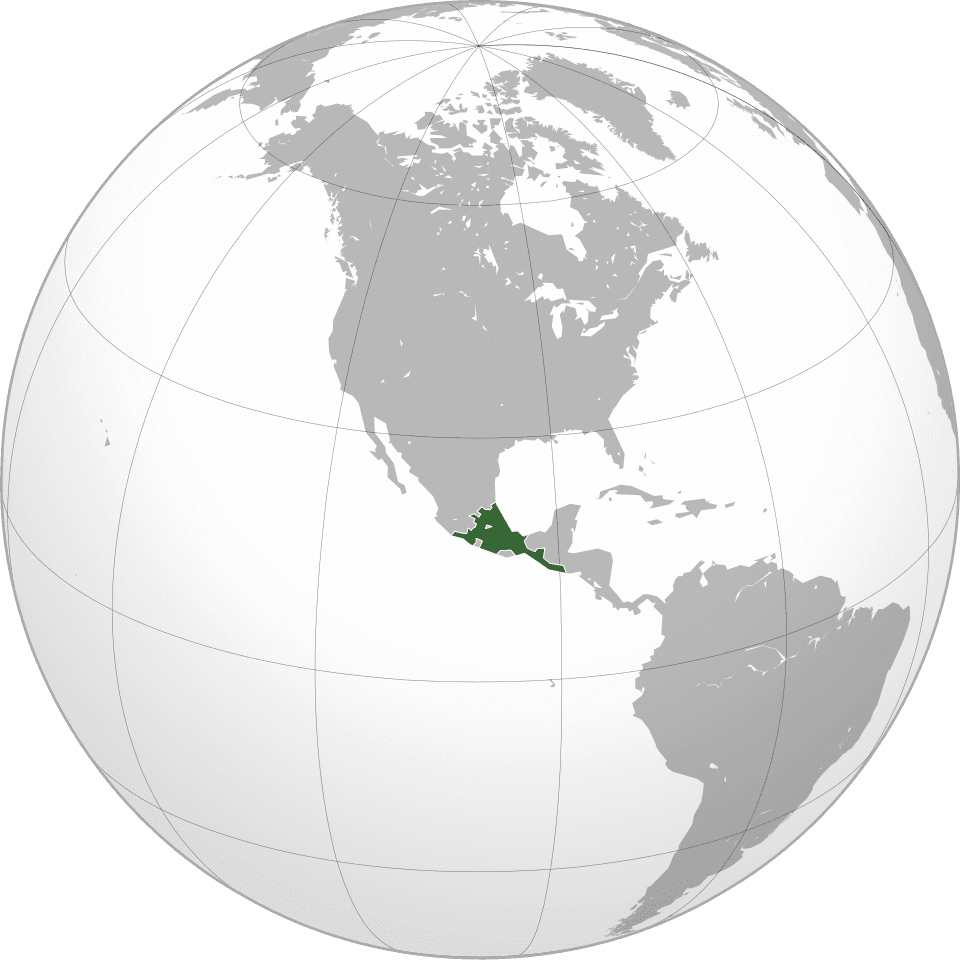
In the early fourteenth century, a wandering people called the Mexica arrived on the shores of Lake Texcoco in central Mexico. According to their own mythology, they had been searching for a divine sign: an eagle perched on a cactus, devouring a serpent. When they found it on a small, swampy island, they stopped walking and began building. What rose from that unlikely foundation would become Tenochtitlan—one of the largest cities on earth—and the beating heart of an empire that stretched from the Pacific coast to the Gulf of Mexico, commanding the lives of millions.
Origins: The Wandering Mexica
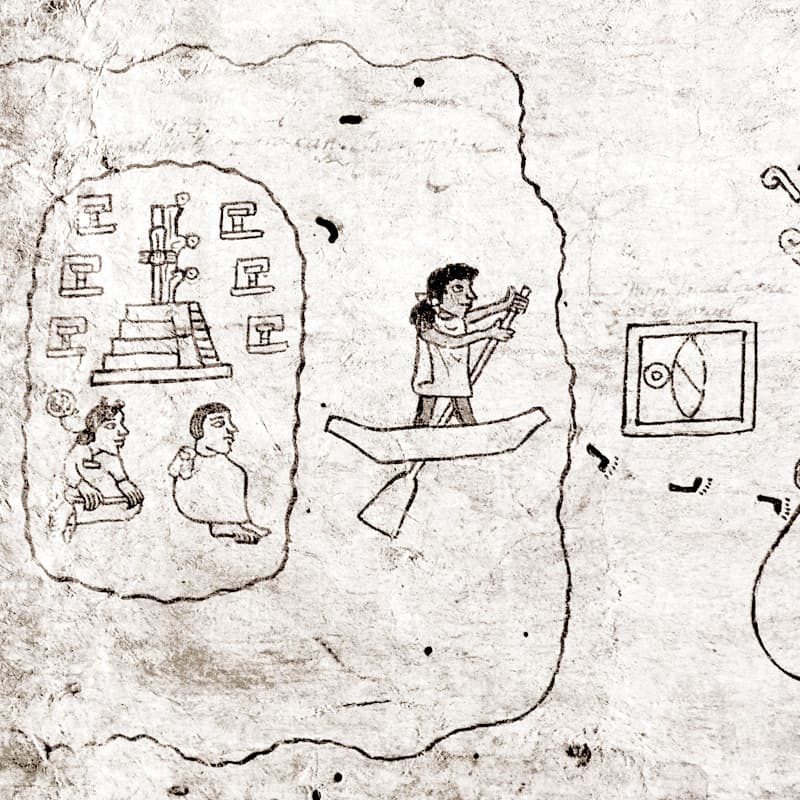
The Mexica were relative latecomers to the Valley of Mexico, arriving around 1300 CE after centuries of migration from a semi-mythical northern homeland they called Aztlan—from which the later term 'Aztec' derives, though the people themselves used 'Mexica.' For decades they served as mercenaries for established city-states in the region, gaining a reputation as fierce warriors and ruthless survivors. Their founding of Tenochtitlan is traditionally dated to 1325 CE, though some scholars place it slightly later. For much of the fourteenth century, the Mexica paid tribute to the powerful Tepanec rulers of Azcapotzalco, biding their time and absorbing the sophisticated cultural and administrative traditions of the valley.
The Triple Alliance and the Engine of Conquest
The pivotal transformation came in 1428, when the Mexica joined with the neighboring city-states of Texcoco and Tlacopan to overthrow their Tepanec overlords. This Triple Alliance—known to scholars as the Aztec Empire—became the most formidable political force Mesoamerica had ever seen. The three partners divided tribute revenues in a fixed ratio: Tenochtitlan claimed two-fifths, Texcoco two-fifths, and Tlacopan one-fifth. In practice, Tenochtitlan's military supremacy made the Mexica the dominant partner, and their ruler, the tlatoani, became the paramount figure in an expanding imperial network.
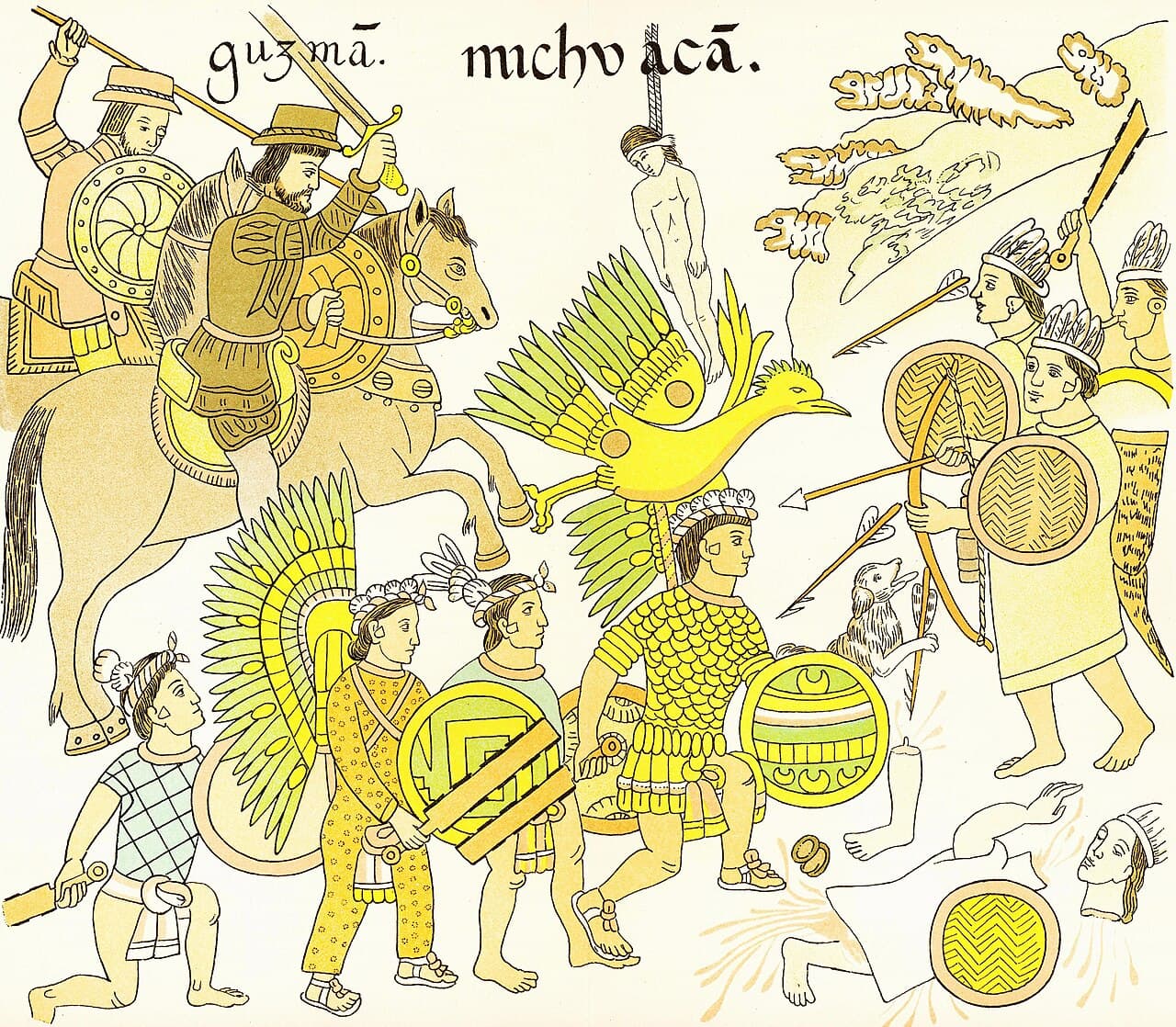
Aztec expansion was driven by a combination of military conquest, strategic marriage alliances, and the extraction of tribute. Conquered peoples were generally allowed to retain their own rulers and customs, provided they delivered regular payments of goods—cacao, cotton, jade, feathers, maize, and human sacrificial victims. This 'hegemonic' rather than fully administrative empire was efficient and flexible, but it bred deep resentment among subjugated peoples, a vulnerability that would prove catastrophic in 1519.
Tenochtitlan: A City That Stunned the World
When Spanish conquistadors first laid eyes on Tenochtitlan in November 1519, they struggled to find words. Bernal Díaz del Castillo, a soldier in Hernán Cortés's expedition, wrote that it resembled 'an enchanted vision' from the tales of Amadís de Gaula. With an estimated population of 200,000 to 300,000 people, it was larger than any city in contemporary Europe. Built on an artificial island and connected to the mainland by three great causeways, the city featured an elaborate system of canals, aqueducts carrying fresh water from the springs of Chapultepec, vast market plazas, and the towering Templo Mayor—a double pyramid dedicated to the war god Huitzilopochtli and the rain god Tlaloc.
The market of Tlatelolco, Tenochtitlan's twin city to the north, dazzled visitors with its orderly stalls offering goods from across Mesoamerica: gold, silver, copper, cloth, live animals, medicinal herbs, pottery, and food of every description. Aztec merchants, known as pochteca, formed a specialized hereditary guild that traveled vast distances, serving simultaneously as traders and intelligence agents for the empire.
Religion, Sacrifice, and the Cosmic Bargain
No aspect of Aztec civilization has provoked more controversy—or more misrepresentation—than its practice of human sacrifice. To the Mexica, the universe was fragile and cyclical. They believed they were living in the Fifth Sun, a cosmic age that would end in catastrophic earthquakes unless the gods were nourished with the most precious substance available: human blood. Sacrificial victims, typically warriors captured in battle, were honored as sacred offerings whose deaths sustained the sun's daily journey across the sky.
The scale of sacrifice was real and significant. The re-consecration of the Templo Mayor in 1487, under the ruler Ahuitzotl, reportedly involved the sacrifice of thousands of captives over four days—though modern scholars debate the precise numbers recorded in later sources. The practice was deeply embedded in a sophisticated cosmological and ritual calendar system. The Aztecs used two interlocking calendars: the 365-day solar calendar (xiuhpohualli) for agriculture and civic life, and the 260-day ritual calendar (tonalpohualli) for divination and ceremony. Together they created a 52-year cycle analogous to a Mesoamerican 'century.'
Society, Art, and Learning
Aztec society was hierarchical but not entirely rigid. At its apex sat the tlatoani and a warrior nobility; below them ranked priests, merchants, skilled craftsmen, and commoners (macehualtin), who were organized into territorial kin-groups called calpulli that owned communal land and supported local temples. Slaves existed at the bottom of the hierarchy but could own property and purchase their freedom. Education was notably egalitarian for its time: both boys and girls were required to attend schools, with noble children attending the elite calmecac and commoners the telpochcalli, where they learned history, rhetoric, calendar knowledge, and warfare.
Aztec artistic achievement was extraordinary. Monumental stone sculptures, featherwork mosaics, goldsmithing, and painted manuscripts (codices) recorded history, genealogy, tribute lists, and religious knowledge. The famous Aztec Sun Stone, often mislabeled a 'calendar,' is a cosmological monument weighing nearly 25 tons, discovered beneath Mexico City's main plaza in 1790.
The Spanish Conquest and the Fall of an Empire
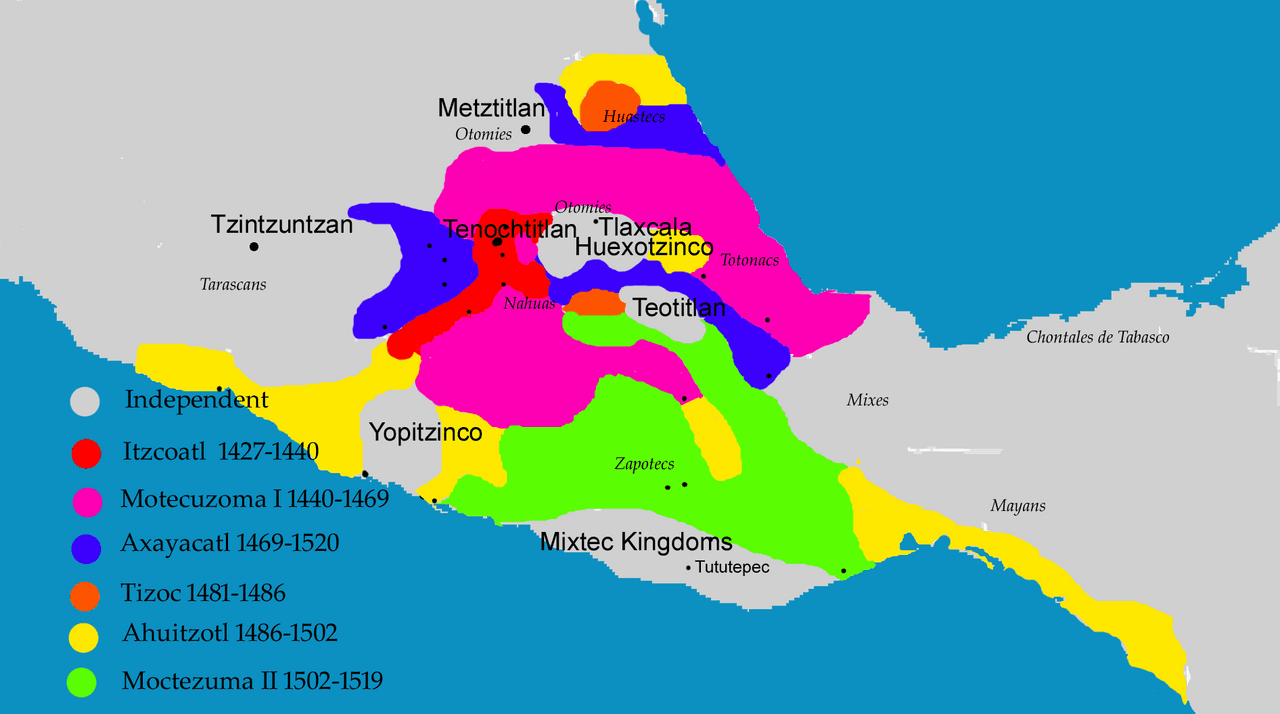
The arrival of Hernán Cortés in 1519 triggered one of history's most dramatic reversals of fortune. Cortés landed on the Gulf Coast with roughly 500 soldiers, 16 horses, and considerable diplomatic cunning. The key to his success was not Spanish steel alone, but the profound disaffection among peoples subjugated by the Aztecs. The Tlaxcalans, longtime enemies of the Mexica who had never been conquered, became Cortés's most critical indigenous allies, providing tens of thousands of warriors. The Aztec ruler Moctezuma II initially received Cortés in Tenochtitlan with cautious hospitality—a decision that would prove fatal. Cortés took Moctezuma hostage, and when violence erupted during a religious festival massacre ordered by Pedro de Alvarado, the city rose in revolt. On the 'Noche Triste' (Sorrowful Night) of June 30, 1520, the Spanish and their allies were driven from the city with catastrophic losses.
But Cortés regrouped, built a fleet of brigantines to control Lake Texcoco, and laid siege to Tenochtitlan. A devastating smallpox epidemic—to which indigenous people had no immunity—had already killed perhaps half the city's population, including the new ruler Cuitláhuac. After 75 days of brutal siege warfare, Tenochtitlan fell on August 13, 1521. The last tlatoani, Cuauhtémoc, was captured while attempting to escape by canoe. The greatest city in the Western Hemisphere was systematically demolished, and Mexico City was built upon its ruins.
Legacy: A Civilization That Endures
The fall of Tenochtitlan did not erase Aztec civilization. Millions of Nahuatl-speaking people survived the conquest and the catastrophic population collapse that followed. Nahuatl words—chocolate, tomato, avocado, chili, coyote—entered the global lexicon. Aztec agricultural techniques, including the remarkable chinampas (floating gardens) that still operate in Xochimilco, outlasted the empire. Mexican national identity is profoundly shaped by the Mexica legacy: the eagle and cactus of their founding myth appear on Mexico's flag to this day. Archaeological excavations at the Templo Mayor site in downtown Mexico City, ongoing since 1978, continue to yield extraordinary discoveries, reminding the world that the Aztec Empire remains not merely history, but living inheritance.
| Ruler (Tlatoani) | Reign | Key Achievement |
|---|---|---|
| Acamapichtli | 1376–1395 | First tlatoani; established dynastic rule |
| Itzcoatl | 1427–1440 | Co-founder of Triple Alliance; began systematic expansion |
| Moctezuma I | 1440–1469 | Expanded empire to Gulf Coast and Oaxaca |
| Ahuitzotl | 1486–1502 | Greatest military expansion; rededicated Templo Mayor |
| Moctezuma II | 1502–1520 | Ruled at height of empire; received Cortés |
| Cuauhtémoc | 1520–1521 | Last tlatoani; captured after fall of Tenochtitlan |