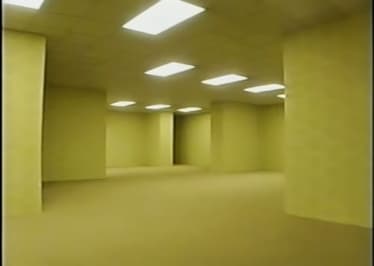
There is something deeply unsettling about a photograph of an empty, yellowed office space — fluorescent lights humming, carpet the color of old mustard, walls that seem to stretch forever. That image, posted anonymously to 4chan in May 2019, became the seed of one of the most remarkable acts of collective storytelling the internet has ever produced. The Backrooms, as it came to be called, is simultaneously a meme, a horror mythology, a creative universe, and a cultural mirror — reflecting anxieties about liminal spaces, digital dread, and the uncanny corners of modern architecture.
The Origin: One Image, Infinite Dread
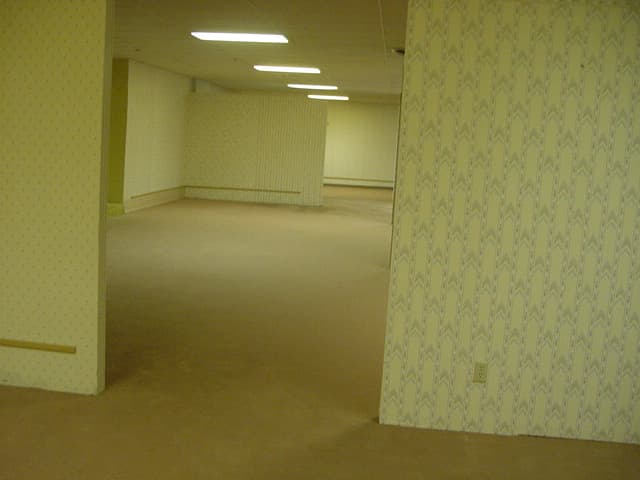
The original 4chan post appeared on May 12, 2019, in a thread asking users to share images that 'feel off.' The photograph — its true origin still debated, though it has been linked to a real commercial building in the American Midwest — showed a vast, empty office interior: wet-looking carpet, aging wallpaper, and the kind of institutional lighting that hums just below the threshold of conscious annoyance. A caption accompanying the image read: 'If you're not careful and you noclip out of reality in the wrong areas, you'll end up in the Backrooms, where it's nothing but the stench of old moist carpet, the madness of mono-yellow, the endless background noise of fluorescent lights at maximum hum-buzz, and approximately six hundred million square miles of randomly segmented empty rooms to be trapped in.' That single paragraph — whoever wrote it — established the entire grammar of what would follow.
The Wiki and the World-Building Explosion
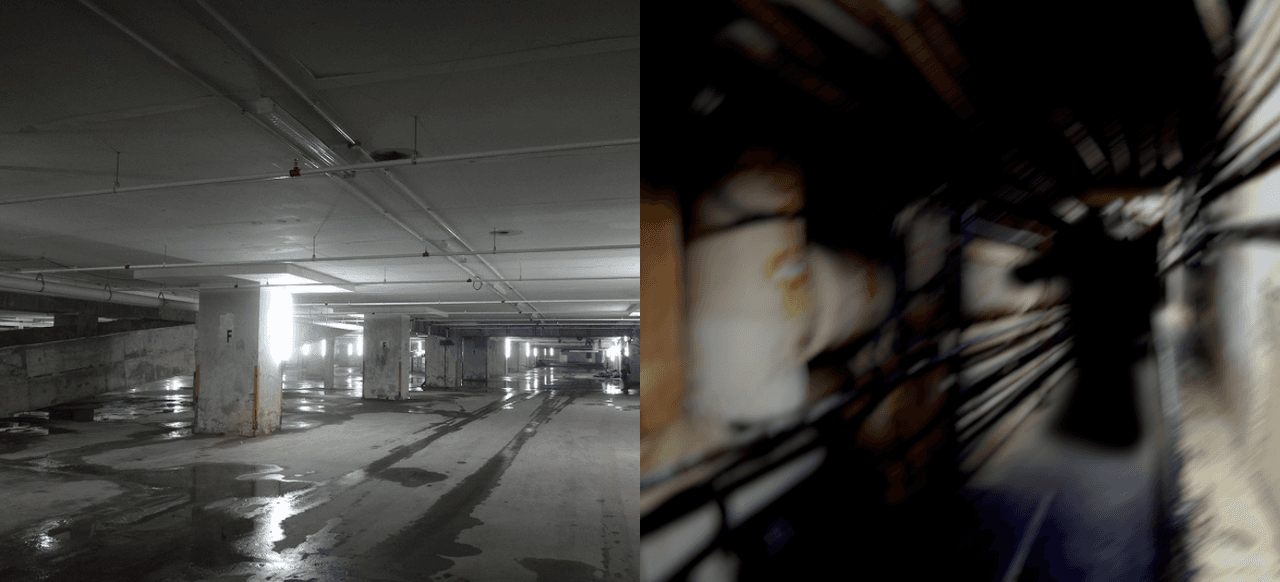
From 4chan, the concept migrated to Reddit and then to the Backrooms Wiki, a collaborative fiction project hosted on Fandom and later on a dedicated wiki platform. Writers began fleshing out the mythology with extraordinary discipline and creativity. The original yellow office became 'Level 0,' described as the entry point — an infinite maze of identical rooms with no discernible exits. From there, contributors added hundreds of additional 'levels,' each with its own aesthetic, rules, and dangers. Level 1 is a vast concrete warehouse with dim industrial lighting. Level ! (called 'The End') is a pitch-black void. The 'Poolrooms' — a fan-favorite level — consist of shallow, tile-lined pools of warm water, eerily still and bathed in aqueous light. Entities were introduced: faceless, hostile creatures with names like 'Smilers,' 'Hounds,' and 'Skin-Stealers.' The wiki grew to encompass thousands of pages and dozens of active contributors, functioning less like fan fiction and more like a collaborative cosmology.
Kane Pixels and the Cinematic Turn
The mythology leapt into mainstream consciousness largely through the work of one teenager. In January 2022, a then-16-year-old creator using the name Kane Pixels uploaded 'The Backrooms (Found Footage)' to YouTube. The video, presented as grainy VHS footage of a figure who accidentally falls into the Backrooms, was so convincingly produced — using Blender 3D software and meticulous color grading — that it briefly fooled some viewers into thinking it was real. The video amassed over 70 million views, and Kane Pixels went on to develop a serialized video series that functions as a full narrative film, complete with a fictional 1990s corporate entity called A.I.R.S. (Async Image Relay System), government conspiracies, and a deeply human story of a father and son separated across realities. Film critic and YouTube commentator Thomas Flight described Kane's work as 'genuinely cinematic in a way most professional horror films are not.' Kane Pixels was subsequently signed to a talent agency and began collaborating on a professionally produced Backrooms film project.
The Psychology of Liminal Spaces
Why does the Backrooms resonate so powerfully? Cultural critics and psychologists point to the concept of 'liminal spaces' — transitional environments like empty malls, vacant hallways, and off-season hotels that trigger a specific type of unease. These spaces are architecturally designed for human activity, but photographed in their emptiness they feel fundamentally wrong. The term 'liminal' comes from the Latin limen, meaning 'threshold.' Anthropologist Arnold van Gennep first used it in 1909 to describe transitional phases in ritual. Applied to architecture, a liminal space is one that exists between states — neither fully public nor private, neither occupied nor abandoned. The Backrooms weaponizes this discomfort, building an entire cosmology around the notion that reality itself has a 'back end' — a server room behind the universe's front-facing interface. The metaphor resonates deeply with a generation raised on digital systems and online worlds, for whom the idea of 'noclipping' through reality carries immediate intuitive meaning.
From Niche Meme to Cultural Industry
The Backrooms has since generated a sprawling creative economy. Video games like 'Escape the Backrooms' (released on Steam in August 2022 by Fancy Games) attracted hundreds of thousands of players within weeks of launch and regularly trend on the platform. Merchandise — from prints of Level 0's signature wallpaper to plush versions of its entities — is sold by dozens of independent creators. A dedicated subreddit, r/backrooms, has grown to over 250,000 members. In 2023, Netflix was reported to be in discussions about a feature-length adaptation. The original mythology has also spawned sub-genres: the 'Frontrooms' (a mirror concept positing that our reality is itself a constructed space), the 'Dreamrooms,' and numerous cross-genre mashups. Importantly, the Backrooms community has largely maintained what might be called 'collaborative canon discipline' — new contributions are voted on and curated, preventing total narrative entropy.
| Level Name | Description | Key Feature |
|---|---|---|
| Level 0 – The Lobby | Infinite yellow office maze | Original viral image; ~6 billion sq mi |
| Level 1 – Habitable Zone | Industrial concrete warehouse | Limited supplies; dim lighting |
| Level 2 – Pipe Dreams | Industrial maintenance tunnels | Hostile entities; extreme noise |
| The Poolrooms (Level 37) | Tile-lined shallow pools | Eerily calm; fan-favorite aesthetic |
| Level ! – The End | Pitch-black void | No light; no sound; no entities |
Why It Matters: The New Folklore
The Backrooms represents something genuinely new in the history of mythology and storytelling. Previous internet horror phenomena — Slender Man, SCP Foundation, creepypasta broadly — laid the groundwork, but the Backrooms achieved a scale and creative depth that surpassed its predecessors with remarkable speed. It is, in the truest sense, a piece of digital folklore: created anonymously, mutated through collective retelling, and now embedded in the cultural consciousness of an entire generation. Folklorist Dr. Trevor Blank, who has written on internet legends, has noted that online communities are 'the campfire of the 21st century' — and the Backrooms is perhaps the best example yet of what stories that campfire produces. It also carries real cultural weight as a document of post-pandemic anxiety, the alienation of open-plan office culture, and the millennial and Gen Z experience of navigating systems — digital, institutional, and social — that feel vast, opaque, and indifferent to the individual trapped inside them. The hum of fluorescent lights has never sounded so meaningful.