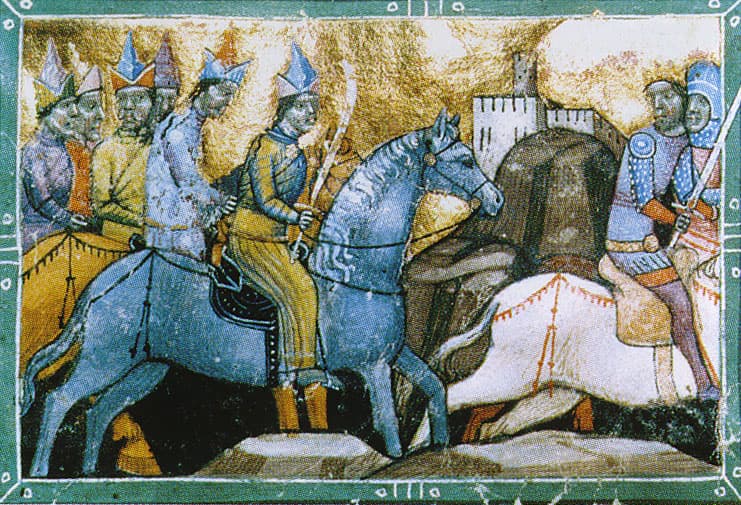
In the span of a single century, a scattered confederation of nomadic tribes from the windswept steppes of Mongolia transformed into the most powerful military force the world had ever seen. At its peak in the late 13th century, the Mongol Empire stretched from the Korean peninsula in the east to the doorstep of Central Europe in the west — an unbroken landmass of roughly 24 million square kilometers, encompassing nearly a quarter of the Earth's total land area. No empire before or since has matched its contiguous territorial reach, and the story of how it rose, and eventually fell, remains one of history's most extraordinary chapters.
The Rise of Temüjin: From Outcast to World Conqueror
The man who would become Genghis Khan was born around 1162 near the Onon River in northeastern Mongolia, given the name Temüjin. His early life was defined by hardship: his father was poisoned by rival Tatars when Temüjin was roughly nine years old, and his family was subsequently abandoned by their clan and left to survive on the harsh steppe alone. Far from breaking him, these trials forged a man of extraordinary resilience, political cunning, and military vision. Through a combination of strategic alliances, loyalty-building, and brutal warfare, Temüjin spent decades uniting the fractious Mongol and Turkic tribes of the region. In 1206, at a grand assembly known as the kurultai, he was proclaimed Genghis Khan — 'Universal Ruler' — by the united tribes. The empire had begun.
The Mongol War Machine
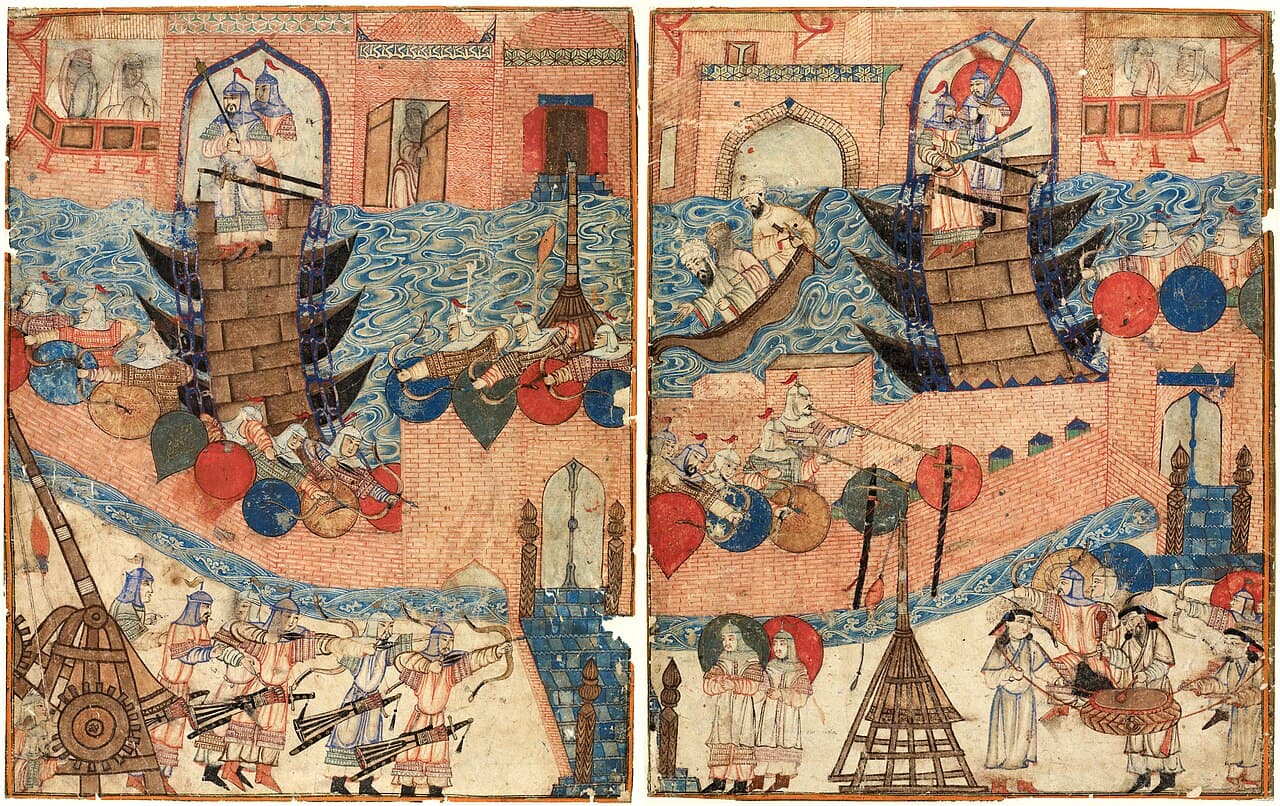
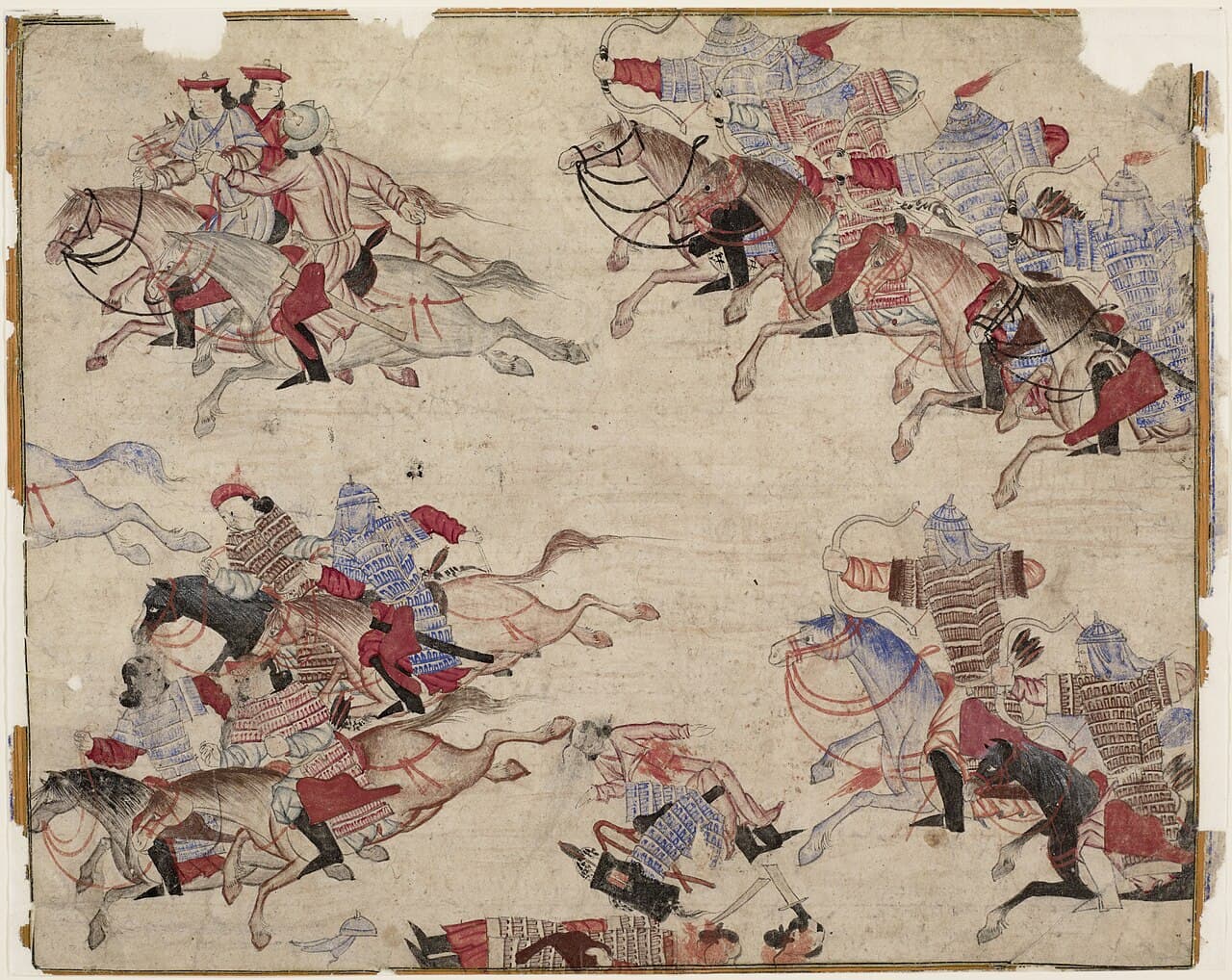
The secret to Mongol military dominance lay not in brute numbers alone, but in sophisticated tactics, discipline, and speed that left enemies perpetually off-balance. Mongol armies were almost entirely cavalry-based, capable of covering extraordinary distances — sometimes 100 kilometers in a single day — and executing complex battlefield maneuvers with precision. They employed a devastating tactic known as the 'feigned retreat,' luring enemy formations into breaking ranks before turning and annihilating them. Genghis Khan also proved a master of psychological warfare, offering mercy to cities that surrendered and unleashing near-total destruction on those that resisted, a policy that frequently caused enemies to capitulate without a fight. The Mongols also absorbed the technology and expertise of conquered peoples: Chinese engineers operated siege weapons, Persian administrators managed bureaucracies, and Uyghur scribes developed a written Mongolian script.
Conquest and Consolidation: An Empire Spanning Continents
Genghis Khan's campaigns swept through northern China, Central Asia, Persia, and into Eastern Europe before his death in 1227. His successors — particularly his son Ögedei Khan and later grandson Kublai Khan — continued the expansion. The Jin Dynasty of northern China fell in 1234. The Abbasid Caliphate, one of the Islamic world's greatest powers, was shattered in 1258 when Mongol forces under Hulagu Khan sacked Baghdad, killing the caliph and reportedly slaughtering hundreds of thousands of inhabitants. The destruction of Baghdad's famed House of Wisdom, a repository of centuries of scientific and philosophical knowledge, remains one of history's most lamented cultural losses. To the west, Mongol armies crushed Polish and Hungarian forces at the Battles of Legnica and Mohi in 1241, sending shockwaves of terror through Europe. Only the death of Ögedei Khan that same year, which forced the army to return east for a succession kurultai, spared Western Europe from further assault.
The Pax Mongolica: A World Connected
For all the staggering violence of Mongol conquest, the empire's mature phase brought an era historians call the Pax Mongolica — the Mongol Peace. For roughly a century, the vast network of trade routes collectively known as the Silk Road operated with unprecedented security and efficiency. Merchants, diplomats, missionaries, and travelers could cross Eurasia with relative safety, protected by Mongol law and a sophisticated relay station system called the yam. It was this connected world that carried the Venetian explorer Marco Polo to the court of Kublai Khan in China, and facilitated the exchange of goods, ideas, and — tragically — disease. The bubonic plague, which would devastate Europe as the Black Death after 1347, likely traveled westward along these very trade routes.
| Khanate | Region | Ruling Dynasty | Approximate Dates |
|---|---|---|---|
| Yuan Dynasty | China & Mongolia | Kublai Khan's line | 1271–1368 |
| Ilkhanate | Persia & Middle East | Hulagu Khan's line | 1256–1335 |
| Golden Horde | Russia & Central Asia | Batu Khan's line | 1242–1502 |
| Chagatai Khanate | Central Asia | Chagatai Khan's line | 1226–1347 |
Fracture and Fragmentation
The empire's sheer size made unity increasingly difficult. By the late 13th century, the Mongol realm had fractured into four major successor states — the Yuan Dynasty, the Ilkhanate, the Golden Horde, and the Chagatai Khanate — which frequently warred with one another. The Yuan Dynasty in China was overthrown by the native Ming Dynasty in 1368. The Ilkhanate dissolved into competing successor states by the mid-14th century. The Golden Horde, which had dominated Russia for two centuries and whose legacy is still embedded in Russian language and governance, gradually weakened under pressure from the growing power of Muscovy, finally collapsing by the early 16th century. The last embers of Mongol imperial ambition were carried by Timur (Tamerlane), a Turkic-Mongol conqueror who claimed descent from Genghis Khan, and later by the Mughal Empire of India, founded in 1526 by the Mongol descendant Babur.
Legacy: A World Remade
The Mongol Empire's legacy is profoundly double-edged. Demographic historians estimate that Mongol conquests may have killed as many as 40 million people — a figure that represented a significant fraction of the global medieval population, with some regions like Iran and northern China losing the majority of their inhabitants. Entire cities, irrigation systems, and civilizations were erased. Yet the Mongols also accelerated global connectivity in ways that laid groundwork for the modern world. They facilitated the transmission of gunpowder technology and printing from China to the West, fostered religious tolerance within their empire, and created administrative and diplomatic frameworks that successor states built upon for centuries. Russia's tsarist autocracy, some historians argue, bears the imprint of Mongol governance. The very concept of a Eurasian diplomatic system owes a debt to the Mongol postal and administrative networks. Genghis Khan's descendants number in the millions today — genetic studies suggest that roughly 0.5 percent of the world's male population, some 16 million men, may carry his Y-chromosome lineage. In every measurable sense — territorial, demographic, cultural, and genetic — the Mongol Empire left a mark on the human story unlike any other.