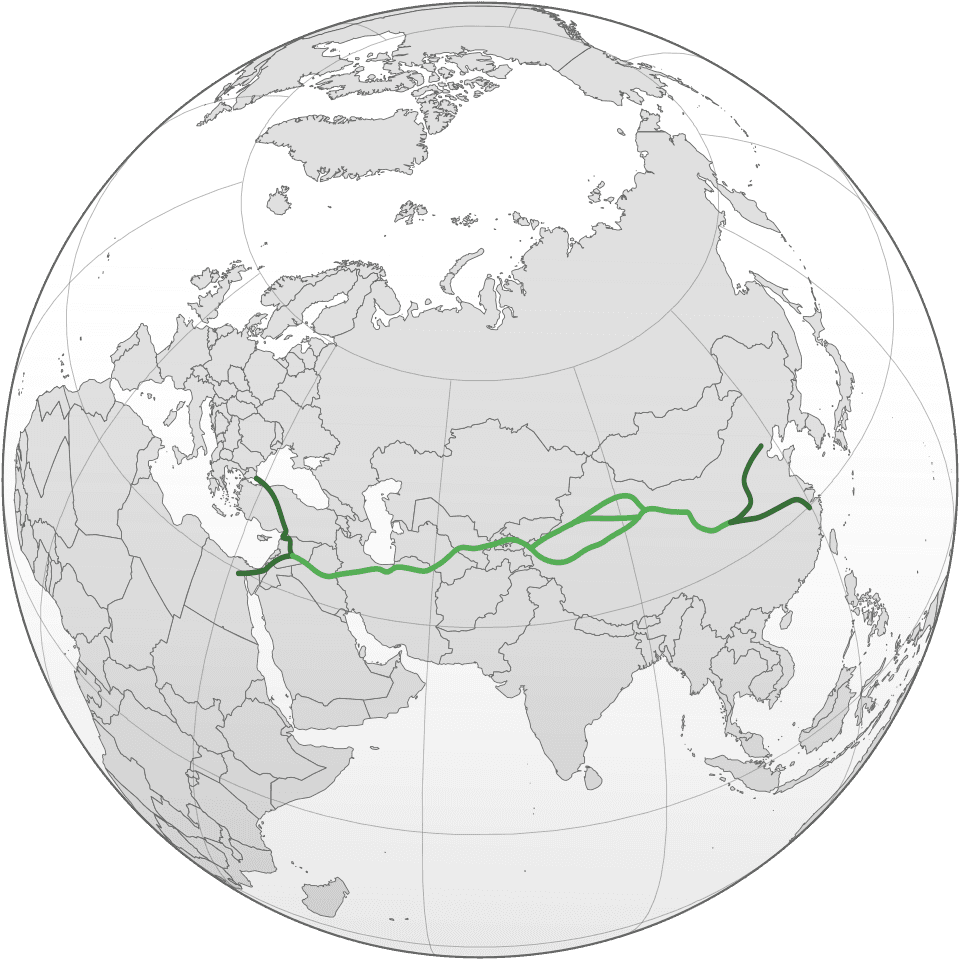
Long before container ships and cargo planes, the world's most transformative exchange of goods and ideas moved at the pace of a camel's plod. The Silk Road — a vast, shifting web of overland and maritime trade routes stretching roughly 7,500 miles from China's imperial capitals to the shores of the Mediterranean — was history's first great engine of globalization. For nearly fifteen centuries, it carried silk, spices, gold, glassware, and paper across deserts, mountain passes, and open seas. More profoundly, it carried Buddhism, Islam, Christianity, the Black Death, and the mathematics that would underpin the Renaissance.
Origins: A Network Born from Imperial Ambition
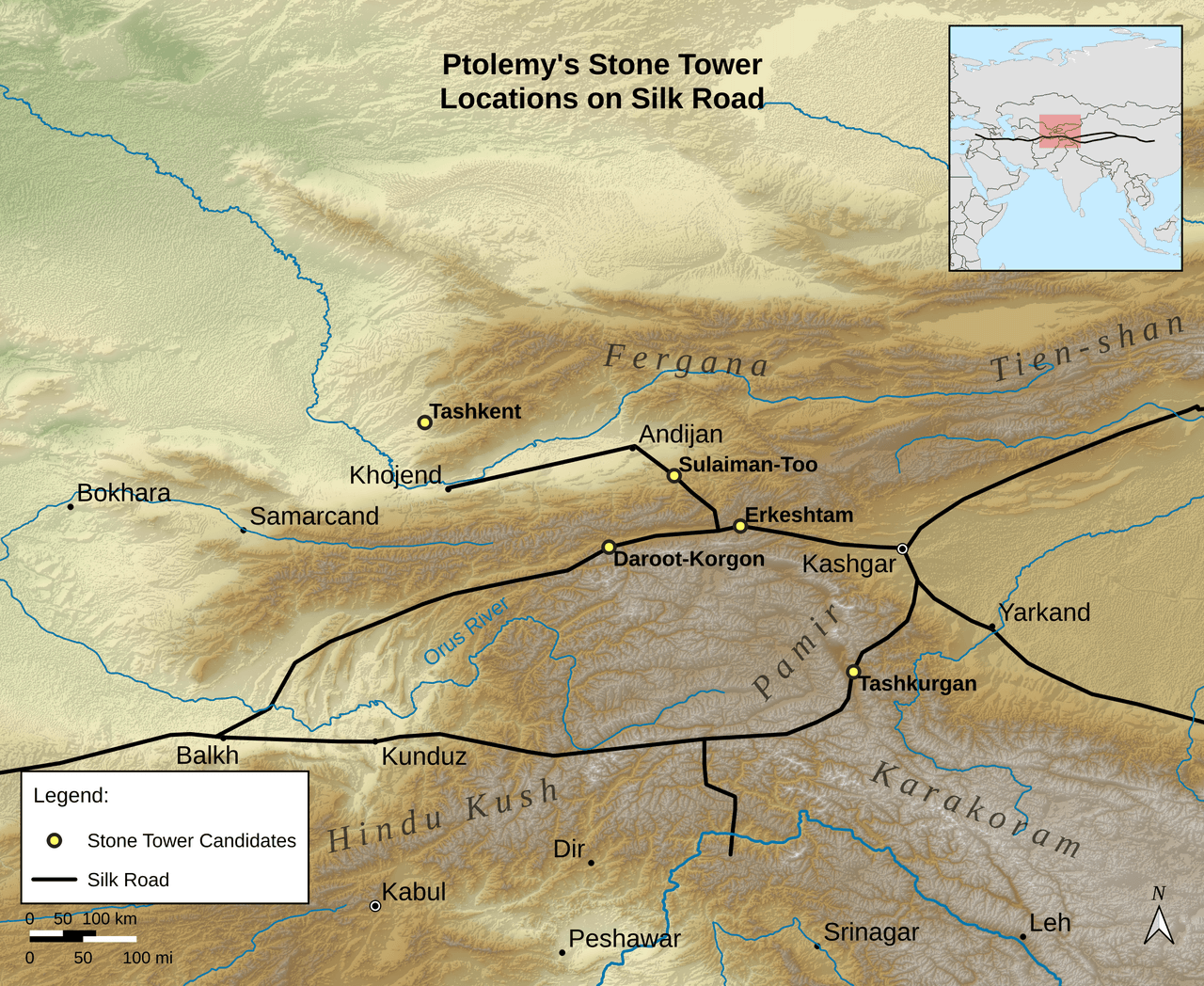
The routes we now call the Silk Road did not spring into existence as a single planned highway. Their formal origins are conventionally traced to 130 BC, when the Han Emperor Wu dispatched the diplomat Zhang Qian westward to seek military alliances against the nomadic Xiongnu confederation. Zhang Qian returned not with soldiers but with something arguably more valuable: knowledge of the Parthian Empire, the Fergana Valley's famed 'heavenly horses,' and the Hellenistic kingdoms of Bactria. Emperor Wu recognized the strategic and commercial potential immediately. Chinese silk — already legendary in Western markets — began flowing westward along guarded imperial roads, and exotic goods flowed east in return.
The name 'Silk Road' (Seidenstraße) was actually coined much later, in 1877, by the German geographer Ferdinand von Richthofen. Ancient travelers would not have recognized a single unified route; instead, the network comprised multiple branching corridors that shifted over centuries depending on politics, climate, and the rise and fall of empires. The northern route skirted the Gobi Desert and passed through Central Asian oasis cities. A southern route wound through the Himalayas and into the Indian subcontinent. Maritime branches connected the Persian Gulf and Red Sea ports to the South China Sea.
The Goods That Moved the World
Silk was the signature export that gave the network its modern name, and for good reason. Chinese silk was so prized in Rome that the Senate repeatedly — and unsuccessfully — tried to ban its import, alarmed by the silver draining westward to pay for it. But the Silk Road was never merely about fabric. From China came porcelain, tea, iron, and paper. From Central Asia and Persia came horses, cotton, gemstones, and dried fruits. From the Mediterranean world traveled glassware, wool textiles, olive oil, and wine. India supplied pepper, cinnamon, ivory, and indigo. The exchange was kaleidoscopic, and merchants rarely traveled the entire length of the route; goods changed hands multiple times through a relay of middlemen, each adding value and profit.
| Region | Key Exports | Key Imports |
|---|---|---|
| China | Silk, porcelain, tea, paper, iron | Horses, glassware, cotton, gemstones |
| Central Asia | Horses, lapis lazuli, dried fruit | Silk, spices, manufactured goods |
| Persia / Parthia | Silver, glass, wool textiles | Silk, spices, porcelain |
| India | Spices, ivory, indigo, cotton | Gold, horses, Chinese silk |
| Mediterranean / Rome | Glassware, olive oil, wine, gold | Silk, spices, pepper, porcelain |
Oasis Cities and the People Who Built the Road
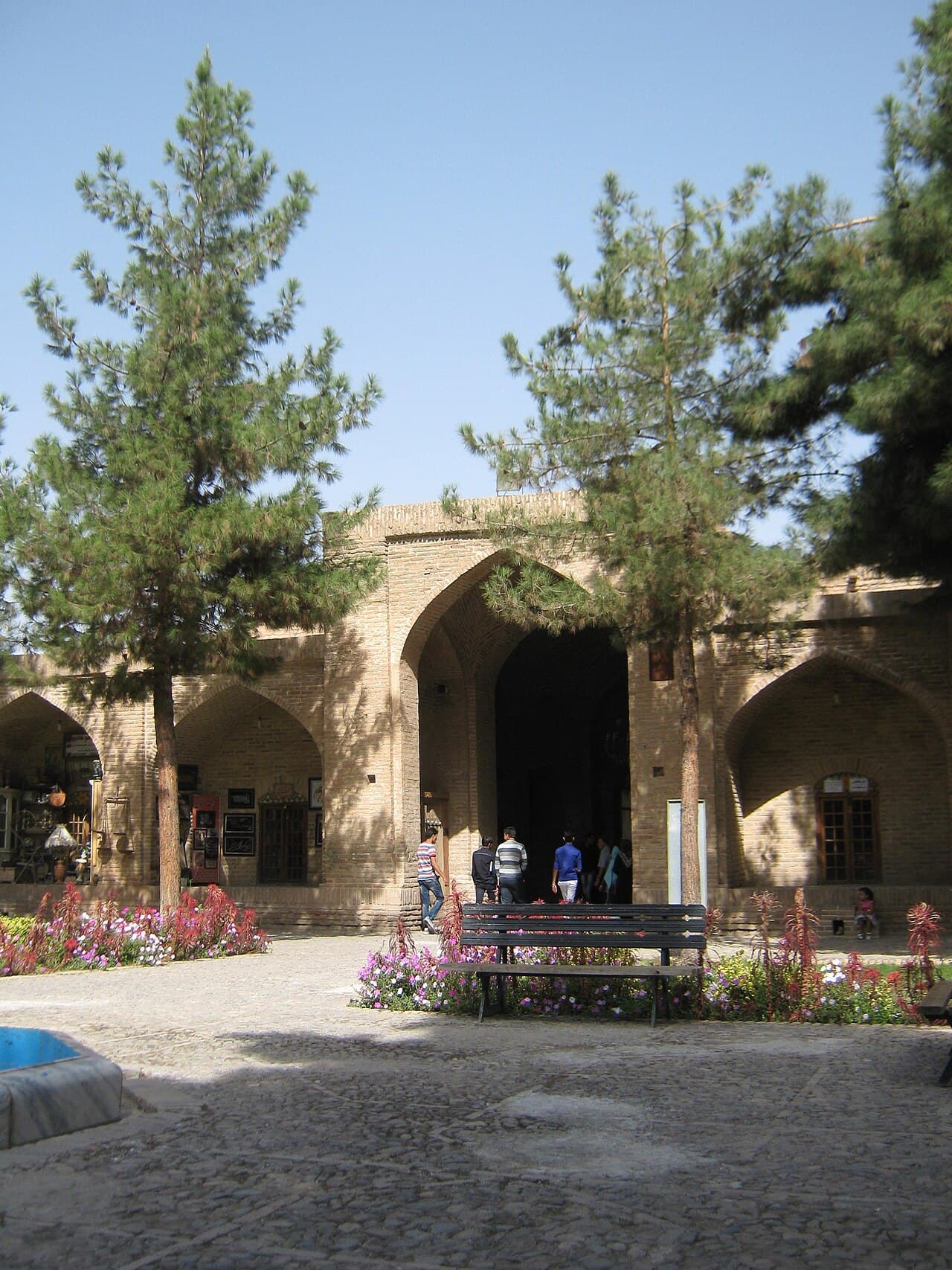
The human geography of the Silk Road was as remarkable as its cargo. Oasis cities — Samarkand, Dunhuang, Kashgar, Merv, and Palmyra — became cosmopolitan crossroads where a dozen languages might be heard in a single marketplace. Sogdian merchants from modern-day Uzbekistan emerged as the great middlemen of the early Silk Road, their commercial letters found as far east as the Gansu corridor. Caravanserais, the roadside inns spaced roughly a day's journey apart, provided water, food, and shelter for merchants, pilgrims, and envoys alike. The journey from Chang'an (modern Xi'an) to Constantinople might take eighteen months or more — a feat of endurance as much as commerce.
The Invisible Cargo: Religion, Art, and Ideas
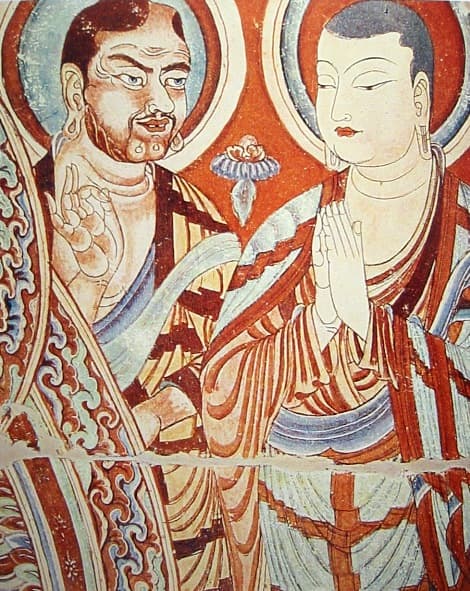
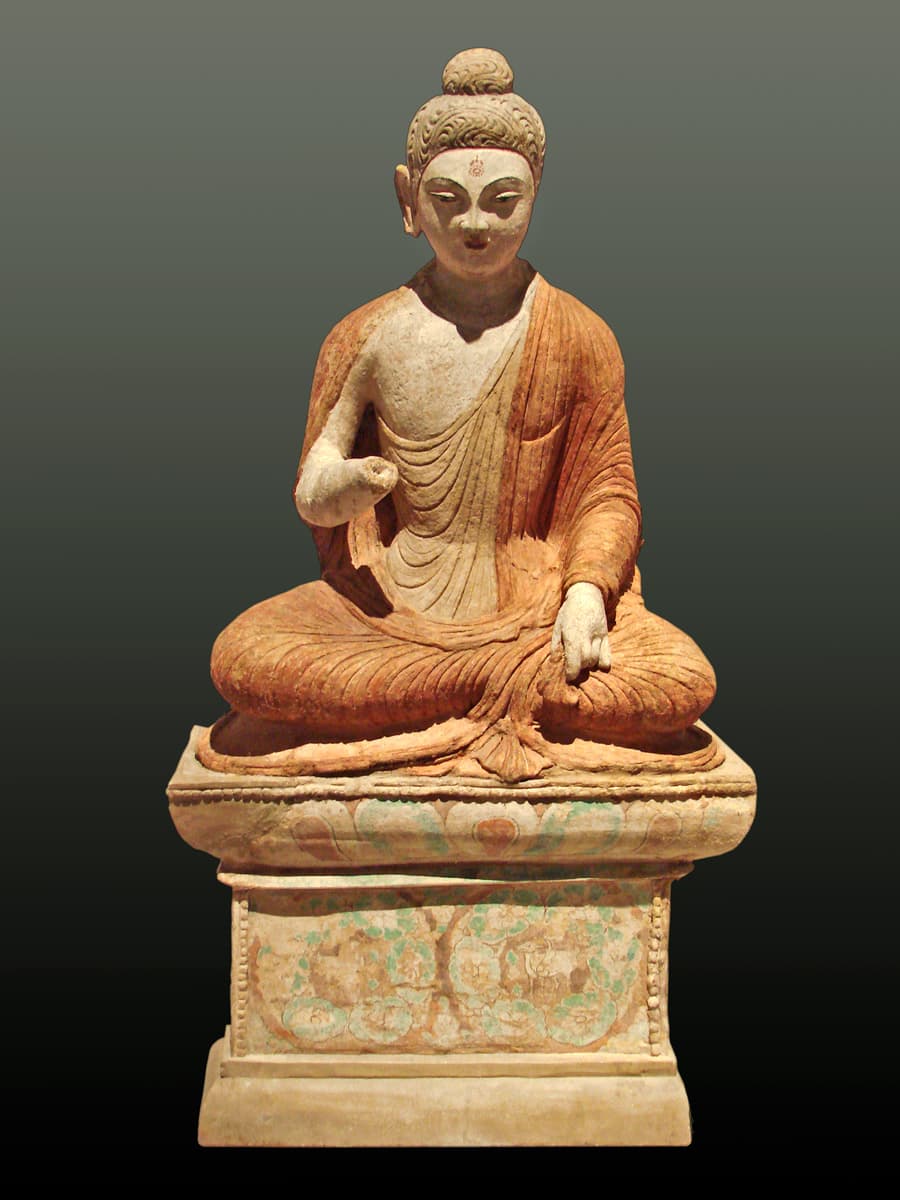
Perhaps the Silk Road's most enduring legacy was not material but spiritual and intellectual. Buddhism traveled from India through Central Asia into China along these very routes during the first centuries AD, transforming East Asian civilization. The Dunhuang cave complex in northwestern China preserves thousands of Buddhist manuscripts and paintings deposited by travelers and monks — a time capsule of Silk Road culture sealed around 1000 AD. Islam, after its emergence in the 7th century, spread with extraordinary speed along the same corridors, converting the Sogdian merchants and Central Asian kingdoms that had once been Buddhist or Zoroastrian. Christianity, in its Nestorian form, reached as far as Tang Dynasty China.
The flow of ideas was equally consequential in technology. Paper-making, invented in China, reached the Islamic world after Arab forces captured Chinese papermakers at the Battle of Talas in 751 AD. Within decades, Baghdad had its own paper mills; within centuries, Europe followed. Gunpowder, the magnetic compass, and printing — China's 'four great inventions' — all eventually reached the West along these routes, catalyzing the military and intellectual revolutions of medieval and early modern Europe. Indian numerical notation, the system we now call Arabic numerals, traveled westward through Persia and the Islamic world, making modern mathematics possible.
The Black Death: Trade's Darkest Passenger
The Silk Road's connectivity carried catastrophe as well as culture. In the mid-14th century, the bubonic plague — Yersinia pestis — traveled westward along Mongol-controlled trade routes from Central Asia, reaching the Crimean port of Caffa by 1346. Italian merchants fleeing the besieged city carried it to Sicily and then mainland Europe, unleashing the Black Death that killed an estimated one-third of Europe's population within five years. The same Mongol Empire (Pax Mongolica) that had briefly unified much of Eurasia and made the Silk Road safer than ever before had inadvertently created the perfect highway for the deadliest pandemic in recorded history.
Decline and Legacy
The Silk Road's overland routes entered terminal decline in the 15th century. The fall of the Mongol Empire fragmented the political security that had underpinned transcontinental trade. The Ottoman conquest of Constantinople in 1453 disrupted traditional access points. Most decisively, Portuguese navigators opened all-sea routes to Asia around Africa's Cape of Good Hope, bypassing the overland middlemen entirely. Vasco da Gama's arrival in Calicut in 1498 effectively signaled the end of the Silk Road era — and the beginning of the European age of maritime empire.
Yet the Silk Road never entirely disappeared from history's imagination or from geopolitics. In 2013, Chinese President Xi Jinping announced the Belt and Road Initiative (BRI), an ambitious infrastructure and investment program explicitly framed as a revival of the ancient trade routes. Spanning over 140 countries and trillions of dollars in pledged investment, the BRI reveals just how potent the Silk Road's symbolism remains — a reminder that the desire to connect distant peoples for mutual profit and cultural exchange is among the oldest and most persistent impulses in human civilization.