Between 1939 and 1945, humanity fought the deadliest conflict in recorded history. World War II consumed six continents, mobilized over 100 million military personnel, and killed an estimated 70 to 85 million people — roughly three percent of the entire world's population at the time. It toppled empires, gave birth to superpowers, forged the United Nations, and left a nuclear shadow over civilization that persists to this day. To understand the modern world, one must first understand the war that created it.
The Road to War: Seeds of Catastrophe
The origins of World War II are inseparable from the failures of World War I. The Treaty of Versailles (1919) imposed crippling reparations on Germany, stripped it of territory, and assigned it sole 'war guilt' — a humiliation that festered through the 1920s. The Great Depression of 1929 shattered what remained of economic stability across Europe, creating fertile ground for extremism. In Germany, Adolf Hitler's National Socialist party exploited mass unemployment, nationalist resentment, and antisemitic scapegoating to seize power in January 1933. Within years, the Weimar Republic was dead, replaced by a totalitarian state with explicitly expansionist ambitions. Meanwhile, Benito Mussolini's Fascist Italy had already established a template for authoritarian rule, and Imperial Japan was pursuing aggressive expansion across East Asia, having invaded Manchuria in 1931 and launched a full-scale war against China in 1937.
Britain and France, exhausted by the previous war and desperate to avoid another, pursued a policy of appeasement. At the Munich Conference in September 1938, British Prime Minister Neville Chamberlain famously agreed to Germany's annexation of Czechoslovakia's Sudetenland, returning home to declare 'peace for our time.' Six months later, Hitler occupied the rest of Czechoslovakia. The appeasement strategy lay in ruins.
1939–1941: Germany's Lightning Conquests
On September 1, 1939, Germany invaded Poland using a revolutionary combined-arms doctrine the world would come to call Blitzkrieg — lightning war. Tanks, motorized infantry, and dive bombers struck in coordinated, overwhelming waves. Poland fell in five weeks. Britain and France declared war on Germany two days after the invasion began, but could do little to save Poland. The Soviet Union, which had secretly signed a non-aggression pact with Germany in August 1939, invaded Poland from the east on September 17, accelerating its collapse.
The spring of 1940 brought further catastrophe for the Allies. Germany swept through Denmark and Norway in April, then launched a devastating offensive through the Ardennes forest in May, outflanking French and British defenses. France fell in just six weeks — a shocking collapse of what had been considered Europe's premier land army. Over 330,000 Allied troops were evacuated from the beaches of Dunkirk in a desperate naval operation, but the European mainland was effectively under Nazi domination. Hitler now controlled a territory stretching from the Arctic Circle to the Pyrenees. Only Britain, led by the newly appointed Winston Churchill, refused to capitulate. The Royal Air Force held off the German Luftwaffe in the Battle of Britain during the summer and autumn of 1940, denying Hitler the aerial supremacy needed for a cross-Channel invasion.
Operation Barbarossa: The War's Turning Point
On June 22, 1941, Hitler launched Operation Barbarossa — the largest military invasion in human history — against the Soviet Union. Over three million German and Axis troops surged across a 1,800-mile front. Initial gains were staggering: entire Soviet armies were encircled and destroyed. By autumn, German forces were within striking distance of Moscow. But the Soviet Union did not collapse as Hitler had predicted. The combination of Soviet resistance, brutal winter conditions, overstretched supply lines, and Joseph Stalin's decision to keep fighting transformed the Eastern Front into a years-long war of attrition that would ultimately bleed Germany white. The battles of Moscow (1941), Stalingrad (1942–43), and Kursk (1943) were among the largest and most consequential in history, and each ended in Soviet victory.
The Pacific War and America Enters the Conflict
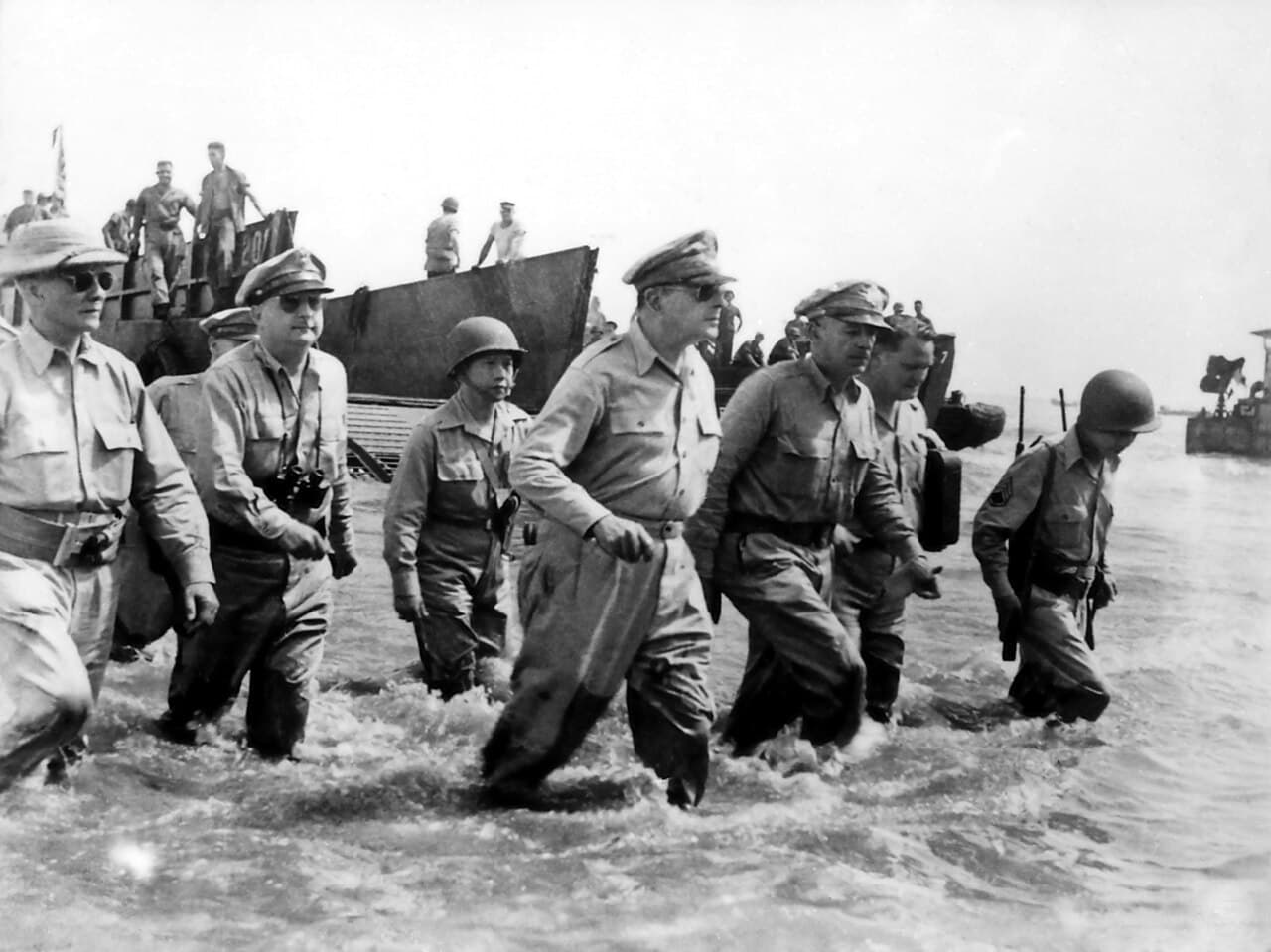
On December 7, 1941, Imperial Japan launched a surprise aerial attack on the United States naval base at Pearl Harbor, Hawaii, killing 2,403 Americans and crippling the Pacific Fleet. The following day, the United States declared war on Japan. Germany and Italy then declared war on the United States, transforming a European and Asian conflict into a truly global war. America's industrial might — its capacity to produce ships, aircraft, tanks, and munitions at unprecedented scale — would prove decisive. The Pacific War saw brutal island-hopping campaigns, massive naval engagements like the Battle of Midway (June 1942), and grinding jungle warfare from Guadalcanal to Iwo Jima.
The Holocaust: History's Most Systematic Genocide
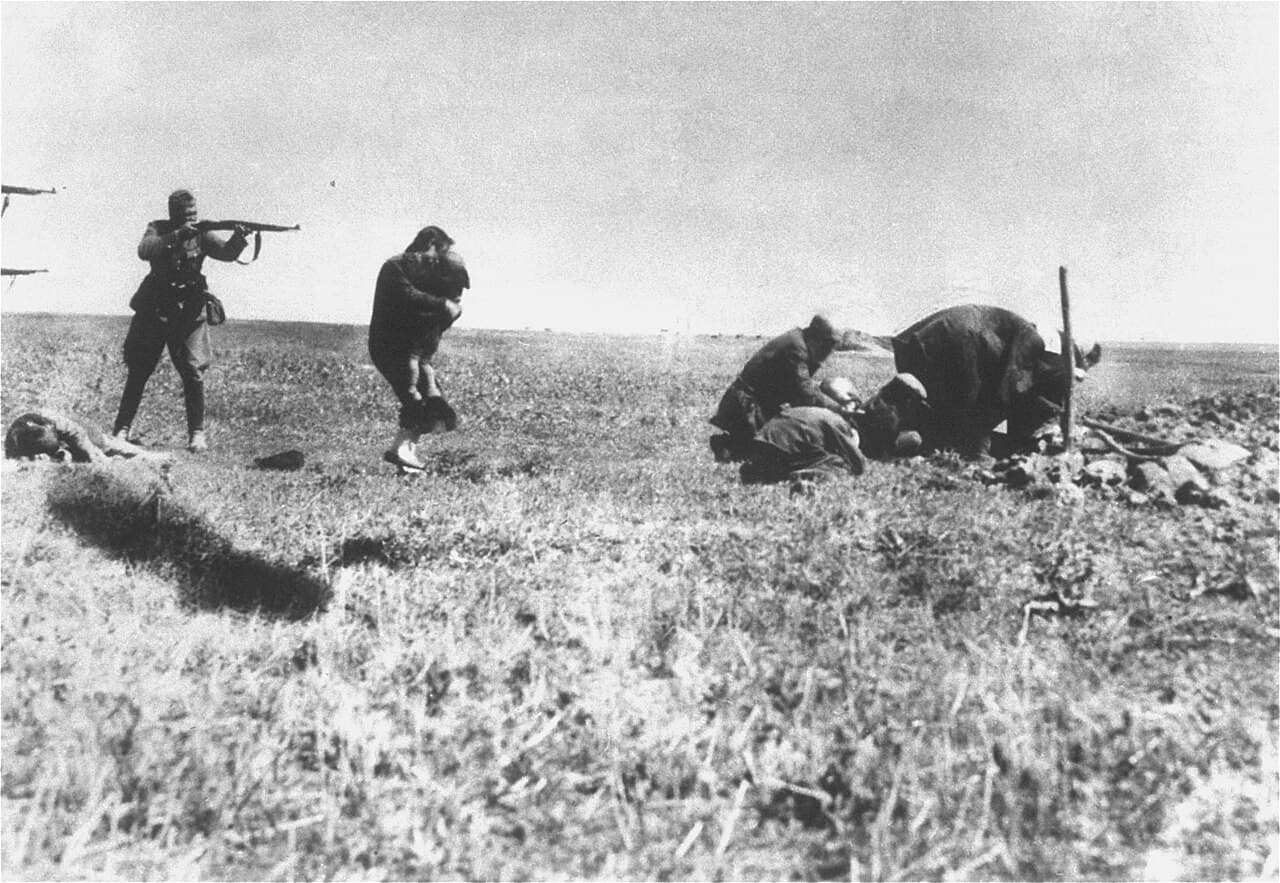
Inseparable from the narrative of World War II is the Holocaust — Nazi Germany's systematic, state-sponsored murder of six million Jews, along with millions of others including Roma, disabled people, Soviet civilians, Polish civilians, and political prisoners. The Nazi regime constructed an industrial apparatus of extermination, with camps such as Auschwitz-Birkenau, Treblinka, Sobibor, and Belzec serving as dedicated killing centers. The Holocaust remains the most meticulously documented genocide in history and stands as a defining moral catastrophe of the modern era.
The Allied Counteroffensive: D-Day to Berlin
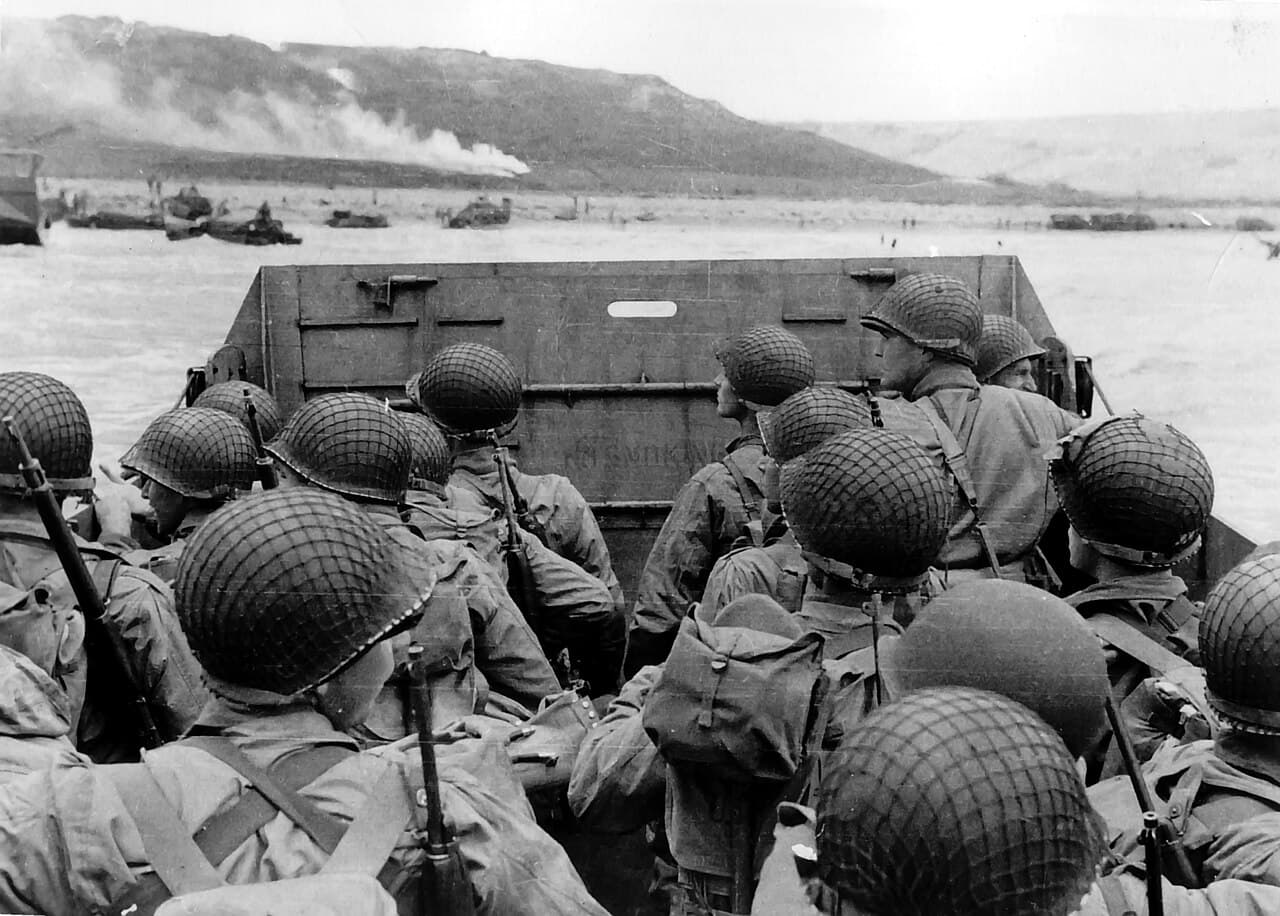
By 1943, the tide had turned. Allied forces had expelled Axis troops from North Africa and invaded Sicily and Italy. On June 6, 1944 — D-Day — the largest amphibious military operation in history landed over 156,000 Allied troops on five beaches in Normandy, France. The operation, codenamed Overlord, opened the long-awaited Western Front. Within a year, Allied armies were fighting inside Germany itself. Hitler committed suicide in his Berlin bunker on April 30, 1945. Germany surrendered unconditionally on May 8, 1945 — celebrated as Victory in Europe (V-E) Day.
The Atomic Bomb and Japan's Surrender
In the Pacific, Japan fought on with ferocious determination. U.S. military planners estimated an invasion of the Japanese home islands could cost hundreds of thousands of Allied — and millions of Japanese — lives. On August 6, 1945, the United States dropped an atomic bomb on Hiroshima, killing an estimated 80,000 people instantly and tens of thousands more in the following months from radiation exposure. Three days later, a second bomb fell on Nagasaki. On August 15, Emperor Hirohito announced Japan's surrender. The formal surrender was signed aboard the USS Missouri on September 2, 1945 — ending World War II.
Legacy: A World Transformed
World War II reshaped the global order in ways that still define the present. The United States and Soviet Union emerged as rival superpowers, setting the stage for the Cold War. The United Nations was founded in 1945 to prevent future conflicts of such scale. European colonialism accelerated into collapse as nations weakened by war could no longer maintain their empires. The Nuremberg Trials established the principle that individuals — including heads of state — could be held accountable for war crimes and crimes against humanity. The State of Israel was founded in 1948, partly in response to the Holocaust. And the atomic age introduced an existential dimension to warfare that no civilization before had ever confronted. Six years of catastrophic violence had, paradoxically, created the architecture of the modern world.
| Country | Military Deaths | Civilian Deaths | Total Estimated Deaths |
|---|---|---|---|
| Soviet Union | 8,700,000–10,700,000 | 13,700,000–20,000,000 | 22,400,000–28,000,000 |
| China | 3,500,000–4,000,000 | 7,200,000–16,000,000 | 10,700,000–20,000,000 |
| Germany | 4,440,000–5,318,000 | 1,500,000–3,000,000 | 6,600,000–8,800,000 |
| Poland | 240,000 | 5,400,000–5,900,000 | 5,600,000–6,000,000 |
| Japan | 2,100,000–2,300,000 | 500,000–800,000 | 2,600,000–3,100,000 |
| United States | 407,000 | ~12,000 | 419,000 |